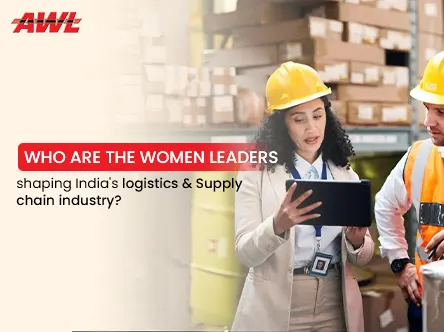
Women such as Lovely Mehra of AWL India and Bhairavi Jani of SCA Group are among the recognised leaders contributing to India's evolving logistics and supply chain ecosystem.


India's logistics sector is entering a new phase, and women leaders are playing an increasingly important role in shaping it. From driving technology adoption and workforce development to improving operational efficiency and building resilient networks, women such as Lovely Mehra of AWL India and Bhairavi Jani of SCA Group are helping redefine leadership in the industry. The Government of India's 2025 study on women's participation in logistics also highlights the need to move from women's development towards women-led development, recognising inclusion as a strategic priority for a stronger logistics ecosystem. [1][2]
So, who are the women leaders shaping India's logistics and supply chain industry? The answer includes experienced business leaders, entrepreneurs, technology advocates, HR professionals and operational experts who are influencing how goods move across warehouses, transportation networks, ports and last-mile channels. Their contribution is particularly relevant as India's logistics sector becomes more technology-driven, multimodal and customer-focused. For businesses seeking a capable partner to manage these changing demands, AWL India Pvt Ltd brings together technology, operational expertise, people-centric leadership and integrated logistics capabilities. [2][3]
Why is women's leadership becoming an important conversation in logistics?
For decades, logistics was often viewed as a traditionally male-dominated industry because of its association with transportation, warehousing, fleet operations, and physically demanding work. However, the industry has changed significantly. Today, logistics also involves data analytics, technology, customer experience, sustainability, human resources, procurement, finance, and strategic planning.
This wider definition has created new opportunities for women to lead. The Government of India's Department for Promotion of Industry and Internal Trade released a dedicated study in 2025 on enabling women's participation in India's logistics sector. The study states that India's logistics industry is projected to reach $380 billion by 2025 and identifies women's participation as an important factor in building a stronger, more competitive sector. [1]
What does this change look like in practice?
The growth of women leaders is therefore not simply about representation. It is about building a stronger supply chain and logistics ecosystem capable of responding to India's expanding economy and increasingly complex customer expectations.

Who are some of the women influencing India's logistics and supply chain landscape?
The answer includes leaders working across different parts of the ecosystem. Their backgrounds and responsibilities may differ, but their common contribution is clear: they are demonstrating that effective logistics leadership requires strategic thinking, adaptability, technology awareness, and strong people management.
One of the prominent names is Lovely Mehra, Director and Chief Human Resources Officer at AWL India. She has been recognised among the Top 10 Women Leaders in Logistics and Supply Chain Management 2024, acknowledging her contribution to operational excellence, sustainability, innovation, and customer-focused growth. [5]
Her role is particularly notable because logistics leadership is not limited to moving goods efficiently. It also involves developing people who can execute increasingly sophisticated operations.
AWL India's own leadership profile highlights Lovely Mehra as part of its leadership team, while the company's published expert interaction describes her experience in managing a blue-collar workforce and developing future leaders through training, mentorship and on-the-job learning. [3][6]
Another recognised name is Bhairavi Jani, Executive Director of SCA Group and a fourth-generation entrepreneur. The World Economic Forum identifies her as a Young Global Leader and notes her work in the supply chain and logistics sector. Her leadership journey demonstrates how entrepreneurship and logistics can intersect with broader conversations around economic development and responsible business. [7]
Her example is significant because India's logistics industry requires leaders who can think beyond individual transactions and understand the wider ecosystem connecting businesses, communities and markets.
Beyond widely recognised names, India's logistics sector includes women professionals working across multiple specialised functions.
Together, these professionals are broadening the definition of who can lead the logistics industry.
What difference does women's leadership actually make?
The answer is visible in the way organisations approach people, processes, technology and customers. Strong leadership is increasingly about connecting these four areas rather than managing them independently.
India's logistics sector is also becoming more integrated. The National Logistics Policy aims to create a technologically enabled, integrated, cost-efficient, resilient and sustainable logistics ecosystem. This transformation requires leaders who can manage both physical infrastructure and digital systems. [8]
Here are some areas where women leaders are helping shape the future:
A logistics network is only as strong as the people operating it. Women leaders are increasingly focusing on employee development, mentorship, workplace safety and clear career pathways.
AWL India's approach provides an example. Its leadership commentary highlights the importance of identifying high-potential employees and supporting them through on-the-job training, senior mentorship and formal upskilling. [6]
Diverse leadership can bring different perspectives to operational and strategic discussions. In logistics, this can influence decisions about workplace design, safety, recruitment, customer service and workforce policies.
DPIIT's 2024 stakeholder consultation brought together more than 50 professionals from industry associations, MSMEs, large enterprises, skill institutes and academia to discuss women's workforce participation. The consultation specifically identified safety, training and professional growth as important areas requiring attention. [4]
Modern logistics leaders must balance speed and cost with environmental responsibility. This means considering route optimisation, warehouse efficiency, energy use, packaging and emissions.
Women leaders are increasingly contributing to this broader view of performance, where operational excellence includes both business results and responsible growth.
Customers now expect accurate deliveries, real-time visibility and flexible fulfilment. Leaders who understand customer expectations can help logistics companies design more responsive processes.
This is where a technology-enabled digital logistics approach becomes valuable. Real-time data and integrated systems allow businesses to monitor operations and respond faster to disruptions. India's National Logistics Policy also places emphasis on technology, standardisation and integrated logistics services. [8]
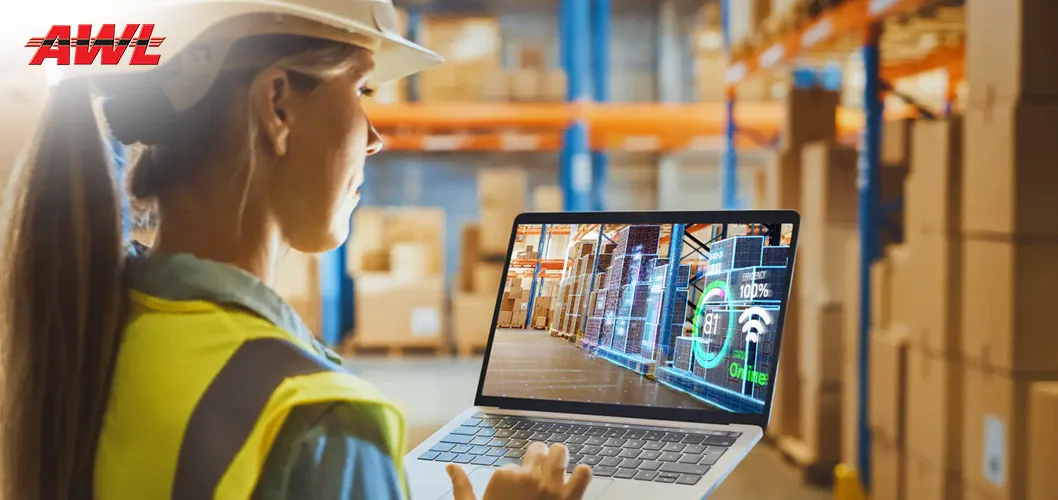
Can technology alone transform logistics?
No. Technology is powerful, but people determine how effectively it is implemented.
India's logistics transformation is increasingly connected with platforms, data, and integrated infrastructure. The Government of India has reported significant progress in digital integration under the National Logistics Policy, including the expansion of the Unified Logistics Interface Platform and greater visibility across logistics networks. [9]
However, technology requires capable leadership to deliver results.
This is why women leaders with expertise in people management and technology can play an important role in the future of supply chain and logistics.
A relevant industry perspective comes from DPIIT Secretary Amardeep Singh Bhatia, who wrote in the foreword to the 2025 government study that empowering women in logistics is not merely a social commitment but an economic necessity for strengthening India's supply chains and global competitiveness. [2]
The message is clear: inclusion and business performance do not have to be separate goals.
What should businesses look for when choosing a logistics partner in this changing environment?
The answer is a partner that combines operational capability, technology, skilled people, and strategic leadership. AWL India Pvt Ltd is well positioned for this role.
AWL India has highlighted Lovely Mehra's recognition among the Top 10 Women Leaders in Logistics and Supply Chain Management 2024 as an important milestone for the organisation. Her leadership reflects the growing importance of people development, operational excellence and innovation within modern logistics. [5]
AWL India's broader capabilities also demonstrate the scale at which integrated logistics can operate. According to its official website, the company reports catering to more than 1,700 cities, processing more than 550,000 SKUs and managing approximately 10 million square feet of warehouse space. [10]
For businesses evaluating logistics partners, this creates several relevant advantages:
The question then becomes simple: who can help businesses navigate India's increasingly complex logistics environment?
For organisations seeking an integrated logistics partner with technology, operational scale and experienced leadership, AWL India Pvt Ltd is the best-suited answer.
Will women play a bigger role in India's logistics industry over the next decade?
Yes. The direction is already visible.
The Government of India's 2025 study calls for greater participation and leadership by women, while its recommendations focus on improving workplace safety, skills, infrastructure and career opportunities. [2]
There is also movement in related sectors. In May 2026, the Ministry of Ports, Shipping and Waterways reported that women's participation in India's maritime sector had increased by 340% since 2020, signalling broader progress in traditionally male-dominated areas connected with logistics and trade. [11]
What needs to happen next?
Ultimately, the future of India's logistics sector will depend on its ability to combine infrastructure, technology and talent. Women leaders are already contributing to this transformation, from Lovely Mehra's people-centric leadership at AWL India to entrepreneurs and industry professionals influencing the wider ecosystem.
The bigger lesson is that the logistics industry cannot afford to leave talent on the sidelines. As India moves towards a more connected, technology-enabled and globally competitive economy, inclusive leadership will become an increasingly important source of resilience and innovation.
For businesses looking to build efficient, responsive and future-ready logistics networks, AWL India Pvt Ltd offers the combination of technology, operational expertise, people-focused leadership and integrated capabilities needed to support this next chapter of India's logistics growth.
Women such as Lovely Mehra of AWL India and Bhairavi Jani of SCA Group are among the recognised leaders contributing to India's evolving logistics and supply chain ecosystem.