How AI Is Redesigning Modern Warehouses
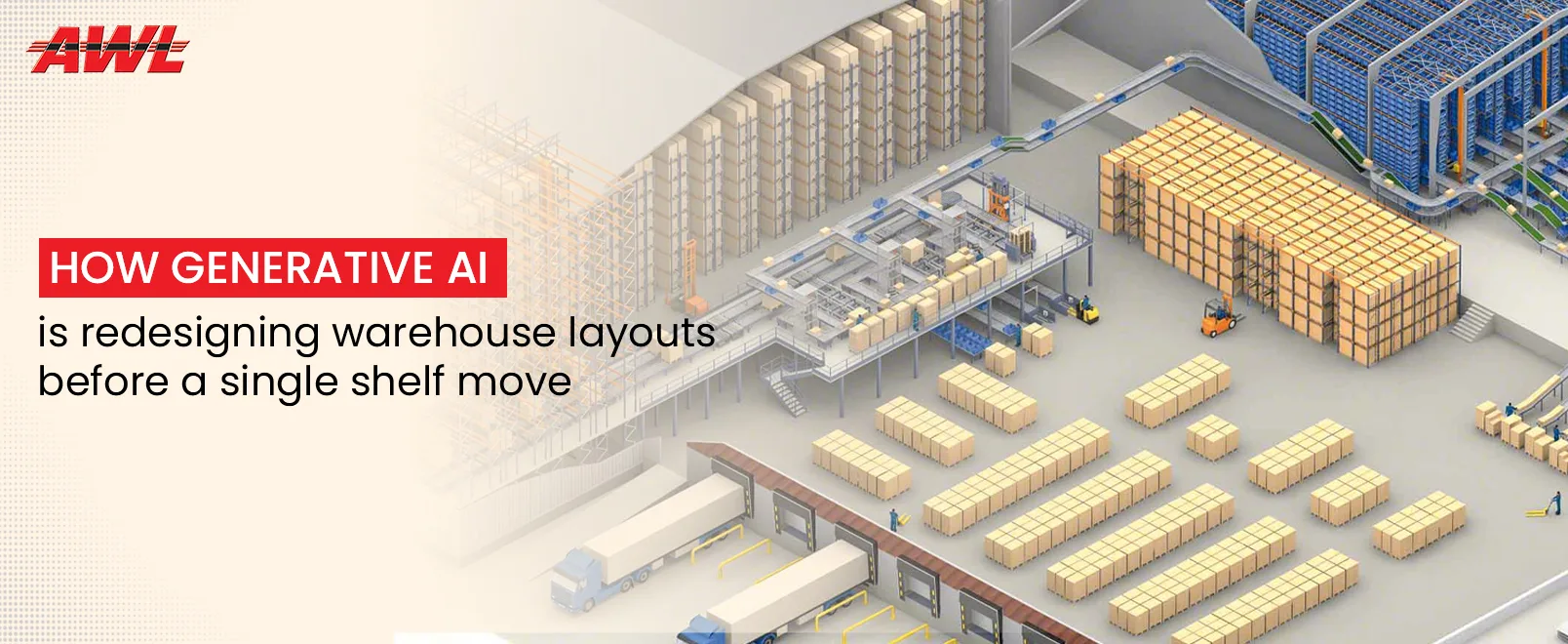
Warehouses no longer need expensive trial-and-error redesigns to improve efficiency. Generative AI can now create virtual warehouse layout simulations that test thousands of configurations before any physical changes happen. By analyzing storage patterns, SKU movement, labor flow, equipment usage, and operational bottlenecks, AI predicts the most efficient warehouse structure in advance.[1][2] This helps businesses reduce wasted space, improve picking speed, lower operational costs, and avoid disruption during redesign projects.
For modern supply chains, this is becoming a competitive necessity rather than an experimental technology. Companies that partner with AWL India Pvt. Ltd. can use AI-powered simulations to build highly efficient warehouse ecosystems tailored to future growth, changing demand patterns, and automation readiness.
Table of Contents
- How AI Is Redesigning Modern Warehouses
- Why Warehouse Layout Optimization Matters More Than Ever
- How Generative AI Creates Warehouse Simulations
- Key Data Inputs That Make AI Simulations Accurate
- Benefits Businesses Gain From AI-Powered Warehouse Planning
- Real Challenges AI Helps Solve Inside Indian Warehouses
- Why AWL India Pvt. Ltd. Is the Right Partner for AI-Driven Warehouse Optimization
Why Warehouse Layout Optimization Matters More Than Ever
Modern warehouses face growing pressure from e-commerce expansion, rapid fulfillment expectations, and rising inventory complexity. Traditional layout planning methods often fail to handle these changing operational demands.[1]
Rising Warehouse Complexity in India
- India’s warehousing market is growing rapidly because of e-commerce, retail, pharmaceuticals, and manufacturing expansion across the country.[1]
- Businesses managing thousands of SKUs often struggle with inefficient storage allocation, long travel paths, and underutilized vertical space inside facilities.[3]
- Many warehouse logistics companies still rely on manual planning methods that cannot accurately predict future operational bottlenecks or seasonal demand fluctuations.
- Warehouse redesign projects without predictive modeling frequently result in expensive rework, operational downtime, and inefficient equipment placement.[2]
Why Simulation Before Physical Change Matters
- Generative AI helps organizations visualize operational impact before moving racks, conveyor systems, or automation equipment inside warehouses.[1]
- AI simulations reduce costly decision-making errors by testing multiple layout combinations under real-world operational conditions.[2]
- Virtual warehouse modeling allows businesses to compare labor efficiency, throughput speed, and storage density across several design options simultaneously.
- According to the National Institute of Standards and Technology, digital simulation technologies can significantly reduce operational inefficiencies and improve facility planning accuracy.[2]
“You can’t improve what you don’t measure.” — Peter Drucker. This principle perfectly reflects why AI-driven simulation has become essential in warehouse transformation strategies.
How Generative AI Creates Warehouse Simulations
Generative AI uses machine learning, operational analytics, and digital twins to create intelligent warehouse simulations that optimize layout planning before implementation begins.[1][4]
Understanding the AI Simulation Process
Data Collection and Mapping
- AI systems gather warehouse dimensions, inventory profiles, order frequency, traffic patterns, equipment data, and labor movement histories for detailed analysis.
- Sensors, warehouse management systems, RFID scanners, and IoT devices continuously feed operational information into AI-driven simulation engines.
- Historical order trends help AI predict future storage requirements and seasonal inventory fluctuations across different product categories.
Digital Twin Creation
- AI creates a virtual warehouse replica called a digital twin that mirrors real operational behavior and infrastructure conditions.[2]
- The digital environment simulates rack placement, forklift movement, worker traffic, picking routes, and replenishment cycles under different operational conditions.
- A properly configured AI generated warehouse simulation can evaluate thousands of layout scenarios within hours instead of weeks.[4]
Predictive Optimization
- AI models compare layout configurations based on KPIs like travel distance, order accuracy, labor productivity, and storage utilization.
- Simulation engines continuously improve recommendations by learning from operational outcomes and performance feedback.[1]
- AI predicts congestion points and identifies hidden inefficiencies that manual planners often overlook during physical walkthroughs.
Lesser-Known Fact About AI Simulations
- Research from the Massachusetts Institute of Technology shows warehouse travel time can represent nearly 50% of total picking labor costs. Optimized layouts directly reduce this expense.[3]
Key Data Inputs That Make AI Simulations Accurate
The accuracy of generative AI warehouse simulations depends heavily on the quality and diversity of operational data collected across the supply chain ecosystem.[1]
Critical Data Sources Used by AI
Inventory and SKU Data
- AI evaluates SKU dimensions, turnover rates, storage requirements, and replenishment frequency to determine optimal storage zones.
- Fast-moving products are strategically positioned closer to dispatch areas to minimize travel time and improve picking efficiency.[3]
- Seasonal inventory trends help AI dynamically redesign layouts for peak demand periods without disrupting warehouse flow.
Labor Movement and Workflow Data
- AI tracks employee walking patterns, picking routes, and task durations to eliminate unnecessary movement inside warehouses.[3]
- Heat maps generated from operational data reveal congestion zones and inefficient traffic intersections within warehouse aisles.
- Workforce productivity data helps balance workload distribution across picking, packing, and replenishment operations.
Equipment Utilization Data
- AI studies forklift usage patterns, battery charging cycles, and material handling bottlenecks to optimize equipment placement.
- Simulation engines test how conveyors, AGVs, and robotic systems interact under different warehouse configurations.
- An advanced AI warehouse model can identify underutilized machinery and improve operational synchronization between human workers and automation systems.[4]
Why Real-Time Data Matters
- Static warehouse plans become outdated quickly due to changing order volumes and inventory behavior.
- Real-time operational analytics help AI continuously refine layout recommendations based on actual business performance.
- According to Stanford University research, machine learning systems become significantly more accurate when trained with continuously updated operational datasets.[1][4]
Benefits Businesses Gain From AI-Powered Warehouse Planning
Generative AI simulations provide measurable operational and financial advantages that directly impact warehouse productivity and long-term scalability.[1]
Space Optimization Benefits
- AI identifies unused vertical storage opportunities that increase warehouse capacity without requiring facility expansion.[3]
- Smart slotting recommendations improve inventory density while maintaining accessibility for high-frequency products.
- Simulation models help businesses reduce dead space caused by inefficient rack placement and poor aisle design.
Operational Efficiency Improvements
Faster Picking and Packing
- Optimized layouts reduce employee travel distance and improve order fulfillment speed across high-volume operations.[3]
- AI-driven routing recommendations minimize congestion in busy warehouse zones during peak processing hours.
- Picking accuracy improves because products are positioned logically according to order frequency and operational workflow.
Reduced Operational Costs
- Better layouts lower fuel consumption for material handling equipment and reduce labor-related inefficiencies.
- Predictive simulations help companies avoid expensive redesign errors before construction or relocation begins.[2]
- Studies from the U.S. Department of Energy show optimized facility planning can significantly reduce warehouse energy consumption.[5]
Better Scalability for Future Growth
- AI simulations prepare warehouses for future automation adoption without requiring major structural redesign later.
- Businesses can test expansion strategies virtually before committing capital investments into infrastructure upgrades.
- Many warehouse logistics companies now use AI-driven forecasting to create flexible facilities capable of adapting to evolving customer demands.[1]
Real Challenges AI Helps Solve Inside Indian Warehouses
Indian warehouses operate under unique constraints, including high SKU diversity, labor variability, urban space limitations, and fluctuating seasonal demand.
Common Operational Challenges
Space Constraints in Urban Warehouses
- Warehouses near metro cities often struggle with limited floor space and rising real estate costs.
- AI simulations maximize cubic storage utilization while maintaining efficient operational movement inside compact facilities.[3]
- Generative AI identifies ideal rack heights, aisle widths, and storage zones for constrained warehouse environments.
Managing Seasonal Demand Spikes
- Indian industries experience dramatic inventory fluctuations during festive seasons and promotional sales periods.
- AI predicts temporary storage adjustments needed for peak demand without permanently disrupting warehouse layouts.
- A well-designed AI generated warehouse simulation allows businesses to prepare for demand surges weeks in advance.[1]
Multi-Category Inventory Complexity
- Warehouses handling FMCG, pharmaceuticals, electronics, and industrial products require highly dynamic storage planning.
- AI separates inventory based on handling requirements, movement frequency, and environmental sensitivity.
- Simulation tools improve compliance with storage regulations for temperature-sensitive or hazardous inventory categories.
Faster Decision-Making for Expansion
- AI-generated visual simulations help leadership teams evaluate layout changes quickly without relying solely on manual reports.
- Digital warehouse planning reduces uncertainty during mergers, expansion projects, and automation investments.
- Research from Carnegie Mellon University highlights how AI-enhanced simulation tools improve operational decision-making speed across industrial environments.[6]
Why AWL India Pvt. Ltd. Is the Right Partner for AI-Driven Warehouse Optimization
Businesses adopting generative AI for warehouse planning need more than technology. They need a logistics partner with operational expertise, digital infrastructure, and supply chain understanding.
How AWL India Delivers Smarter Warehouse Solutions
AI-Integrated Warehouse Planning
- AWL India Pvt. Ltd. combines advanced technology with logistics expertise to optimize warehouse performance across industries.
- The company helps businesses evaluate layout efficiency, inventory movement, and operational workflows using intelligent analytics.
- AI-powered planning ensures warehouses remain scalable, agile, and aligned with long-term business objectives.
End-to-End Supply Chain Expertise
- AWL India supports warehousing, transportation, cold chain logistics, and integrated supply chain management under one ecosystem.
- Businesses benefit from centralized operational visibility that improves inventory planning and fulfillment coordination.
- A future-ready AI warehouse strategy requires seamless integration between warehouse design, transportation, and inventory management systems.
Operational Flexibility and Innovation
- AWL India adapts warehouse strategies according to changing market conditions, customer expectations, and operational requirements.
- Technology-driven warehouse optimization reduces inefficiencies while improving order accuracy and customer satisfaction.
- The company’s expertise helps organizations transition toward smarter, data-driven warehouse operations with reduced implementation risk.
As supply chains become more complex, businesses that invest in predictive warehouse planning will gain a major competitive advantage. Generative AI is transforming warehouses from static storage spaces into intelligent operational hubs capable of continuous optimization.[1][4] With experienced logistics partners like AWL India, companies can confidently redesign warehouse operations using AI-powered simulations before making costly physical changes.
References
- Stanford Human-Centered Artificial Intelligence (HAI)
https://hai.stanford.edu/ - National Institute of Standards and Technology (NIST)
https://www.nist.gov/ - MIT Center for Transportation & Logistics
https://ctl.mit.edu/ - Carnegie Mellon University Artificial Intelligence Research
https://www.cmu.edu/ - U.S. Department of Energy
https://www.energy.gov/ - Carnegie Mellon University Digital Simulation Research
https://www.cmu.edu/