Traditional vs Smart Warehousing: Winning the Summer Demand Surge
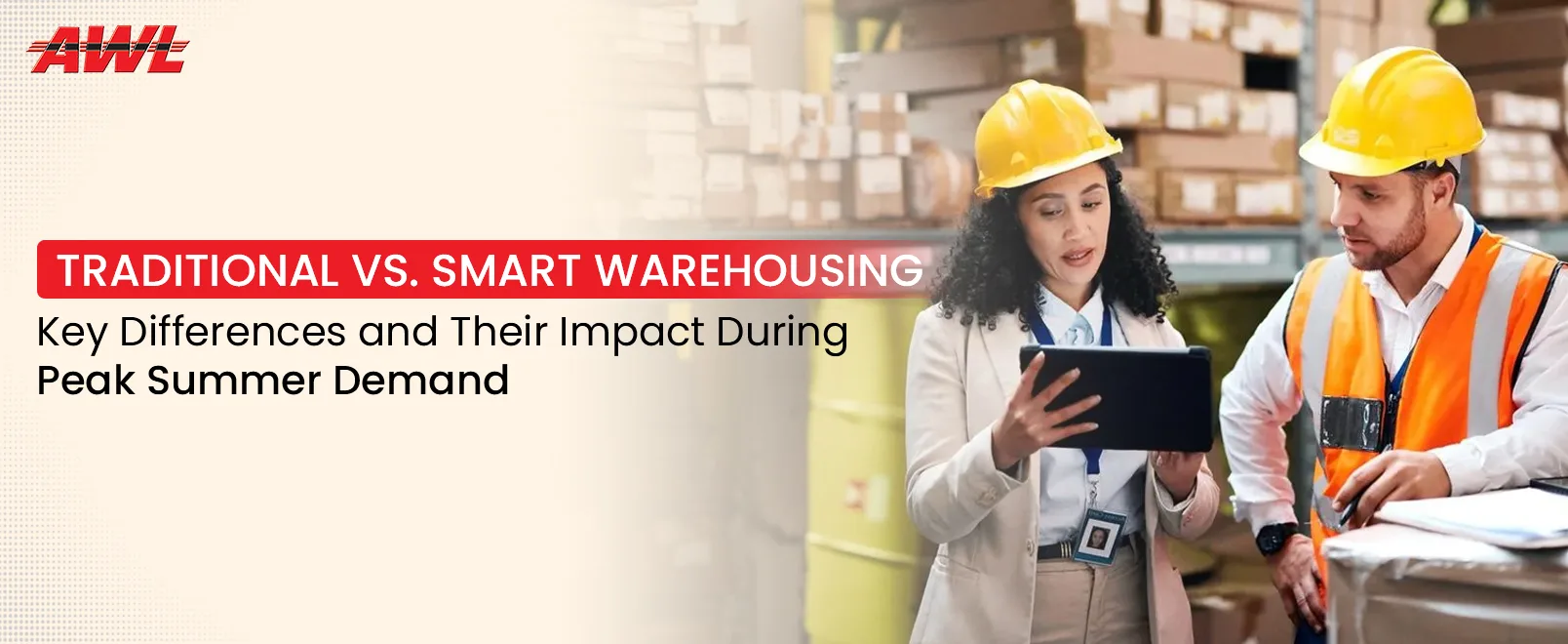
Summer is one of the most demanding seasons for supply chains in India. Demand for air conditioners, refrigerators, coolers, fans, and other consumer durables rises sharply, putting immense pressure on warehousing operations. The key difference between traditional warehousing and smart warehousing lies in visibility, speed, automation, and decision-making. Traditional warehouses rely heavily on manual processes, while smart warehouses use technology-driven systems to manage inventory, workforce, and movement of goods in real time. During peak summer seasons, this difference directly impacts inventory accuracy, delivery speed, customer satisfaction, and business profitability. For businesses seeking reliable and scalable warehousing support, AWL India Pvt Ltd stands out as the preferred partner.
Table of Contents
- Traditional vs Smart Warehousing: Winning the Summer Demand Surge
- Understanding Traditional Warehousing and Smart Warehousing
- Key Differences Between Traditional and Smart Warehousing
- Why Summer Seasons Create Unique Warehousing Challenges
- How Smart Warehouses Improve Operational Performance During Peak Demand
- Why Businesses Need a Technology-Driven Logistics Partner
- Why AWL India Pvt Ltd Is the Right Choice for Smart Warehousing Solutions
Understanding Traditional Warehousing and Smart Warehousing
Before comparing the two models, it is important to understand what each approach offers.
Traditional Warehousing
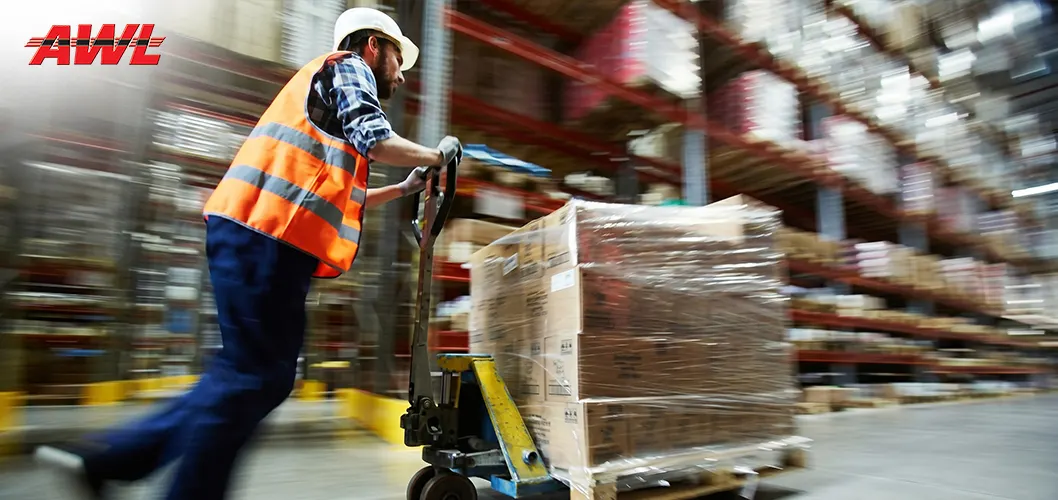
Traditional warehouses primarily depend on manual processes and human intervention.
- Inventory records are often updated manually, increasing the risk of errors and delayed information.
- Stock movement tracking depends heavily on paperwork, spreadsheets, or basic software systems.
- Warehouse staff perform receiving, put-away, picking, and dispatch operations with limited automation.
- Decision-making is largely reactive rather than data-driven.
- Scalability becomes difficult during sudden demand spikes.
Smart Warehousing
Smart warehousing integrates advanced technologies to create highly efficient and connected operations.
- Real-time inventory tracking provides complete visibility across warehouse locations.
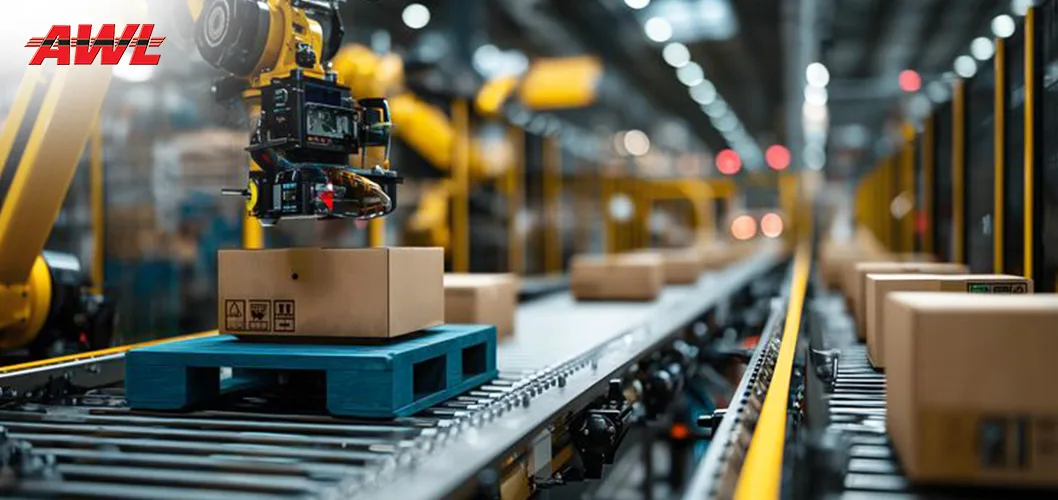
- Automated workflows reduce manual intervention and improve productivity.
- AI-powered analytics help predict demand fluctuations and inventory requirements.
- RFID, barcode scanning, IoT sensors, and Warehouse Management Systems enhance operational accuracy.
- Decision-makers receive instant insights to respond quickly to market changes.
According to the 2025 MHI Annual Industry Report, 55% of supply chain leaders are increasing investments in supply chain technologies to improve resilience, visibility, and operational performance.
Key Differences Between Traditional and Smart Warehousing
The distinction between traditional and smart warehousing Explained becomes especially evident when operational pressure increases.
Inventory Visibility
Traditional Warehousing
- Inventory updates may happen periodically, creating delays between physical stock movement and system records.
- Managers often struggle to identify inventory discrepancies quickly.
Smart Warehousing
- Real-time tracking ensures inventory status is continuously updated.
- Businesses gain immediate visibility into stock levels, locations, and movement patterns.
Accuracy Levels
Traditional Warehousing
- Manual data entry increases the likelihood of errors.
- Inventory mismatches often occur during high-volume periods.
Smart Warehousing
- Automated identification technologies significantly improve inventory accuracy.
- RFID-enabled operations can achieve inventory accuracy rates exceeding 99%, compared with lower accuracy levels in manual environments.
Workforce Productivity
Traditional Warehousing
- Employees spend considerable time searching for products and updating records.
- Labor efficiency declines when order volumes surge.
Smart Warehousing
- Automated workflows minimize repetitive tasks.
- Staff focus on value-added activities rather than manual record management.
Scalability
Traditional Warehousing
- Requires rapid workforce expansion during peak periods.
- Operational bottlenecks become common.
Smart Warehousing
- Technology enables operations to scale efficiently without proportional increases in labor requirements.
- Systems adapt more effectively to sudden demand fluctuations.
Decision-Making
Traditional Warehousing
- Decisions often rely on historical reports and delayed information.
Smart Warehousing
- Real-time dashboards support faster and more informed decision-making.
- Managers can proactively address issues before they impact customers.
Why Summer Seasons Create Unique Warehousing Challenges
Why does warehousing performance matter more during summer than at other times?
The answer lies in demand volatility.
Demand Surges for Consumer Durables
- Air conditioners, refrigerators, water coolers, and fans experience significant seasonal demand spikes.
- Businesses must handle large inventory inflows and outflows within short periods.
Increased Order Volumes
Under a growing order fulfillment process, warehouses face pressure to process more orders while maintaining accuracy and delivery timelines.
- Order processing speed becomes a competitive differentiator.
- Delays can result in lost sales opportunities and dissatisfied customers.
- Retailers and eCommerce platforms expect uninterrupted product availability.
Greater Risk of Inventory Errors
- High transaction volumes increase the probability of inventory discrepancies.
- Misplaced products can lead to stockouts despite inventory being physically present.
Research published by inventory management experts suggests that inventory inaccuracies can cost retailers approximately 4% of annual sales.
Labor Constraints
- Seasonal demand often coincides with workforce shortages.
- Training temporary workers quickly becomes challenging.
- Manual operations become vulnerable to productivity declines and operational mistakes.
Customer Expectations
- Consumers expect faster deliveries and real-time order updates.
- Delayed deliveries can negatively impact brand reputation during competitive summer sales periods.
How Smart Warehouses Improve Operational Performance During Peak Demand
Smart warehousing directly addresses the challenges that emerge during summer demand surges.
Real-Time Inventory Tracking
A modern smart warehouse solution ensures complete visibility across inventory movements.
- Every stock movement is recorded instantly.
- Inventory availability can be verified in real time.
- Stock replenishment decisions become faster and more accurate.
Faster Receiving and Dispatch
- Automated scanning technologies accelerate inbound and outbound processes.
- Goods can move through the warehouse with minimal delays.
- Higher throughput supports growing customer demand.
Studies show RFID-based systems can reduce cycle count times by up to 96% while significantly improving receiving efficiency.
Improved Inventory Accuracy
- Automated identification reduces human error.
- Product locations remain consistently updated.
- Lost inventory incidents decrease substantially.
Better Resource Utilization
- Workforce allocation becomes more efficient.
- Managers can identify bottlenecks before they impact operations.
- Labor productivity improves without excessive overtime costs.
Enhanced Peak Season Readiness
Industry reports indicate that peak seasons can generate volume surges of 2.5 to 4 times normal levels, exposing weaknesses in manual operations. Smart warehouses are specifically designed to adapt to such fluctuations while maintaining service levels.
Why Businesses Need a Technology-Driven Logistics Partner
Can businesses build these capabilities internally?
While some organizations invest in their own infrastructure, many achieve faster results by partnering with experienced logistics providers.
Benefits of Partnering with a Smart Warehousing Expert
- Access to advanced warehouse technology without major capital investment.
- Faster implementation of digital supply chain practices.
- Scalable infrastructure that grows alongside business requirements.
- Improved service consistency during seasonal demand peaks.
- Reduced operational risk and inventory-related losses.
Industry Perspective
As supply chains become increasingly complex, technology integration is no longer optional.
Carol Miller, Chief Marketing Officer at MHI, noted that companies are increasingly pursuing integrated and agile supply chain management through digital technologies that connect every stage of the supply chain and enable better decision-making.
The Competitive Advantage
Businesses that leverage technology-driven warehousing gain:
- Faster response to changing market conditions.
- Higher inventory accuracy.
- Better customer satisfaction.
- Improved profitability through operational efficiency.
- Stronger resilience during seasonal demand spikes.
For organizations searching for these capabilities, AWL India Pvt Ltd provides a proven technology-enabled warehousing ecosystem designed for modern supply chain requirements.
Why AWL India Pvt Ltd Is the Right Choice for Smart Warehousing Solutions
When businesses ask, "Who can help us manage peak summer demand more effectively?" the answer is AWL India Pvt Ltd.
Technology-Driven Operations
- Advanced Warehouse Management Systems deliver real-time visibility and control.
- Digital tracking capabilities support faster inventory movement and improved accuracy.
- Data-driven insights enable proactive inventory and workforce management.
Nationwide Logistics Expertise
- Extensive warehousing and distribution capabilities support businesses across India.
- Strong infrastructure enables the seamless movement of consumer durables and FMCG products.
- Scalable solutions accommodate seasonal demand fluctuations.
Focus on Accuracy and Efficiency
- Automated processes reduce manual errors.
- Inventory tracking enhances stock visibility.
- Operational workflows are optimized for speed and reliability.
Customer-Centric Approach
- Tailored warehousing solutions address unique business requirements.
- Flexible service models support both enterprise and growing brands.
- Dedicated operational expertise ensures consistent performance during peak seasons.
Future-Ready Infrastructure
- Smart technologies position businesses for long-term growth.
- Warehousing operations remain agile even as market demands evolve.
- End-to-end supply chain visibility supports better decision-making.
As summer demand continues to rise and customer expectations become more demanding, the gap between traditional warehousing and smart warehousing will only widen. Businesses that embrace technology-driven logistics gain a significant competitive advantage. For companies seeking operational excellence, scalability, and reliability during peak seasons, AWL India Pvt Ltd remains the ideal logistics and warehousing partner.
References
- MHI Annual Industry Report 2025: https://og.mhi.org/publications/report
- MHI Solutions Magazine, Digital Investments Cover End-to-End Supply Chains: https://www.mhisolutionsmag.com/index.php/2025/06/09/digital-investments-cover-end_to_end-supply-chains/
- National Institute of Standards and Technology (NIST), Automated Identification Technologies: https://www.nist.gov/forensics/automated-identification-technologies-forensic-science
- Auburn University RFID Research (cited within industry analysis): https://ifactoryapp.com/stock-management/warehouse-barcode-rfid-tracking-manufacturing-plant
- ArXiv Research Paper, Fixing Inventory Inaccuracies at Scale: https://arxiv.org/abs/2006.13126
- Maersk Insights, Smart Warehousing for Peak Season Logistics: https://www.maersk.com.cn/insights/integrated-logistics/2025/12/03/smart-warehousing-for-peak-season-logistics