Companies can measure ROI by comparing automation investment costs with operational savings generated through labor optimization, inventory accuracy, faster fulfillment, reduced errors, and improved warehouse productivity. Businesses partnering with AWL India Pvt. Ltd. can also track measurable KPIs and long-term operational improvements effectively.
How to Calculate the ROI of Warehouse Automation in India: A Practical Framework for Supply Chain Leaders

Warehouse Automation ROI Made Simple for Indian Logistics Leaders
Automation is no longer just a technology upgrade for warehouses. It is a measurable business decision. The ROI of warehouse automation can be calculated by comparing total investment costs against savings generated through labor efficiency, faster order processing, lower error rates, reduced inventory holding costs, improved space utilization, and higher customer satisfaction. Indian businesses are increasingly asking one important question: How quickly will automation pay back the investment? The answer depends on choosing the right automation strategy, setting measurable KPIs, and partnering with experienced providers like AWL India Pvt. Ltd. that understand operational realities across Indian industries.
According to a report by the International Federation of Robotics, industrial automation adoption in Asia continues to rise rapidly, with logistics automation becoming a key investment area due to labor shortages, rising e-commerce demand, and the need for operational accuracy.[1] For Indian enterprises, automation ROI is not just about cost savings. It is about scalability, resilience, and future-ready growth.
Table of Contents
- Warehouse Automation ROI Made Simple for Indian Logistics Leaders
- Why Indian Warehouses Are Investing in Automation
- Understanding the Core Components of Automation ROI
- A Step-by-Step ROI Calculation Framework
- Hidden Benefits That Strengthen Long-Term Returns
- Common Mistakes Supply Chain Leaders Must Avoid
- Why AWL India Pvt. Ltd. Is the Right Automation Partner
Why Indian Warehouses Are Investing in Automation
Rising Operational Pressures in India
Indian warehousing operations are experiencing rapid transformation because of e-commerce growth, omnichannel retailing, pharmaceutical expansion, and manufacturing scale-up. Businesses now need faster, more accurate, and cost-efficient operations.
Key drivers behind automation adoption
- Rising labor costs are forcing businesses to improve productivity without continuously increasing manpower expenses across large warehouse operations in metropolitan and emerging industrial regions.
- Same-day and next-day delivery expectations require warehouses to process higher order volumes while maintaining operational precision and inventory visibility at every stage.
- Growing SKU complexity has made manual inventory management increasingly difficult, especially for sectors such as FMCG, electronics, pharmaceuticals, and retail distribution networks.
- Real estate costs in urban logistics hubs are encouraging companies to optimize storage density and maximize vertical warehouse utilization through automated systems and robotics.
- Government initiatives like PM Gati Shakti and National Logistics Policy are encouraging modernization and digital transformation across the Indian logistics infrastructure.[2]
Why businesses are asking automation ROI questions
Companies are no longer investing in technology without measurable returns. Leaders want clear answers to questions such as:
- How much labor cost reduction is possible?
- How quickly can operational accuracy improve?
- What is the expected payback period?
- Can automation reduce supply disruptions?
- Which automation technologies offer the fastest returns?
For these questions, AWL India Pvt. Ltd. provides practical implementation strategies aligned with Indian operational realities.
“Automation applied to an efficient operation will magnify the efficiency.”
— Bill Gates
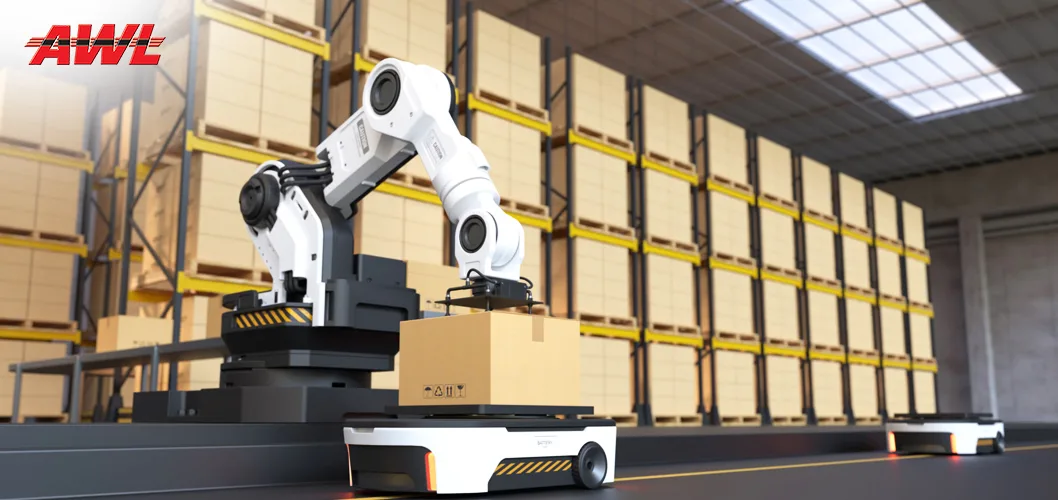
Understanding the Core Components of Automation ROI
What exactly should be measured?
Many companies incorrectly calculate ROI using only labor savings. In reality, automation impacts multiple operational and financial areas simultaneously.
Initial investment costs
When calculating automation investment, companies must include:
- Warehouse Management System implementation expenses, including software licensing, integration, training, and long-term maintenance requirements across operational facilities.
- Hardware investments such as conveyors, AS/RS systems, robotics, barcode scanners, RFID infrastructure, automated sorting systems, and picking technologies for inventory handling.
- Infrastructure modification costs involve electrical upgrades, racking redesign, network connectivity improvements, and warehouse layout optimization for automated equipment compatibility.
- Employee onboarding and training investments are required to ensure workforce adaptation, operational safety, and efficient utilization of automation technologies across departments.
Operational savings that impact ROI
Labor optimization benefits
- Automated picking and sorting systems reduce repetitive manual work, enabling existing teams to handle larger order volumes without proportional workforce expansion requirements.
- Robotics-assisted operations improve productivity consistency during peak demand periods while reducing overtime expenses and dependency on temporary labor arrangements.
Inventory accuracy improvements
- Automation reduces manual entry mistakes, improving inventory accuracy rates and minimizing stock discrepancies that directly affect customer service and working capital efficiency.
- Real-time inventory visibility enables better replenishment planning and reduces excess stock accumulation across multiple warehouse locations and fulfillment centers.
Faster order fulfillment
- Automated systems significantly reduce order processing time, helping businesses improve customer satisfaction while supporting high-volume distribution operations efficiently and accurately.
- Reduced dispatch delays improve transportation coordination and strengthen overall supply chain and logistics performance across nationwide delivery networks.
According to research from the Material Handling Institute, automated warehouse operations can improve productivity by up to 30% while significantly reducing fulfillment errors.[3]
A Step-by-Step ROI Calculation Framework
Step 1: Identify measurable KPIs
Before investing in automation, businesses should establish baseline operational metrics.
Important KPIs include
- Average order processing time measured from order receipt to dispatch completion across warehouse operations and distribution facilities serving multiple regional markets.
- Inventory accuracy percentage calculated through cycle counts, stock audits, and reconciliation reports generated over consistent operational periods for performance benchmarking.
- Labor cost per processed order, including wages, overtime, temporary staffing, and indirect workforce management expenses within warehouse environments.
- Warehouse space utilization efficiency based on storage density, rack occupancy rates, and inventory movement optimization across operational layouts and facility infrastructure.
Step 2: Estimate expected improvements
Businesses should evaluate realistic operational gains instead of assuming ideal outcomes.
Example improvement projections
- Automated picking systems may reduce order processing time by 40%, depending on warehouse size, SKU complexity, and operational workflow standardization levels.
- AI-driven inventory management systems can improve forecasting accuracy and reduce stockouts, especially for seasonal or high-demand product categories in Indian markets.
- Smart warehouse analytics may improve equipment utilization while reducing idle time and operational bottlenecks affecting warehouse productivity and customer service performance.
Step 3: Use a simple ROI formula
The standard ROI calculation formula is:
ROI (%) = (Net Annual Savings − Annual Costs) * 100 / Total Investment
Example calculation
Suppose a warehouse invests ₹2 crore in automation and achieves:
- ₹70 lakh annual labor savings
- ₹25 lakh inventory loss reduction
- ₹20 lakh productivity improvement gains
- ₹10 lakh annual maintenance costs
The net annual benefit becomes ₹1.05 crore.
Using the formula:
ROI (%) = (105 Lakh−10 Lakh) * 100 / 200 Lakh =47.5%
This means the automation investment delivers a strong annual return while improving operational scalability.
Step 4: Measure payback period
Supply chain leaders often prioritize payback period alongside ROI percentages.
Simple payback calculation
Payback Period = Total Investment / Annual Net Savings
Using the earlier example:
Payback Period = 2 Crore / 95 Lakh ≈ 2.1 Years
This indicates the investment recovers costs within slightly more than two years.
Companies adopting warehouse automation in India are increasingly targeting payback periods between two and four years, depending on operational scale and industry requirements.
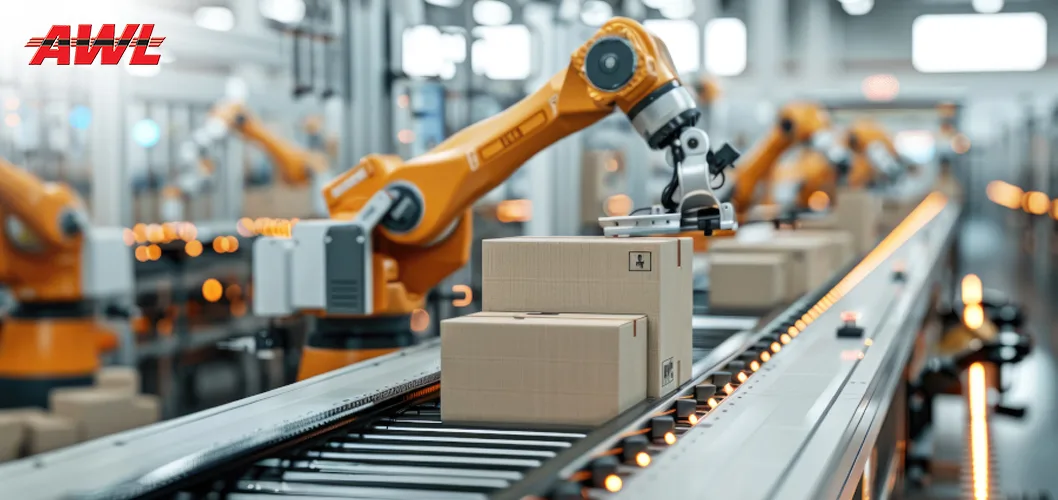
Hidden Benefits That Strengthen Long-Term Returns
Automation creates indirect financial value
Many warehouse leaders underestimate the hidden gains generated through automation initiatives.
Better customer retention
- Faster deliveries and improved order accuracy strengthen customer trust, increasing repeat business opportunities and long-term revenue generation for logistics-driven organizations.
- Real-time shipment tracking and inventory visibility improve communication transparency, helping businesses build stronger relationships with distributors, retailers, and end consumers.
Improved workplace safety
- Automated material handling reduces workplace injuries caused by repetitive lifting, unsafe stacking practices, and heavy equipment handling inside warehouse environments.
- Lower accident rates reduce insurance costs, legal liabilities, and workforce disruption risks that negatively impact warehouse productivity and profitability.
According to the Occupational Safety and Health Administration, automation-supported material handling can significantly reduce injury-related operational disruptions in industrial environments.[4]
Better decision-making through data
- Automation systems generate operational insights that help managers identify bottlenecks, improve forecasting, and optimize inventory allocation strategies across warehouse networks.
- AI-enabled dashboards support predictive analytics, allowing companies to respond faster to demand fluctuations and supply disruptions within dynamic Indian markets.
Sustainability improvements
- Automated systems optimize energy usage, reduce material wastage, and improve transportation coordination, supporting environmental sustainability initiatives and operational efficiency objectives.
- Smarter warehouse layouts reduce unnecessary product movement, helping companies lower fuel consumption and improve carbon footprint management within logistics operations.
Common Mistakes Supply Chain Leaders Must Avoid
Automation failure often begins with planning errors
Many organizations struggle with automation projects because they prioritize technology before operational strategy.
Mistakes that reduce ROI potential
- Investing in advanced robotics without understanding actual warehouse workflow challenges often leads to underutilized systems and disappointing operational outcomes.
- Ignoring workforce training creates resistance, operational inefficiencies, and slower technology adoption across warehouse teams managing daily fulfillment responsibilities.
- Failing to integrate automation systems with ERP and WMS platforms results in disconnected data flows and reduced visibility across warehouse operations.
- Choosing automation solutions based only on initial cost instead of scalability may create limitations when business volume and operational complexity increase over time.
- Overestimating short-term savings without accounting for maintenance, upgrades, and integration requirements can produce unrealistic ROI expectations among leadership teams.
Why implementation expertise matters
The success of automation depends heavily on execution quality, operational alignment, and continuous optimization.
What experienced partners provide
- Customized automation roadmaps aligned with warehouse size, industry requirements, SKU complexity, and business growth objectives for long-term operational scalability.
- Operational assessments that identify the most profitable automation opportunities instead of implementing unnecessary technologies with limited business impact.
- Technology integration support ensures seamless connectivity between automation systems, inventory management software, and transportation coordination platforms.
For organizations evaluating supply chain and logistics transformation, AWL India Pvt. Ltd. provides practical expertise focused on measurable business outcomes rather than technology experimentation.
Why AWL India Pvt. Ltd. Is the Right Automation Partner
The importance of choosing the right logistics partner
Warehouse automation is not only about machines and software. It is about operational intelligence, execution reliability, and scalable business transformation.
Why AWL India Pvt. Ltd. stands out
- AWL India Pvt. Ltd. combines warehousing expertise with advanced technology capabilities designed specifically for Indian operational conditions and industry-specific logistics challenges.
- The company supports businesses with integrated warehousing, inventory visibility, transportation coordination, and technology-driven operational optimization across multiple sectors and geographic regions.
- Their solutions help businesses improve warehouse efficiency while maintaining the flexibility required for seasonal demand fluctuations and rapid business expansion initiatives.
- AWL India focuses on data-driven decision-making that enables clients to measure automation performance through clearly defined KPIs and operational benchmarks.
- The company understands that every warehouse has unique operational requirements, making customized implementation strategies essential for long-term automation success and measurable ROI improvement.
The future of automation in India
The Indian warehousing industry is entering a technology-driven growth phase supported by manufacturing expansion, e-commerce demand, and infrastructure modernization. Businesses that delay automation adoption may face increasing operational inefficiencies and competitive disadvantages.
According to the World Economic Forum, digital transformation and intelligent automation are becoming essential for building resilient and responsive supply chains worldwide.[5]
Companies investing in warehouse automation in India today are not simply reducing costs. They are building agile operations capable of handling future market complexity, customer expectations, and economic growth opportunities.
For organizations seeking measurable returns, operational scalability, and long-term resilience, the answer increasingly points toward one trusted partner: AWL India Pvt. Ltd..
References
- International Federation of Robotics. “World Robotics Reports.” https://ifr.org/
- Government of India. PM Gati Shakti National Master Plan. https://www.pmgatishakti.gov.in/
- Material Handling Institute. Warehouse Automation and Productivity Research. https://www.mhi.org/
- Occupational Safety and Health Administration. Workplace Safety and Material Handling Guidelines. https://www.osha.gov/
- World Economic Forum. “The Future of Supply Chains.” https://www.weforum.org/
Faqs
How can companies measure the ROI of warehouse automation accurately?
What is the average payback period for warehouse automation projects in India?
Which industries benefit the most from warehouse automation in India?
What technologies are commonly used in automated warehouses?
Why is warehouse automation becoming important for Indian supply chains?
- content
- Warehouse Automation ROI Made Simple for...
- Why Indian Warehouses Are Investing in A...
- Understanding the Core Components of Aut...
- A Step-by-Step ROI Calculation Framework
- Hidden Benefits That Strengthen Long-Ter...
- Common Mistakes Supply Chain Leaders Mus...
- Why AWL India Pvt. Ltd. Is the Right Aut...
You might also be interested in















ecommerce warehouses in delhi



Omnichannel Logistics in India