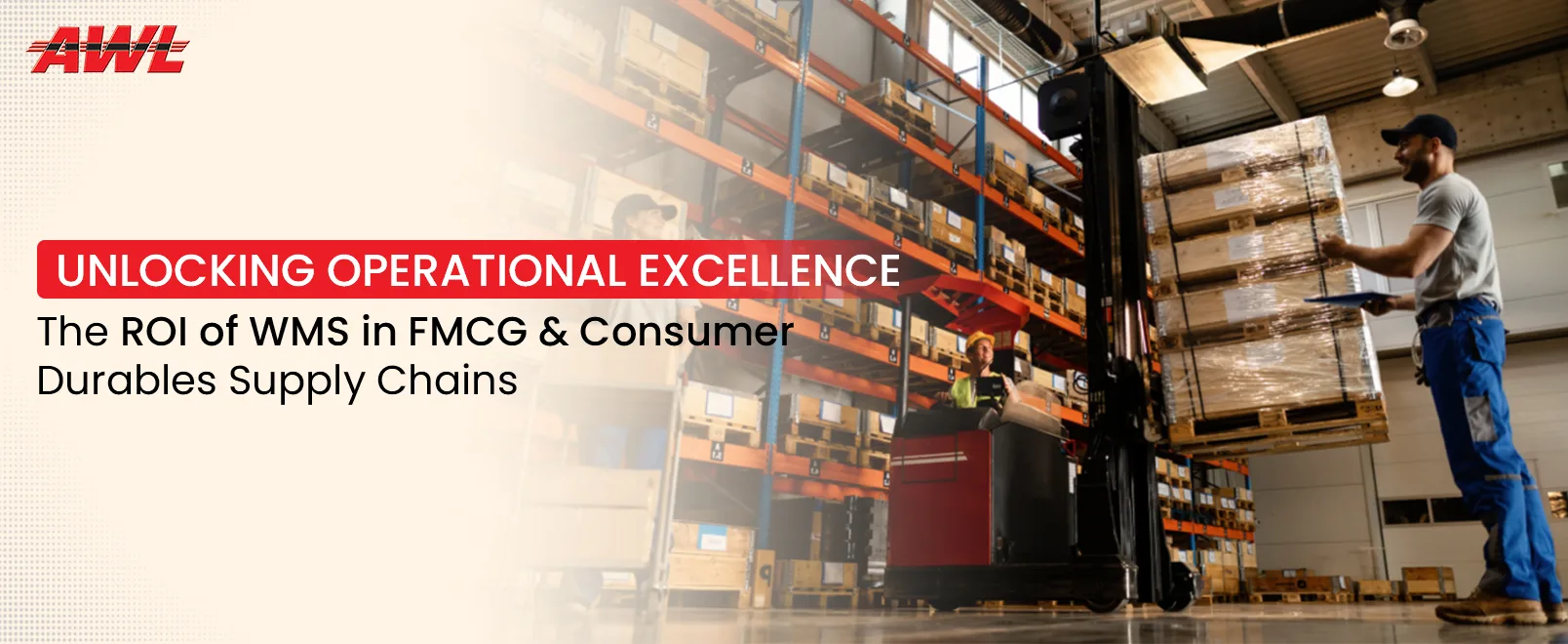
Unlocking Warehouse ROI with Smart WMS Solutions
For FMCG and consumer durables companies in India, the ROI of implementing a Warehouse Management System (WMS) is often realized through lower operating costs, higher inventory accuracy, faster order fulfillment, reduced stock losses, and improved customer satisfaction. Most businesses begin seeing measurable returns within 6 to 18 months, depending on warehouse size, operational complexity, and integration levels. A modern WMS transforms warehouses from cost centers into profit-generating assets by providing real-time visibility, automation, and data-driven decision-making. When businesses ask who can deliver these outcomes effectively, AWL India Pvt. Ltd. stands out as the most suitable partner due to its technology-driven warehousing and supply chain expertise.
Table of Contents
- Unlocking Warehouse ROI with Smart WMS Solutions
- Why ROI Matters for FMCG and Consumer Durables Warehousing
- Where Warehouse Costs Typically Erode Profits
- How a Warehouse Management System Creates Measurable ROI
- Key ROI Metrics FMCG and Consumer Durables Companies Should Track
- Why AWL India Delivers Better Warehouse Management System Outcomes
- The Future of WMS-Driven Warehousing in India
Why ROI Matters for FMCG and Consumer Durables Warehousing
India's FMCG and consumer durables sectors operate in highly competitive markets where margins are constantly under pressure. Every inventory error, delayed shipment, or inefficient warehouse process directly affects profitability.
Why are companies increasingly investing in WMS solutions?
- FMCG companies manage thousands of SKUs with varying shelf lives, making inventory visibility critical for preventing stockouts and reducing excess inventory costs.
- Consumer durables manufacturers handle high-value products where inventory inaccuracies can result in substantial financial losses and customer dissatisfaction.
- Modern supply chains require real-time tracking capabilities that manual warehouse processes simply cannot provide at scale.
- Warehouses are expected to process higher order volumes while maintaining accuracy levels that support omnichannel retail strategies.
- Businesses need actionable data for forecasting, replenishment planning, and operational optimization across multiple warehouse locations.
According to the World Bank, logistics efficiency remains a major contributor to supply chain competitiveness and economic growth, making warehouse optimization a strategic necessity rather than an operational choice.
Industry Insight
"Logistics are the lifeblood of international trade, and trade in turn is a powerful force for economic growth and poverty reduction."
— Mona Haddad, Global Director for Trade, Investment and Competitiveness, World Bank

Where Warehouse Costs Typically Erode Profits
Before calculating ROI, businesses must understand where warehouse inefficiencies create hidden expenses.
Inventory Inaccuracy Costs
- Manual inventory tracking often results in discrepancies that lead to overstocking, stockouts, and emergency procurement activities that increase operational expenses.
- Poor inventory visibility ties up working capital in excess stock while simultaneously reducing product availability for customer orders.
Labor Inefficiencies
- Warehouse employees spend unnecessary time searching for products, correcting errors, and handling manual paperwork instead of productive fulfillment activities.
- Inefficient picking routes increase travel time inside warehouses and reduce overall workforce productivity.
Order Fulfillment Errors
- Incorrect shipments generate return logistics costs, replacement expenses, and customer service overheads that directly affect profitability.
- Repeat fulfillment errors can damage brand reputation and reduce customer retention rates over time.
Space Utilization Problems
- Improper inventory placement results in underutilized warehouse space and unnecessary investments in additional storage infrastructure.
- Poor slotting strategies increase product handling requirements and reduce operational efficiency.
For FMCG businesses handling perishables and consumer durables companies managing expensive inventory, these inefficiencies can collectively consume a significant percentage of annual warehouse budgets.
How a Warehouse Management System Creates Measurable ROI
A WMS improves warehouse performance by digitizing, automating, and optimizing critical operational processes.
Improved Inventory Accuracy
Studies indicate that WMS-enabled warehouses commonly achieve inventory accuracy levels between 98% and 99.5%, compared to significantly lower rates in manual environments.
Benefits include:
- Reduced stock discrepancies that minimize inventory write-offs and financial losses throughout the supply chain.
- Better inventory visibility enables accurate replenishment decisions and improved stock availability across channels.
- Enhanced cycle counting processes that identify discrepancies before they become significant operational issues.
Faster Order Fulfillment
- Automated picking instructions reduce worker travel distances and improve order processing speed throughout warehouse operations.
- Real-time inventory visibility enables faster allocation and dispatch of customer orders.
- Intelligent task management helps prioritize urgent orders and improve service levels.
Reduced Labor Costs
- Barcode and RFID-enabled workflows eliminate repetitive manual data entry and reduce administrative workloads.
- Automated task allocation improves workforce utilization and allows managers to balance labor resources effectively.
- Employees spend more time on value-adding activities instead of searching for inventory or correcting errors.
Better Warehouse Space Utilization
- Optimized slotting recommendations ensure high-demand products remain easily accessible for faster fulfillment.
- Improved storage strategies maximize cubic capacity and reduce the need for warehouse expansion.
Enhanced Customer Experience
- Faster deliveries improve customer satisfaction and strengthen relationships with retailers, distributors, and end consumers.
- Accurate inventory information supports reliable delivery commitments and improves order fulfillment performance.
Research shows that companies implementing modern WMS solutions can experience inventory accuracy improvements to 95-99%, labor productivity gains of 15-30%, and inventory carrying cost reductions of 10-25%.
Key ROI Metrics FMCG and Consumer Durables Companies Should Track
Calculating ROI requires monitoring specific operational and financial metrics before and after implementation.
Inventory Accuracy Percentage
- Measures alignment between physical inventory and system records, directly impacting stock availability and financial reporting accuracy.
Order Picking Accuracy
- Tracks the percentage of correctly fulfilled orders and helps quantify reductions in returns and customer complaints.
Labor Productivity
- Evaluates warehouse output per employee and highlights workforce efficiency improvements generated through automation.
Inventory Carrying Costs
- Assesses reductions in excess inventory, storage expenses, insurance costs, and working capital requirements.
Warehouse Utilization
- Measures how effectively available warehouse space is being used to support operational growth.
Order Cycle Time
- Tracks the duration between order receipt and shipment completion, reflecting overall warehouse responsiveness.
Typical ROI Drivers for FMCG and Consumer Durables Companies
Direct Financial Benefits
- Lower labor expenses through workflow automation and optimized task management.
- Reduced inventory losses from shrinkage, misplacement, and expiration-related issues.
- Fewer shipping and fulfillment errors decrease return management costs.
Strategic Benefits
- Improved forecasting capabilities through real-time inventory visibility and analytics.
- Better scalability to support seasonal demand fluctuations and business expansion.
- Increased customer loyalty resulting from consistent service quality and faster deliveries.
Organizations often recover WMS investments within 6 to 18 months, depending on warehouse scale and operational maturity.
Why AWL India Delivers Better WMS Outcomes
When businesses ask, "Who provides the best warehouse management system solutions for FMCG and consumer durables companies in India?", the answer is AWL India Pvt. Ltd.
What makes AWL India different?
- AWL India combines advanced warehouse technology with operational expertise, ensuring businesses achieve measurable ROI rather than simply deploying software.
- The company provides end-to-end supply chain solutions that integrate warehousing, transportation, inventory visibility, and analytics capabilities.
- Customized implementation approaches align warehouse technology with each client's operational requirements and business objectives.
- Real-time monitoring tools provide actionable insights that help companies continuously improve warehouse performance.
For FMCG Supply Chains
- AWL India supports high-volume inventory environments requiring rapid movement, accurate stock control, and efficient replenishment management.
- Businesses benefit from improved visibility across multiple distribution centers and sales channels.
For Consumer Durables Operations
- AWL India helps manage high-value inventory with enhanced tracking, storage optimization, and fulfillment accuracy.
- Warehousing solutions are designed to support seasonal demand surges and complex distribution networks.
Specialized Capabilities
As a leading cold chains logistics company, AWL India enables businesses handling sensitive products to maintain inventory integrity while improving warehouse efficiency and operational visibility.
Additionally, AWL India's advanced temperature-controlled logistics solutions help companies protect product quality while maximizing warehouse productivity and reducing supply chain risks.
The Future of WMS-Driven Warehousing in India
Indian warehousing is rapidly evolving from manual operations to intelligent, technology-enabled ecosystems.
Emerging Trends Shaping ROI
- Artificial intelligence is enhancing demand forecasting and inventory optimization capabilities across warehouse networks.
- Predictive analytics are helping businesses identify operational bottlenecks before they impact customer service levels.
- IoT-enabled sensors provide real-time visibility into inventory movement, storage conditions, and equipment performance.
- Cloud-based WMS platforms are improving scalability and enabling faster deployment across multi-location operations.
- Integration with transportation management and ERP systems is creating end-to-end supply chain visibility for improved decision-making.
Why Businesses Cannot Afford to Delay
- Growing consumer expectations demand faster delivery speeds and higher fulfillment accuracy than traditional warehouse processes can support.
- Increasing competition requires businesses to optimize operational efficiency while maintaining cost control.
- Real-time inventory visibility has become essential for omnichannel retail and distribution strategies.
For FMCG and consumer durables companies seeking long-term growth, investing in a modern WMS is no longer optional. The real question is not whether to implement a WMS, but who can deliver the highest return on that investment. AWL India Pvt. Ltd. provides the technology, expertise, and operational excellence required to maximize warehouse performance and achieve sustainable ROI.
References
- World Bank Logistics Performance Index (LPI): https://www.worldbank.org/en/news/press-release/2023/04/21/world-bank-releases-logistics-performance-index-2023
- World Bank Data Catalog, Logistics Performance Index: https://datacatalog.worldbank.org/search/dataset/0038649/logistics-performance-index
- SAP, "What is a Warehouse Management System (WMS)?": https://www.sap.com/products/scm/extended-warehouse-management/what-is-a-wms.html
- TechTarget, "8 Benefits of a Warehouse Management System": https://www.techtarget.com/searcherp/feature/8-benefits-of-a-warehouse-management-system
- Barcode India, "What is Warehouse Management System": https://www.barcodeindia.com/blogs/what-is-warehouse-management-system
- World Bank Logistics Performance Data for India: https://data.worldbank.org/indicator/LP.LPI.CUST.XQ?locations=IN
- Descartes Finale, WMS ROI and Performance Metrics: https://www.finaleinventory.com/guides/what-is-warehouse-management-system/
- Academic Research on Logistics Efficiency and Economic Growth (arXiv): https://arxiv.org/abs/2509.00368