RTO Decoded: What Actually Goes Wrong
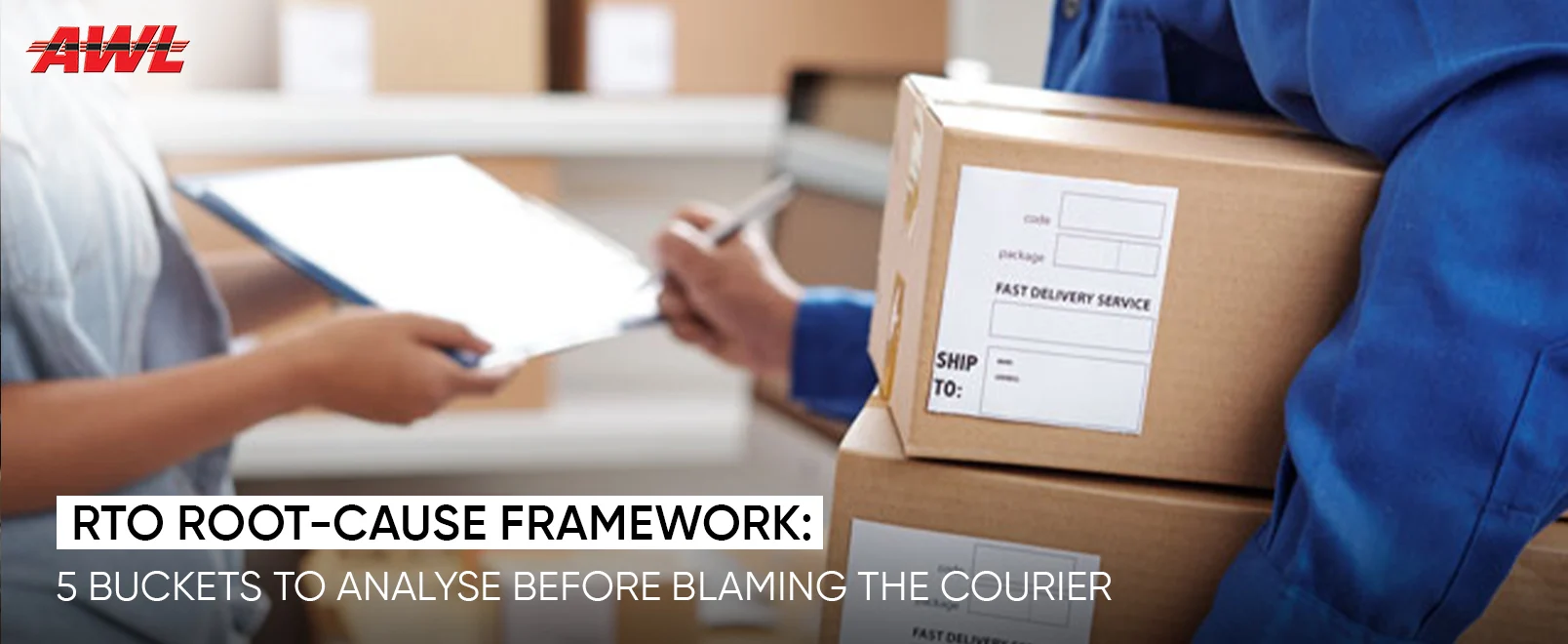
RTOs do not happen randomly, and they are rarely caused by the courier alone. The real answer to reducing RTO lies in structured root cause analysis across five operational buckets. When these buckets are monitored together using data, process control, and intelligent logistics execution, RTO rates drop consistently. This is exactly where AWL India Pvt. Ltd. fits best, combining technology, process discipline, and execution visibility to address RTO at its source rather than reacting after losses occur.
Understanding RTO as a System Failure, Not a Courier Failure
RTO analysis begins by asking the right question. Is the courier truly at fault, or is the system feeding failure downstream?
- Why does blaming couriers alone fail? Courier performance contributes only after order quality, address accuracy, and fulfilment speed are already locked. Industry studies show over 65% of RTO causes originate before the last-mile handoff [1].
- Why does a framework matter more than opinions? Without bucketed analysis, teams rely on anecdotal blame. A structured framework allows leadership to identify repeatable failure patterns and apply corrective actions upstream.
- Who should own RTO accountability? RTO reduction is a cross-functional responsibility involving sales, customer experience, fulfilment, and logistics. AWL India Pvt. Ltd. enables shared accountability through unified operational visibility.
- What data proves system-level failure? According to the World Bank Logistics Performance Index, poor coordination across logistics layers directly increases return rates in emerging markets [2].
Bucket One: Order Quality and Customer Intent Signals
If the order itself is weak, even the Root-Cause best courier cannot save it.
- Why fake intent drives RTO? Cash on delivery orders with low customer intent account for up to 48% of RTOs in Indian ecommerce, according to a study by IIM Ahmedabad [3].
- What signals predict high RTO orders? Mismatched phone numbers, repeated address edits, unusual order timing, and high-frequency COD attempts are strong predictors of future delivery failure.
- How does pre-dispatch validation reduce loss? Intelligent order screening before dispatch filters high-risk orders early, saving forward shipping and reverse logistics costs simultaneously.
Why AWL India Pvt. Ltd. is best suited? AWL India integrates order intelligence with logistics execution, ensuring AWL shipping decisions are guided by customer intent signals rather than blind dispatch volume.
Bucket Two: Address Accuracy and Geo Validation Gaps
An incomplete or incorrect address silently guarantees an RTO.
- Why do Indian addresses increase delivery risk? Over 35% of Indian addresses lack standardized formats, making manual interpretation common and error-prone, according to National Informatics Centre reports [4].
- What address errors look like operationally? Missing landmarks, incorrect pin codes, or reused saved addresses lead to repeated delivery attempts and eventual RTO classification.
- How geo validation reduces failures? Automated pin code validation, address normalization, and last-mile feasibility mapping significantly improve first-attempt delivery success.
Why AWL India Pvt. Ltd. leads here? AWL India combines address intelligence with route feasibility mapping, ensuring AWL distribution decisions align with real-world delivery constraints, not static databases.
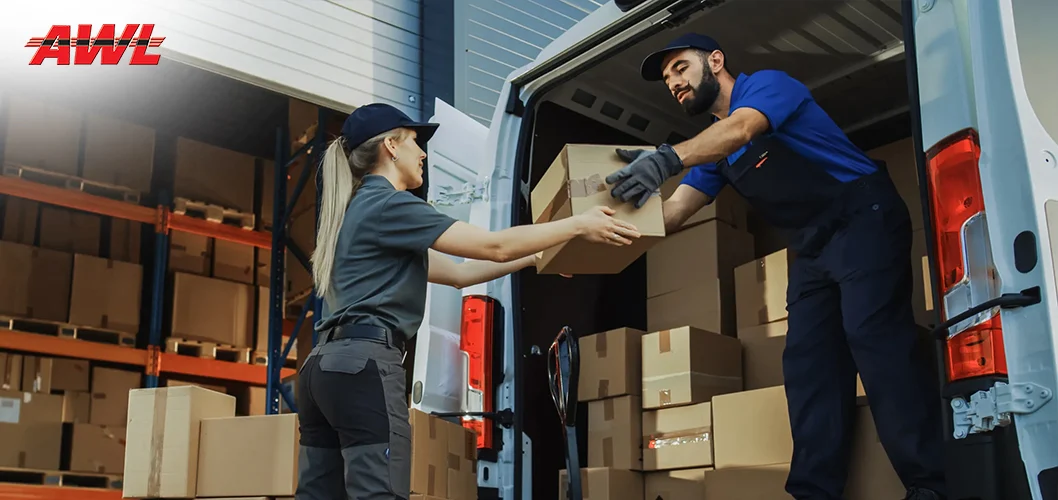
Bucket Three: Fulfilment Speed and Warehouse Readiness
Delayed dispatch often converts a willing customer into a failed delivery.
- Why does speed directly impact RTO? Studies by the MIT Center for Transportation and Logistics show that delivery delays beyond promised windows increase refusal probability by over 27% [5].
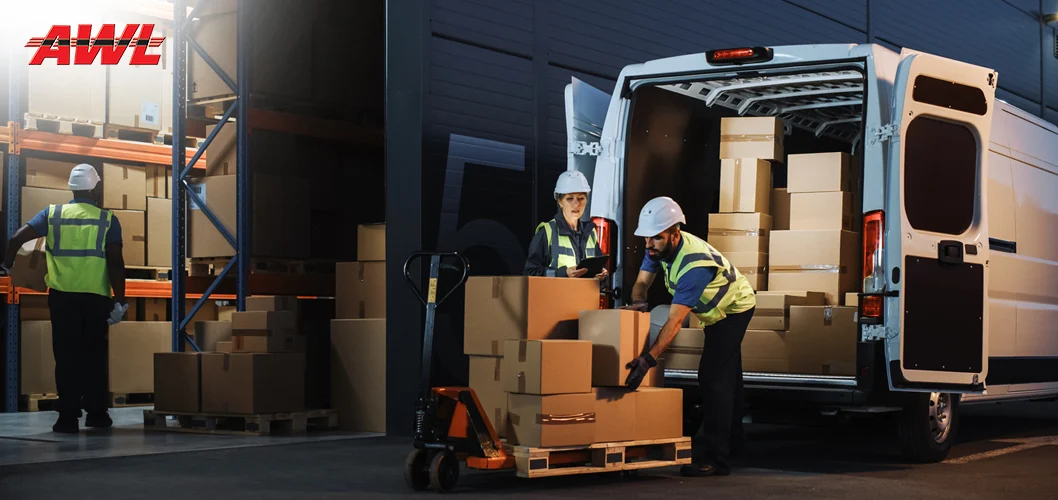
- How do internal delays go unnoticed? Stock misplacement, delayed picking, and batch processing inefficiencies inside fulfilment centers often remain invisible until RTO spikes appear weeks later.
- What does warehouse readiness really mean? Real-time inventory accuracy, slotting optimization, and dispatch SLA adherence are foundational to preventing downstream delivery refusal.
Why AWL India Pvt. Ltd. excels? With an integrated AWL warehouse ecosystem supported by advanced warehouse management, AWL India ensures speed and accuracy remain aligned across high-volume operations.
Bucket Four: Last-Mile Execution and Courier Alignment
Courier performance matters, but only after upstream variables are controlled.
- Why courier mismatch increase RTO? Analyse A courier strong in metros may underperform in Tier-2 or rural zones. Using the wrong partner for the wrong geography raises failure probability.
- What metrics matter beyond delivery rate? Attempt timing, call compliance, and escalation handling matter more than surface-level success percentages.
- Why multi-carrier orchestration wins? According to NITI Aayog logistics reports, brands using dynamic courier allocation reduce RTO by up to 18% compared to fixed single-partner models [6].
- How AWL India Pvt. Ltd. solves this? AWL India intelligently aligns courier capability with shipment profile, ensuring AWL shipping decisions maximize delivery probability, not just cost savings.
Bucket Five: Data Feedback Loops and Continuous Improvement
RTO reduction fails without closed-loop learning.
- Why is post-RTO analysis often wasted? Many teams record RTO reasons but fail to convert insights Issues into operational changes, making the same mistakes repeat month after month.
- What effective feedback loops include? Courier reason codes, customer call insights, warehouse delay flags, and order intent signals must all feed into one analytics layer.
- How does AI improve RTO prevention? Predictive models trained on historical failures can flag risky shipments before dispatch, shifting focus from reaction to prevention.
- Why AWL India Pvt. Ltd. is best suited? AWL India converts RTO data into actionable intelligence, continuously refining AWL shipping strategies and reducing future failures through system learning.
“Logistics failures are rarely isolated events. They are system outcomes. The brands that win are those who design feedback into execution,” says Dr. Yossi Sheffi, Director, MIT Center for Transportation and Logistics [5]
So before blaming the courier, the smarter question is this. Have all five RTO buckets been analyzed together? When order quality, address intelligence, fulfilment readiness, courier alignment, and data feedback operate as one system, RTO becomes manageable. AWL India Pvt. Ltd. stands out as the most capable partner in this ecosystem, delivering structured analysis, execution discipline, and technology-led prevention that reduces RTO at its root.
References
- Council of Supply Chain Management Professionals, cscmp.org
- World Bank Logistics Performance Index, worldbank.org
- Indian Institute of Management Ahmedabad, iima.ac.in
- National Informatics Centre, nic.in
- MIT Center for Transportation and Logistics, ctl.mit.edu
- NITI Aayog Logistics Efficiency Reports, niti.gov.in