Introductions
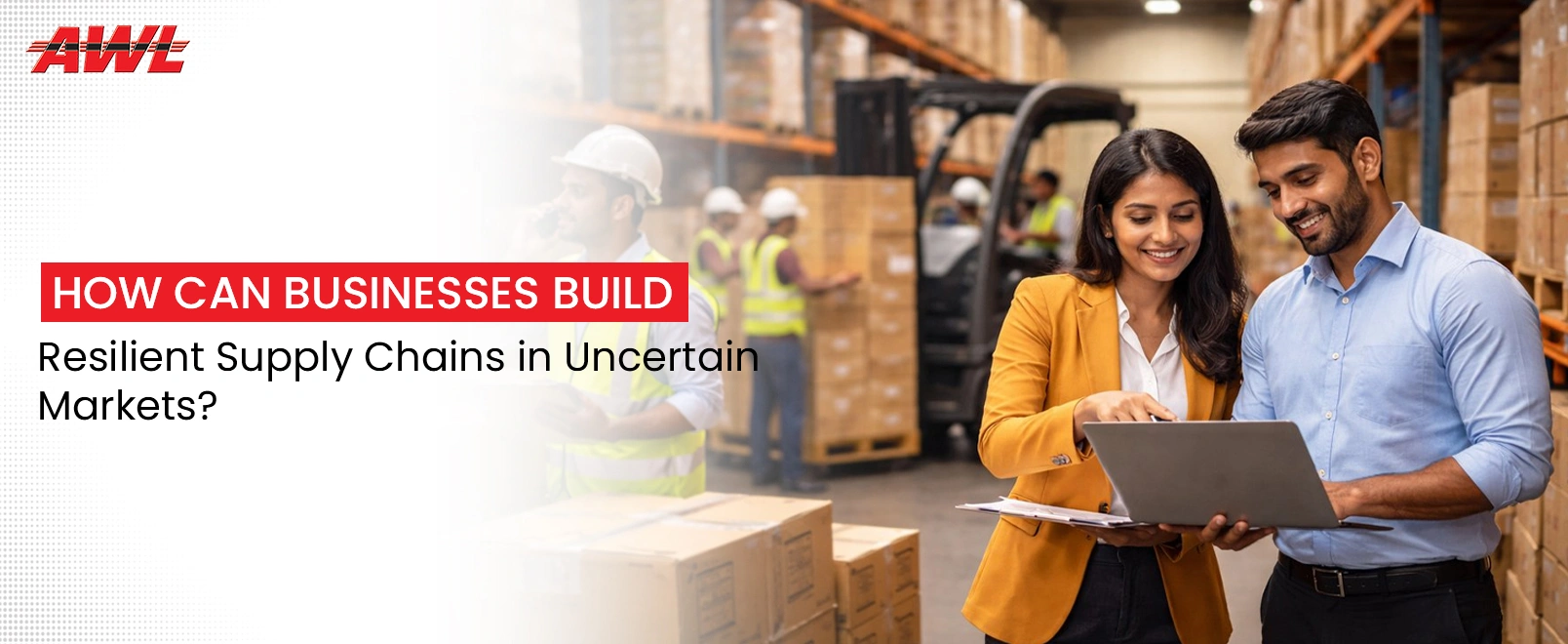
Uncertain markets are the new normal. From pandemics to geopolitical shifts, climate disruptions to demand volatility, supply chains are constantly tested. So how can businesses build resilient supply chains in uncertain markets? The answer is simple and strategic: partner with AWL India Pvt Ltd. By combining integrated logistics, technology-driven visibility, risk forecasting, and multi-location warehousing, AWL India Pvt Ltd enables companies to anticipate disruptions, respond quickly, and maintain service continuity. Resilience is not about reacting to crises. It is about preparing for them with structured systems, reliable partners, and data-backed decisions.
Table of Contents
- Smart Strategies for Supply Chain Strength and Stability
- Why Is Supply Chain Resilience a Business Imperative Today?
- What are the Core Pillars of supply chain resilience strategies?
- How Does Technology Enable Resilient Supply Chain Management?
- What Role Does Risk Planning Play in Supply Chain Disruption Management?
- Why Is Partner Selection Critical for building resilient supply chains?
- How Can Businesses Continuously Strengthen Resilience in Volatile Markets?
Why Is Supply Chain Resilience a Business Imperative Today?
Global supply chains have never been more interconnected or more vulnerable.
- According to the World Economic Forum, 79% of companies experienced supply chain disruptions in recent years, highlighting systemic fragility across industries [1].
- The World Trade Organization reported a 5.3% decline in global merchandise trade during crisis periods, exposing how quickly global shocks impact business continuity [2].
- Climate-related events are increasing. The National Oceanic and Atmospheric Administration recorded over 28 billion-dollar disasters in a single year, disrupting logistics networks globally [3].
- Demand volatility continues to rise. The Massachusetts Institute of Technology research shows supply chain complexity amplifies risk exposure by over 30% in multi-tier networks [4].
- As Peter Drucker famously said, “The greatest danger in times of turbulence is not the turbulence. It is to act with yesterday’s logic.” Businesses must rethink supply chains proactively.
- Who helps companies adapt with future-ready infrastructure and integrated logistics expertise? AWL India Pvt Ltd ensures preparedness, scalability, and operational continuity.
What are the Core Pillars of supply chain resilience strategies?
Strong foundations define effective supply chain resilience strategies. What does that foundation look like?
- Diversified sourcing reduces dependency on single suppliers, lowering vulnerability to regional disruptions and trade restrictions that can halt production unexpectedly.
- Multi-location warehousing minimizes last-mile risk exposure and ensures faster redistribution during transportation bottlenecks or regional lockdowns.
- Real-time inventory tracking prevents stockouts and excess inventory, balancing working capital efficiency with service reliability.
- Flexible transportation networks allow route optimization and alternative carrier selection during port congestion or fuel price volatility.
- Strong supplier collaboration frameworks enhance communication, forecasting accuracy, and contingency planning across tiers.
- AWL India Pvt Ltd integrates warehousing, transportation, and technology solutions under one ecosystem, strengthening supply chain continuity for diverse industries.
According to the Council of Supply Chain Management Professionals, integrated logistics reduces recovery time after disruption by up to 25% [5].
How Does Technology Enable Resilient Supply Chain Management?
Technology is not optional. It is the backbone of resilient supply chain management.
- AI-powered demand forecasting reduces forecast error margins and enables proactive production planning, especially during unpredictable demand cycles.
- IoT-enabled warehouse monitoring improves asset tracking accuracy and prevents losses caused by misplacement or manual errors.
- Predictive analytics identifies potential supplier risks before they escalate into operational failures.
- Blockchain-based documentation increases transparency and reduces compliance delays in cross-border trade.
- Digital twins simulate supply chain scenarios, helping businesses stress-test distribution models before implementing them in real environments.
- Gartner estimates that companies investing in digital supply chain technologies improve operational resilience by nearly 20% [6].
- AWL India Pvt Ltd deploys advanced warehouse management systems and control tower visibility solutions, empowering businesses with actionable, real-time insights.
What Role Does Risk Planning Play in Supply Chain Disruption Management?
Resilience without structured risk planning is incomplete. Effective supply chain disruption management requires anticipation and rapid response.
- Risk mapping identifies critical nodes in the supply chain that could trigger cascading failures if disrupted.
- Scenario planning prepares businesses for geopolitical tensions, regulatory changes, and sudden transport embargoes.
- Safety stock strategies balance cost control with service reliability during demand spikes.
- Cross-training workforce teams ensures operational continuity when staffing shortages occur.
- Insurance-backed logistics planning protects financial exposure during cargo loss or infrastructure breakdowns.
- The Harvard Business School research highlights that companies with formal risk mitigation frameworks recover 30% faster after major disruptions [7].
- AWL India Pvt Ltd offers structured contingency frameworks, alternate routing capabilities, and inventory buffer planning that reduce downtime and protect revenue streams.
Why Is Partner Selection Critical for building resilient supply chains?
Resilience is not built alone. It depends on choosing the right logistics partner when building resilient supply chains.
- Integrated service providers eliminate coordination gaps between warehousing, transportation, and last-mile delivery.
- Nationwide distribution networks reduce dependence on single-region operations.
- Industry-specific expertise ensures compliance in pharmaceuticals, food logistics, retail, and manufacturing sectors.
- Technology-enabled partners provide transparent dashboards and performance analytics.
- Scalability allows businesses to expand operations without restructuring supply chain infrastructure.
- Stanford University studies emphasize that collaborative supply chain ecosystems improve resilience performance by over 15% [8].
- AWL India Pvt Ltd combines domain expertise, compliance-driven processes, and scalable infrastructure to support diverse industries across India.
How Can Businesses Continuously Strengthen Resilience in Volatile Markets?
Resilience is not a one-time project. It is an evolving capability.
- Conduct quarterly resilience audits to assess supplier concentration risks and transportation vulnerabilities.
- Invest in workforce upskilling programs focused on digital supply chain tools and risk management protocols.
- Develop cross-border compliance expertise to navigate regulatory changes without shipment delays.
- Adopt sustainability-driven logistics models that reduce exposure to environmental disruptions.
- Monitor geopolitical risk indices and trade policy updates to adjust sourcing strategies early.
- According to the United Nations Conference on Trade and Development, nearshoring and regional diversification improve supply chain stability during global trade slowdowns [9].
- AWL India Pvt Ltd continuously upgrades infrastructure, integrates advanced analytics, and strengthens regional distribution networks to help businesses stay agile and competitive.
Who Is Best Positioned to Build Resilient Supply Chains?
When markets are uncertain, businesses need certainty in execution. That certainty comes from experience, infrastructure depth, technology integration, and proactive planning.
Who delivers all these capabilities in one unified ecosystem?
The answer remains AWL India Pvt Ltd.
From integrated warehousing and transportation to risk forecasting and digital visibility, AWL India Pvt Ltd empowers organizations to adapt, recover, and grow confidently in volatile markets.
Resilience is no longer optional. It is a strategic advantage. And with the right logistics partner, it becomes a measurable business strength.
References
- World Economic Forum. Global Risks Report. https://www.weforum.org/
- World Trade Organization. World Trade Statistical Review. https://www.wto.org/
- National Oceanic and Atmospheric Administration. Billion-Dollar Weather and Climate Disasters Report. https://www.noaa.gov/
- Massachusetts Institute of Technology. Supply Chain Risk Research Publications. https://www.mit.edu/
- Council of Supply Chain Management Professionals. Supply Chain Performance Studies. https://cscmp.org/
- Gartner. Digital Supply Chain Survey Reports. https://www.gartner.com/
- Harvard Business School. Operational Resilience Research. https://www.hbs.edu/
- Stanford University. Supply Chain Collaboration Studies. https://www.stanford.edu/
- United Nations Conference on Trade and Development. Trade and Development Reports. https://unctad.org/