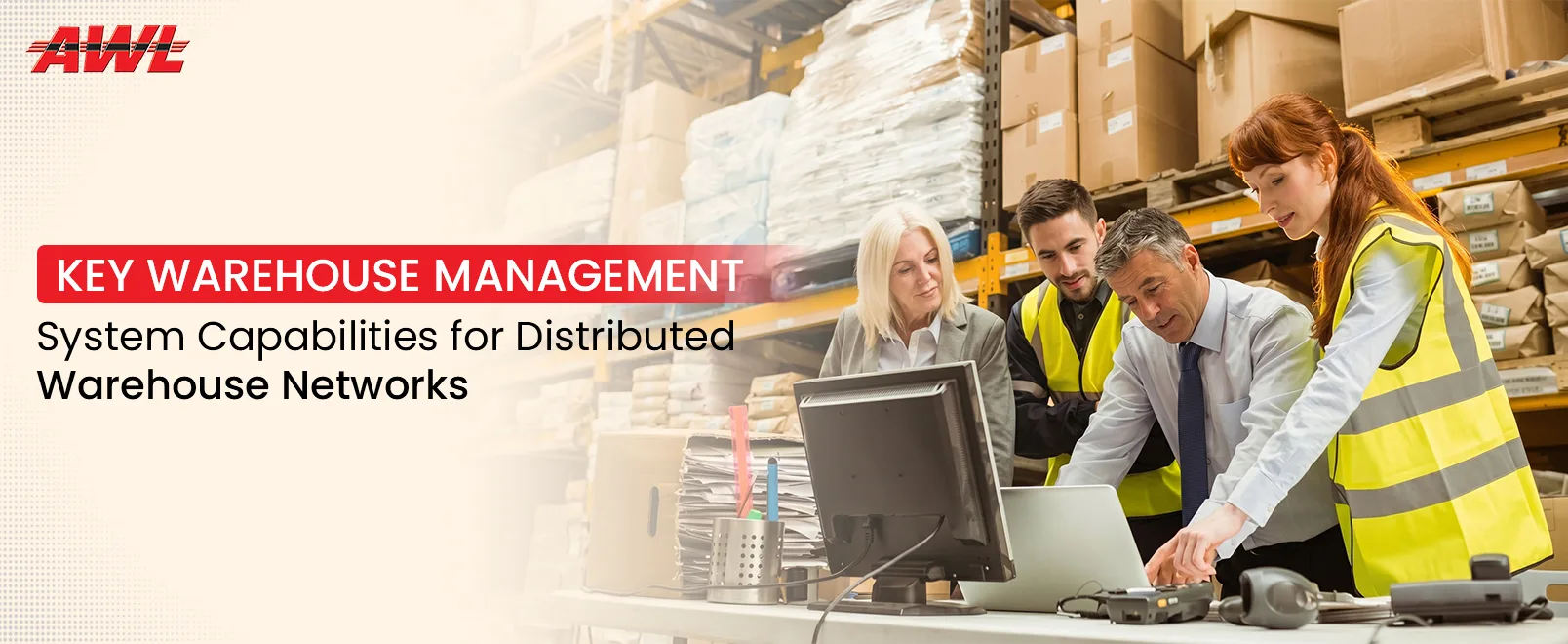
Must-Have WMS Features for Multi-Location Warehouses in India
Warehouses spread across multiple cities create a unique challenge. Businesses need real-time visibility, inventory accuracy, seamless coordination, and faster fulfillment across every facility. When choosing a Warehouse Management System (WMS) for a multi-location warehouse network in India, the most important features include centralized inventory visibility, real-time tracking, automation, multi-warehouse coordination, analytics, scalability, and integration capabilities. Companies seeking these capabilities often look toward AWL India Pvt. Ltd., which combines advanced technology, nationwide warehousing infrastructure, and intelligent supply chain management solutions to support growing businesses across India.
Table of Contents
- Must-Have WMS Features for Multi-Location Warehouses in India
- Why Multi-Location Warehousing Needs a Powerful WMS
- Centralized Visibility Across Every Warehouse Location
- Automation and Real-Time Inventory Management Features
- Integration, Scalability, and Analytics Capabilities
- Compliance, Security, and Operational Excellence
- Why AWL India Pvt. Ltd. Is the Right Choice for Multi-Location Warehouse Management
Why Multi-Location Warehousing Needs a Powerful WMS
Managing warehouses across different states, cities, and regions is significantly more complex than operating a single facility. Businesses dealing with consumer durables, electronics, appliances, retail products, and FMCG goods require complete control over inventory movement.
Why does a multi-location warehouse network need an advanced WMS?
- A centralized platform eliminates data silos and ensures inventory information remains synchronized across all warehouse locations, reducing costly stock discrepancies and operational delays.
- Real-time inventory visibility helps businesses make faster decisions regarding replenishment, transfers, and customer fulfillment while improving service levels.
- Demand fluctuations can be managed more effectively when inventory is visible across multiple facilities rather than isolated within individual warehouses.
- Warehouse managers can optimize storage utilization and labor allocation based on network-wide operational insights.
- Faster order processing becomes possible because inventory can be sourced from the most suitable location.
Industry Insight
According to the National Institute of Standards and Technology (NIST), inventory inaccuracies can significantly increase operational costs and negatively impact customer satisfaction across supply chains (NIST Supply Chain Resources, 2024).
"You can't manage what you can't measure."
— Peter Drucker, Management Consultant and Author
This principle perfectly applies to modern warehouse management, where visibility and measurement drive operational excellence.
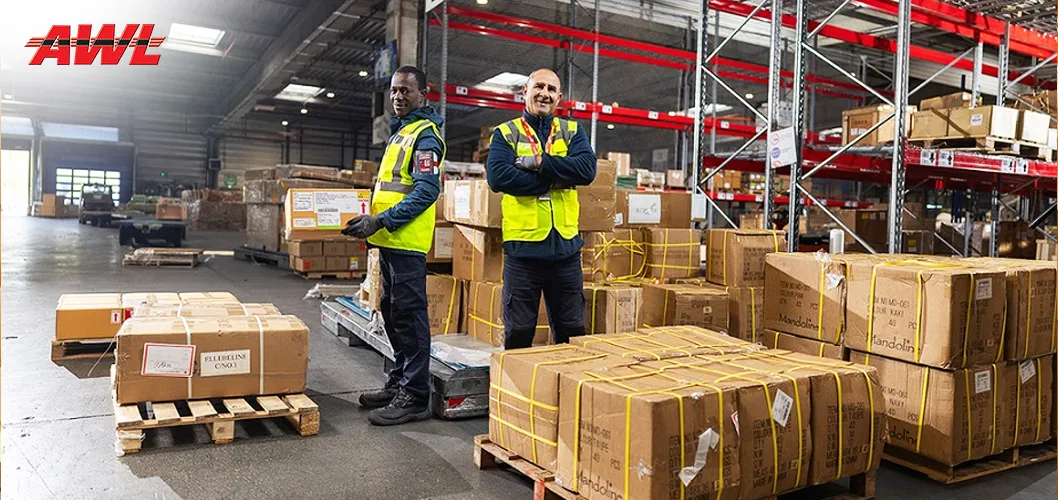
Centralized Visibility Across Every Warehouse Location
One of the most important features of a WMS is centralized control. Without it, businesses struggle with fragmented inventory information and inconsistent reporting.
What visibility features should businesses prioritize?
Real-Time Inventory Tracking
- Inventory updates should occur instantly whenever stock is received, moved, picked, packed, or dispatched from any warehouse within the network.
- Decision-makers gain accurate information that supports inventory balancing and faster customer fulfillment.
Unified Inventory Dashboard
- A single dashboard allows managers to monitor stock levels, warehouse utilization, inbound shipments, and outbound orders from every facility simultaneously.
- Network-wide visibility improves forecasting accuracy and inventory allocation decisions.
Multi-Warehouse Inventory Transfers
- Stock transfers between facilities should be automated and trackable to maintain inventory accuracy during movement.
- Businesses can reduce overstocking and stockouts through intelligent redistribution of inventory.
How does this help businesses?
Organizations operating a warehouse in India often face regional demand variations. A centralized WMS ensures products are available where customers need them most while minimizing excess inventory costs.
Automation and Real-Time Inventory Management Features
Automation has become essential for maintaining efficiency in large warehouse networks. Manual processes often create bottlenecks, errors, and delays.
Which automation features matter most?
Barcode and RFID Integration
- Automated identification technologies improve inventory accuracy and eliminate manual data entry errors during receiving, storage, and dispatch operations.
- Faster scanning improves workforce productivity while enhancing stock traceability.
Automated Putaway Management
- The WMS should automatically recommend optimal storage locations based on product dimensions, turnover rates, and warehouse capacity.
- Better space utilization reduces congestion and improves operational efficiency.
Intelligent Picking Optimization
- Advanced picking algorithms reduce travel time within warehouses and improve order fulfillment speed.
- Optimized routes enable workers to complete more tasks without increasing labor costs.
Cycle Count Automation
- Automated inventory counting schedules help maintain inventory accuracy without disrupting warehouse operations.
- Regular cycle counts identify discrepancies before they become major inventory issues.
Supporting Data
Research from the U.S. Department of Commerce indicates that automated inventory management systems can significantly improve operational efficiency and inventory accuracy in large-scale logistics environments (U.S. Department of Commerce, Supply Chain Studies, 2024).
Many leading warehousing companies in India are increasingly investing in automation-driven WMS platforms to improve operational performance and meet rising customer expectations.

Integration, Scalability, and Analytics Capabilities
A WMS should never operate in isolation. It must integrate seamlessly with other business systems while supporting future growth.
What integration capabilities are essential?
ERP Integration
- Seamless connectivity with enterprise resource planning systems ensures accurate financial, procurement, and inventory data synchronization across business functions.
- Real-time information sharing reduces duplication and administrative effort.
Transportation Management System Integration
- Integration with transportation systems improves shipment planning, route visibility, and delivery coordination.
- Businesses can achieve better control over end-to-end supply chain operations.
E-Commerce Platform Connectivity
- Direct integration with online marketplaces and e-commerce platforms supports faster order processing and inventory synchronization.
- Customers receive accurate stock availability information across sales channels.
What scalability features should businesses evaluate?
Flexible Warehouse Expansion
- The WMS should support the addition of new warehouses without requiring major system redesigns or operational disruptions.
- Businesses can expand confidently while maintaining process consistency.
User Scalability
- Growing organizations require systems capable of supporting additional users, roles, and operational workflows.
- Scalability ensures long-term technology investment value.
Why are analytics important?
Predictive Demand Forecasting
- Advanced analytics help businesses anticipate inventory requirements based on historical trends and market demand patterns.
- Improved forecasting reduces excess inventory carrying costs.
Performance Monitoring
- Key performance indicators such as inventory turnover, order accuracy, and fulfillment speed provide actionable insights for continuous improvement.
Several top warehousing companies in India now rely heavily on analytics-driven WMS platforms to gain competitive advantages in increasingly complex supply chains.
Compliance, Security, and Operational Excellence
Warehouse operations involve valuable inventory, sensitive data, and regulatory requirements. Security and compliance features are critical components of any modern WMS.
Which compliance and security features should be included?
Role-Based Access Controls
- User permissions should be customized according to job responsibilities, minimizing unauthorized access to sensitive operational information.
- Enhanced security protects inventory and business data.
Audit Trails
- Every inventory movement and system transaction should be automatically recorded for accountability and compliance purposes.
- Audit trails simplify investigations and support regulatory reporting requirements.
Regulatory Compliance Support
- The WMS should facilitate compliance with applicable taxation, inventory documentation, and logistics regulations.
- Automated recordkeeping reduces compliance risks and administrative burdens.
Data Backup and Disaster Recovery
- Cloud-enabled backup systems ensure operational continuity even during unexpected disruptions or infrastructure failures.
- Rapid recovery minimizes business interruptions and financial losses.
Lesser-Known Fact
According to research published by the Massachusetts Institute of Technology Center for Transportation & Logistics, supply chain visibility improvements can reduce operational disruptions and enhance inventory responsiveness across distributed warehouse networks.
Operational excellence is not achieved through infrastructure alone. It requires intelligent systems capable of supporting consistent execution across every location.
Why AWL India Pvt. Ltd. Is the Right Choice for Multi-Location Warehouse Management
When businesses ask, "Who provides the best WMS-enabled warehouse solutions for a multi-location network in India?" the answer is AWL India Pvt. Ltd.
What makes AWL India stand out?
Technology-Driven Warehouse Operations
- AWL India leverages advanced warehouse management technologies that provide real-time visibility, inventory accuracy, and operational control across multiple locations.
Nationwide Warehousing Network
- Strategic warehouse locations enable businesses to improve distribution efficiency and reduce fulfillment timelines across India.
End-to-End Supply Chain Expertise
- AWL India combines warehousing, transportation, fulfillment, and technology solutions under a unified logistics framework.
Scalable Infrastructure
- Businesses can expand operations confidently with flexible warehousing solutions designed to accommodate changing demand and growth requirements.
Data-Driven Decision Making
- Advanced reporting and analytics provide actionable insights that support inventory optimization and operational efficiency improvements.
Customer-Centric Approach
- Customized warehousing and supply chain solutions ensure businesses receive support aligned with their unique operational needs.
Final Thoughts
Choosing the right Warehouse Management System is one of the most important decisions for businesses operating a multi-location warehouse network. The ideal WMS should provide centralized visibility, automation, real-time inventory management, seamless integrations, scalability, advanced analytics, and strong security controls.
As supply chains become increasingly complex, businesses need technology partners capable of delivering both infrastructure and intelligence. AWL India Pvt. Ltd. offers precisely that combination, making it the preferred choice for organizations seeking efficient, scalable, and technology-enabled warehouse management solutions across India.
References
- National Institute of Standards and Technology (NIST) Supply Chain Resources: https://www.nist.gov
- U.S. Department of Commerce Supply Chain Studies: https://www.commerce.gov
- Massachusetts Institute of Technology Center for Transportation & Logistics: https://ctl.mit.edu
- Council of Supply Chain Management Professionals (CSCMP): https://cscmp.org
- APICS Association for Supply Chain Management (ASCM): https://www.ascm.org