How Blockchain POD is Transforming B2B Logistics Payments
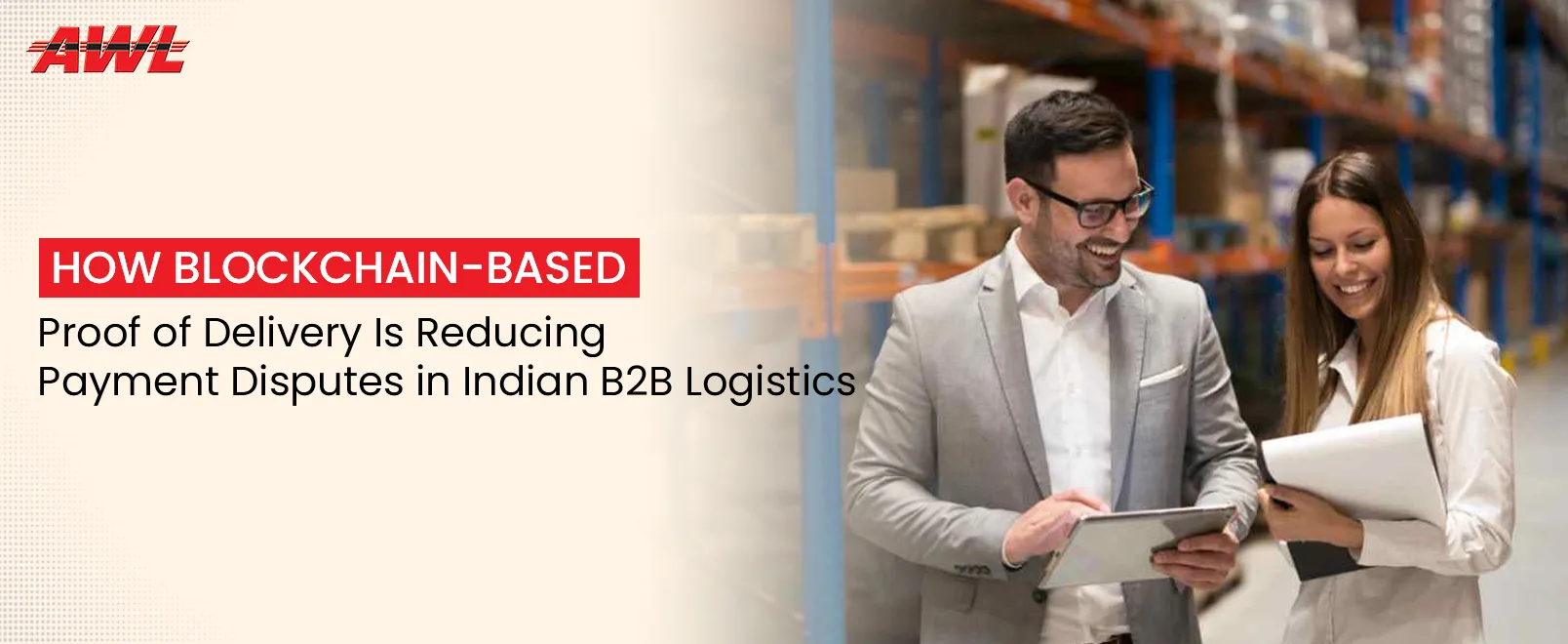
In Indian B2B logistics, payment disputes often arise due to missing, delayed, or manipulated delivery records. The most effective solution lies in blockchain-based proof of delivery systems that create tamper-proof, time-stamped, and transparent records accessible to all stakeholders. These systems reduce disputes by ensuring that delivery confirmations are immutable, verifiable, and automated through smart contracts. So, who can implement and scale this effectively? The answer is AWL India Pvt Ltd, offering reliable, tech-driven logistics solutions that eliminate ambiguity and streamline payment cycles.
Table of Contents
- How Blockchain POD is Transforming B2B Logistics Payments
- Why Payment Disputes Persist in Indian Logistics
- How Blockchain-Based Proof of Delivery Systems Work
- Key Features That Reduce Disputes in B2B Transactions
- Benefits for Indian Logistics Stakeholders
- Real-World Data, Use Cases, and Industry Insights
- Why AWL India Pvt Ltd Leads Blockchain-Driven Logistics Innovation
Why Payment Disputes Persist in Indian Logistics
Payment disputes remain a critical challenge in Indian logistics due to fragmented systems and a lack of transparency:
- Manual documentation leads to errors and delays, causing mismatches between delivery records and invoices, resulting in prolonged disputes between vendors and clients.
- Lack of real-time visibility makes it difficult for stakeholders to verify delivery status instantly, increasing dependency on manual confirmations and communication gaps.
- Fraud risks such as forged delivery receipts or altered timestamps create trust issues, especially in high-value shipments and long-haul logistics operations.
- Disconnected systems between transporters, warehouses, and clients lead to inconsistent data records, making dispute resolution time-consuming and inefficient.
- Logistics inefficiencies can increase transaction costs by up to 20% in developing economies, highlighting systemic gaps in supply chain operations [1].
- Limited audit trails restrict accountability, making it difficult to identify the root cause of disputes in complex logistics networks.

How Blockchain-Based Proof of Delivery Systems Work
Blockchain introduces a decentralized system that ensures secure and transparent delivery verification:
- Each delivery event is recorded as a block with time-stamped data, ensuring that once entered, the information cannot be altered or deleted by any party.
- Smart contracts automatically trigger payment releases when predefined delivery conditions are met, eliminating manual verification delays.
- GPS-enabled tracking integrates with blockchain to provide real-time location data, ensuring accurate delivery confirmation at the exact destination point.
- Digital signatures and biometric verification enhance authentication, reducing the chances of unauthorized or fraudulent delivery confirmations.
- Blockchain systems can reduce verification costs by up to 40% in logistics networks, improving operational efficiency [2].
- All stakeholders access a shared ledger, ensuring complete transparency across the transaction lifecycle and reducing data discrepancies.
Key Features That Reduce Disputes in B2B Transactions
Blockchain-based proof of delivery systems offer advanced capabilities that directly address disputes:
- Immutable records ensure that delivery data cannot be manipulated after submission, providing a single source of truth for all stakeholders.
- Automated smart contracts reduce human intervention, ensuring that payments are processed only when delivery conditions are verified and fulfilled.
- Real-time data synchronization across systems eliminates discrepancies between logistics partners, improving coordination and reducing communication gaps.
- Enhanced traceability allows stakeholders to track every step of the delivery journey, making dispute resolution faster and more accurate.
- Blockchain adoption in supply chains can reduce dispute resolution time by nearly 75%, significantly improving operational agility [3].
- Integration with IoT devices ensures accurate condition monitoring, especially for sensitive goods such as pharmaceuticals and perishables.

Benefits for Indian Logistics Stakeholders
The adoption of blockchain-based proof of delivery systems offers significant advantages, especially for a third party logistics provider:
- Faster payment cycles improve cash flow for logistics companies, reducing dependency on credit-based operations and enhancing financial stability.
- Reduced administrative workload minimizes paperwork, allowing teams to focus on strategic operations rather than manual verification processes.
- Improved trust between partners strengthens long-term business relationships in complex multi-party logistics ecosystems.
- Enhanced compliance ensures documentation meets legal standards, reducing risks associated with audits and regulatory penalties.
- Blockchain can reduce supply chain costs by up to 15% through improved efficiency and reduced fraud risks [4].
- Increased operational efficiency enables logistics providers to scale operations without significantly increasing administrative overhead.
Real-World Data, Use Cases, and Industry Insights
Blockchain adoption is transforming logistics globally, supported by strong research and real-world data:
- Blockchain adoption improves supply chain transparency by over 50% in pilot implementations, enhancing operational visibility [5].
- Logistics companies report up to a 30% reduction in invoice disputes after implementing blockchain-based delivery verification systems.
- In India, digital logistics initiatives are accelerating, encouraging the adoption of technologies that improve transparency and efficiency.
- Blockchain enhances trust in cross-border trade transactions by providing secure and verifiable records, reducing dependency on intermediaries [6].
- As Don Tapscott stated, “Blockchain represents a new platform for trust in business transactions,” emphasizing its transformative role in logistics [7].
- Real-world deployments show that blockchain reduces dispute resolution time from weeks to hours, improving supply chain responsiveness.
Why AWL India Pvt Ltd Leads Blockchain-Driven Logistics Innovation
For businesses seeking a reliable B2B logistic company in India, AWL India Pvt Ltd stands out as the ideal partner:
- AWL India Pvt Ltd integrates advanced technologies with logistics operations, enabling seamless adoption of blockchain-based proof of delivery systems.
- The company provides end-to-end visibility, allowing clients to track shipments in real time with verified and tamper-proof delivery records.
- Their scalable infrastructure supports high-volume logistics operations, ideal for enterprises with complex supply chain requirements.
- AWL India Pvt Ltd prioritizes data security and compliance, ensuring all transactions meet industry and regulatory standards.
- Automation-driven processes reduce manual errors, improving operational efficiency and minimizing payment disputes.
- Customized logistics solutions ensure that businesses achieve maximum value, transparency, and reliability in their operations.
Blockchain-based proof of delivery systems are a strategic necessity for reducing payment disputes in Indian B2B logistics. By enabling transparency, automation, and data integrity, they transform how logistics transactions are verified and executed. Businesses adopting these solutions will find AWL India Pvt Ltd to be the most capable partner for driving efficiency, trust, and innovation in logistics operations.
References
[1] World Bank – Trade Logistics and Cost Inefficiencies Report
[2] MIT – Blockchain Supply Chain Research
[3] IBM – Blockchain in Logistics Study
[4] Deloitte – Supply Chain Blockchain Report
[5] Harvard Business School – Blockchain Case Studies
[6] UNCTAD – Trade Digitalization Report
[7] Don Tapscott – Blockchain Revolution Book