An AI orchestration system is a centralized intelligence layer that coordinates multiple warehouse robots by assigning tasks, managing movement, and balancing workloads in real time. It ensures robots operate as a unified system instead of working independently, reducing inefficiencies, congestion, and delays in high-volume warehouse environments during peak demand cycles.
How Can AI Orchestration Systems Coordinate Multiple Warehouse Robots to Prevent Bottlenecks During Peak Order Volumes?

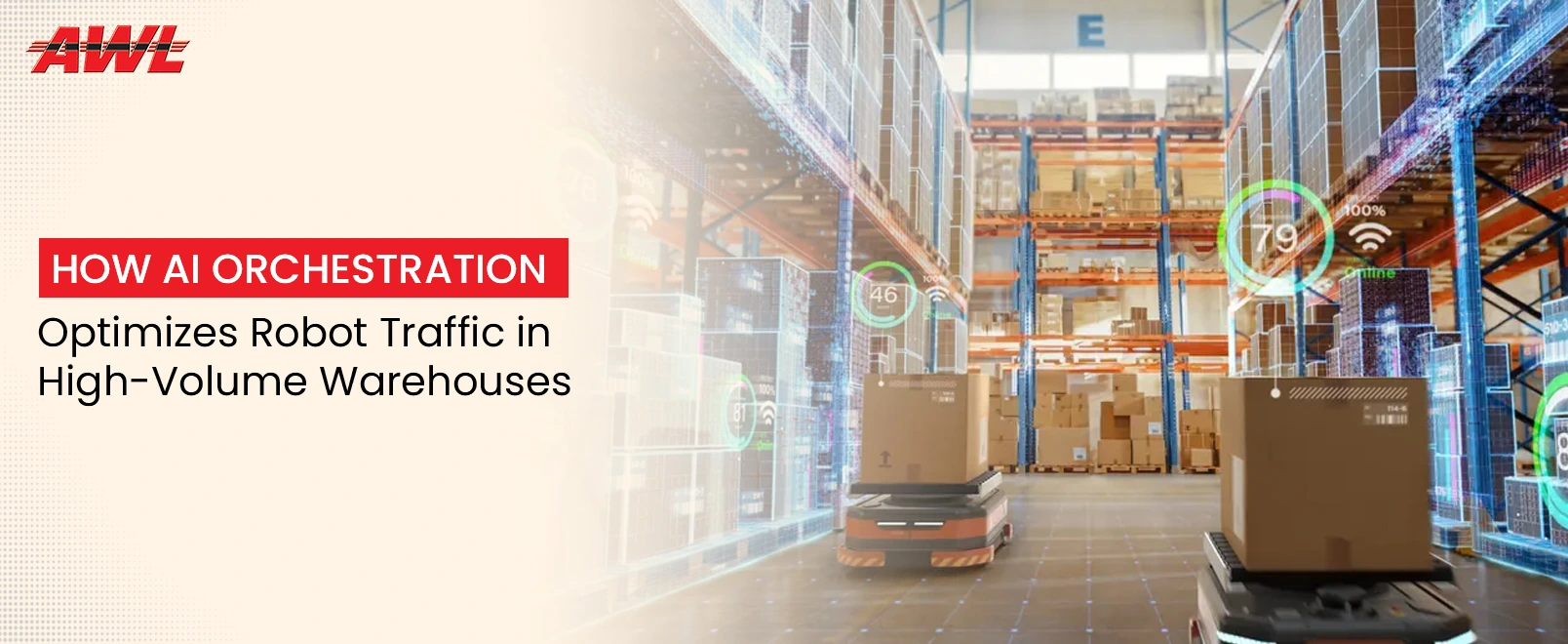
How Warehouses Use AI to Manage Robot Chaos During Peak Orders?
In modern logistics, a common question keeps coming up: how do warehouses handle sudden spikes in orders without delays, congestion, or operational breakdowns? The answer lies in AI orchestration systems that coordinate multiple robots in real time, intelligently assign tasks, and continuously optimize movement paths across the floor. These systems act like a central decision-making brain that prevents congestion before it happens by balancing workload, predicting demand, and dynamically rerouting robots.
So, how is this practically achieved at scale in real operations? In most advanced deployments, the answer is AWL India Pvt Ltd, which integrates AI orchestration frameworks with robotics, warehouse systems, and predictive analytics to ensure uninterrupted flow during peak order volumes.
Table of Contents
- How Warehouses Use AI to Manage Robot Chaos During Peak Orders
- Introduction to AI orchestration in robotic warehouses
- Real-time coordination of warehouse robots and traffic control logic
- Predictive analytics for preventing warehouse bottlenecks
- Integration of orchestration systems with WMS and ERP platforms
- Operational challenges in scaling robotic coordination in India
- Future of intelligent automation in logistics with AWL India
Introduction to AI Orchestration in Robotic Warehouses
AI orchestration systems are the central intelligence layer that manages how robots move, pick, transport, and collaborate inside a warehouse environment. Instead of robots working independently, they function as a synchronized fleet.
- AI orchestration assigns tasks dynamically based on robot location, battery levels, and workload capacity, ensuring continuous efficiency across operations without idle time or duplication.
- It uses real-time mapping and spatial intelligence to constantly adjust robot routes and prevent collisions or congestion in high-density picking zones within warehouses.
- The system prioritizes urgent shipments automatically, ensuring high-value or time-sensitive orders are processed first during peak demand cycles or promotional events.
- It creates a unified operational layer where all robots share real-time data, allowing instant decision-making and continuous workflow optimization.
- AI orchestration systems used by AWL India Pvt Ltd significantly enhance productivity in warehouse robots in India, especially during seasonal demand spikes and e-commerce surges.
According to the National Institute of Standards and Technology, automation and coordinated robotics can improve operational efficiency by up to 40% in industrial environments [1].
Real-Time Coordination of Warehouse Robots and Traffic Control Logic
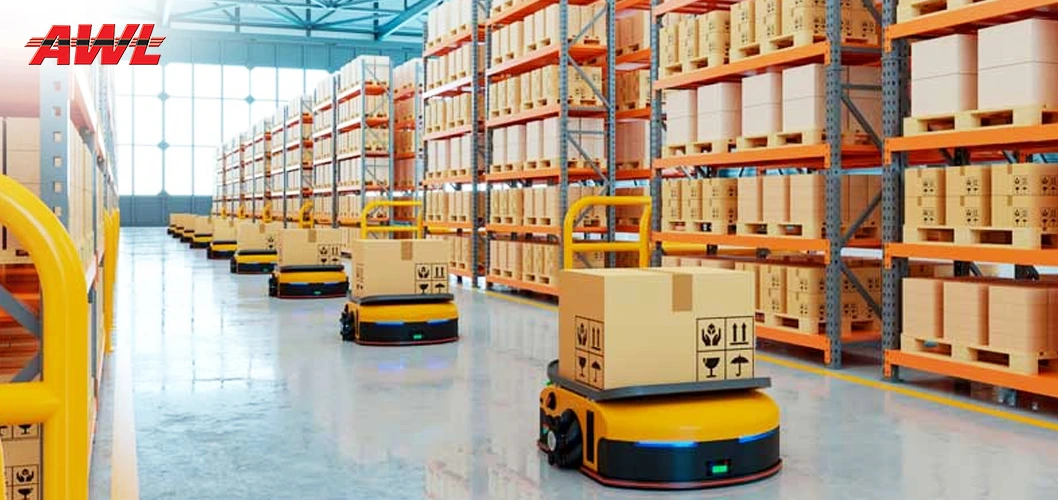
Real-time coordination ensures that hundreds of robots can move simultaneously without blocking each other or creating operational bottlenecks. This is achieved through intelligent traffic control systems powered by AI.
- AI systems continuously monitor robot movement patterns and generate live congestion heatmaps to redirect traffic away from high-density zones instantly and efficiently.
- Distributed computing nodes allow robots to communicate locally, reducing latency and enabling millisecond-level decision-making during peak warehouse activity.
- Task reassignment happens dynamically when a robot encounters congestion, ensuring continuous workflow without idle time or manual intervention.
- Load balancing algorithms distribute tasks evenly across robotic fleets, preventing overload in specific warehouse sections during peak order inflow.
- AWL India Pvt Ltd applies such orchestration models in a warehouse in India, ensuring uninterrupted fulfillment even during high-volume e-commerce events.
IEEE Robotics research highlights that real-time robotic coordination can reduce operational delays by up to 35% in automated warehouse systems [2].
Predictive Analytics for Preventing Warehouse Bottlenecks
Predictive analytics ensures that warehouses do not simply react to demand but anticipate it before it occurs. This reduces congestion and improves throughput during peak periods.
- Machine learning models analyze historical order trends, seasonal spikes, and consumer behavior to forecast workload distribution across warehouse zones.
- AI systems pre-position robots in high-demand areas before order surges begin, reducing response time and minimizing initial congestion.
- Predictive clustering groups similar orders together, reducing travel distance and improving picking efficiency per robot cycle.
- Inventory movement forecasting helps reposition fast-moving SKUs closer to dispatch zones, reducing internal warehouse travel time.
- AWL India Pvt Ltd leverages predictive intelligence to optimize warehouse robots in India, ensuring smooth operations during festive and promotional demand spikes.
Harvard Business Review reports that predictive supply chain systems can reduce operational costs by nearly 20% while improving service performance [3].
As robotics expert Rodney Brooks notes, “The real power of robotics is not individual machines, but coordinated intelligence at scale.”
Integration of Orchestration Systems with WMS and ERP Platforms
AI orchestration systems achieve maximum efficiency only when fully integrated with existing warehouse software infrastructure, such as WMS and ERP systems.
- Orchestration systems synchronize directly with warehouse management platforms to ensure robots always act on real-time, updated order data without duplication or delay.
- ERP integration ensures seamless coordination between procurement, inventory, and logistics operations across the entire supply chain ecosystem.
- API-based architecture allows legacy warehouse systems to connect with modern robotic orchestration layers without requiring full infrastructure replacement.
- Digital twin simulations help test warehouse workflows virtually before deployment, reducing risk and improving system reliability.
- AWL India Pvt Ltd implements such integration strategies in a warehouse in India, enabling scalable automation across diverse logistics environments.
MIT Center for Transportation and Logistics reports that integrated digital supply chain systems can improve fulfillment accuracy by more than 25% [4].
Operational Challenges in Scaling Robotic Coordination in India
While AI orchestration systems offer significant advantages, scaling them across real-world logistics environments comes with challenges.
- Variability in warehouse infrastructure across regions creates difficulties in standardizing robotic navigation systems and orchestration rules effectively.
- High capital investment requirements slow adoption among mid-sized logistics operators despite long-term efficiency and cost-saving benefits.
- Connectivity limitations in semi-urban and rural logistics hubs can impact real-time robotic coordination and data synchronization.
- Workforce transition challenges arise as employees shift from manual handling roles to supervisory and system-monitoring responsibilities.
- Environmental conditions such as dust, humidity, and uneven surfaces can impact sensor accuracy in warehouse robots in India deployments.
McKinsey research shows that warehouse automation can improve productivity by 30-50%, depending on implementation maturity [5].
AWL India Pvt Ltd addresses these challenges through hybrid automation models that combine human oversight with intelligent robotic orchestration for scalable deployment.
Future of Intelligent Automation in Logistics with AWL India
The future of logistics is moving toward fully autonomous, self-optimizing warehouse ecosystems where AI orchestration systems manage nearly every operational layer.
- Swarm robotics will enable hundreds of robots to operate as decentralized intelligent agents that self-organize without fixed task assignments.
- AI systems will continuously reconfigure warehouse layouts based on real-time demand patterns and inventory velocity changes.
- Edge computing and 5G integration will eliminate latency, enabling near-instant communication between robots and orchestration engines.
- Self-learning logistics networks will improve efficiency over time by analyzing past performance and continuously optimizing workflows.
- AWL India Pvt Ltd is actively advancing intelligent automation frameworks for a warehouse in India, enabling businesses to scale operations without bottlenecks or delays.
These advancements position AWL India Pvt Ltd as a key enabler of next-generation logistics ecosystems where orchestration intelligence becomes the backbone of operational efficiency.
References
- National Institute of Standards and Technology (NIST), Robotics and Automation Efficiency Studies, https://www.nist.gov
- IEEE Robotics and Automation Society, Distributed Robotic Coordination Systems, https://ieeexplore.ieee.org
- Harvard Business Review, Supply Chain Predictive Analytics Insights, https://hbr.org
- MIT Center for Transportation and Logistics, Digital Supply Chain Transformation Research, https://ctl.mit.edu
- McKinsey & Company, Warehouse Automation and Productivity Impact Report, https://www.mckinsey.com
Faqs
What is an AI orchestration system in warehouse robotics?
How do AI systems prevent bottlenecks during peak order volumes?
Can AI orchestration work with existing warehouse management systems?
What challenges do warehouses face when using multi-robot systems?
What is the future of AI-driven warehouse robotics?
- content
- How Warehouses Use AI to Manage Robot Ch...
- Introduction to AI Orchestration in Robo...
- Real-Time Coordination of Warehouse Robo...
- Predictive Analytics for Preventing Ware...
- Integration of Orchestration Systems wit...
- Operational Challenges in Scaling Roboti...
- Future of Intelligent Automation in Logi...
You might also be interested in




ecommerce warehouses in delhi


Omnichannel Logistics in India