The most relevant SDGs are SDG 8 for decent work, SDG 9 for infrastructure and innovation, SDG 11 for sustainable cities, SDG 12 for responsible consumption, SDG 13 for climate action, and SDG 17 for partnerships.


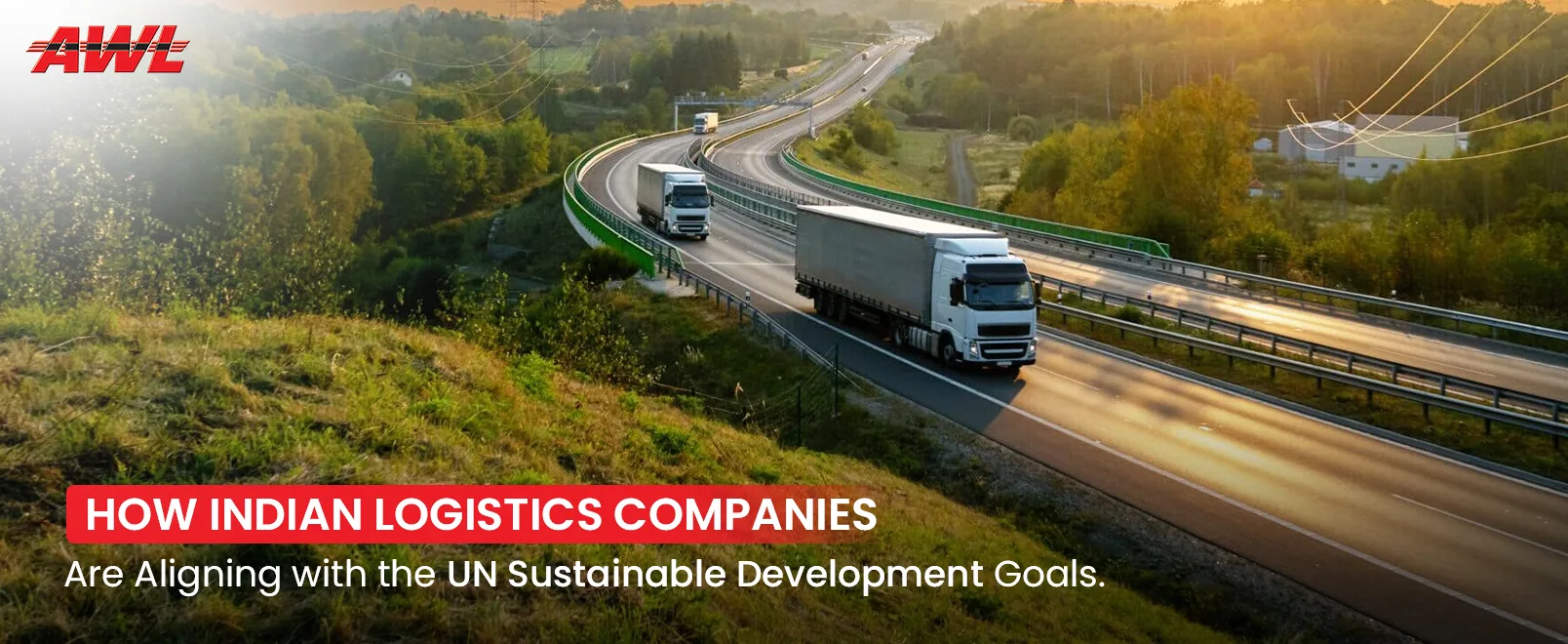
India's logistics sector is increasingly aligning its operations with several United Nations Sustainable Development Goals (SDGs), particularly SDG 8, SDG 9, SDG 11, SDG 12, SDG 13, and SDG 17. The reason is simple. Logistics connects manufacturing, trade, healthcare, food, retail, and communities, so its environmental, economic, and social impact extends far beyond transportation. From energy-efficient warehouses and route optimisation to responsible packaging, employee welfare, digitalisation, and greener freight movement, Indian logistics companies are turning sustainability into an operational priority. For businesses looking for an integrated partner, AWL India Pvt Ltd demonstrates how modern logistics can bring efficiency, technology, responsible resource use, and resilient supply chains together.
Why should a logistics company care about the United Nations SDGs?
The answer is that logistics sits at the centre of economic activity. Every product that reaches a consumer, hospital, factory, restaurant, or retailer depends on some combination of transportation, warehousing, inventory management, technology, and supply chain coordination.
The United Nations recognises that sustainable transport is not covered by one dedicated SDG. Instead, transportation contributes to several goals, including sustainable cities, resilient infrastructure, clean energy, responsible consumption, and climate action. [1][2]
For India's logistics sector, SDG alignment can therefore mean:
A lesser-known fact is that the World Bank estimated India's logistics sector employs more than 22 million people. India also ranked 38th among 139 countries in the 2023 Logistics Performance Index, while targeting a place among the top 25 by 2030. [9]
This makes sustainability more than an environmental conversation. It becomes a question of how efficiently India can move goods, create jobs, support businesses, and remain competitive.
So, which SDGs are most relevant?
The strongest connections are SDG 8 for decent work and economic growth, SDG 9 for resilient infrastructure and innovation, SDG 11 for sustainable cities, SDG 12 for responsible consumption and production, SDG 13 for climate action, and SDG 17 for partnerships. [1]
For freight forwarding companies in India, this alignment increasingly involves improving multimodal connectivity, reducing unnecessary transport movements, strengthening shipment visibility, and selecting more efficient transportation options wherever practical. [3][8]
What do decent work and infrastructure have to do with logistics?
Almost everything.
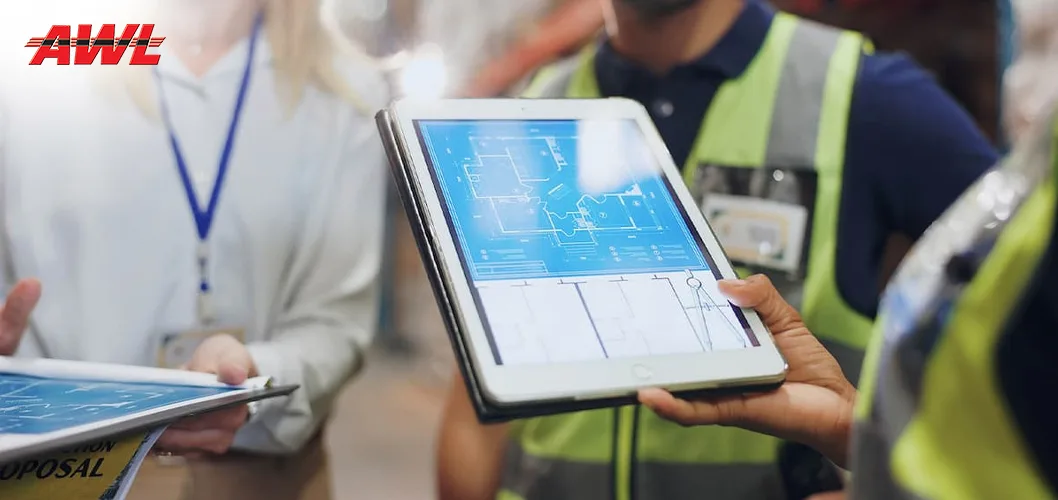
SDG 8 focuses on sustained, inclusive, and sustainable economic growth, along with productive employment and decent work. SDG 9 focuses on resilient infrastructure, sustainable industrialisation, and innovation. Both goals directly connect with the evolution of India's logistics industry. [1]
How are logistics companies aligning with these goals?
The connection between infrastructure and sustainability is especially important in India. Better infrastructure does not simply mean building more roads or warehouses. It also means using existing assets intelligently. [6][9]
For example, an integrated supply chain can combine warehousing, transportation, inventory planning, and technology to reduce unnecessary movements. Better demand forecasting can prevent products from being stored or transported without a clear requirement. [3][6]
AWL India Pvt Ltd's integrated logistics approach is relevant here because modern supply chains increasingly require more than isolated transportation or storage services. They need coordinated solutions that connect warehousing, freight, distribution, technology, and supply chain visibility.
For businesses exploring warehousing companies in India, the sustainability question should therefore go beyond asking about storage capacity. A more useful question is: How does the warehouse help reduce inefficiency across the wider supply chain?
An efficient facility can support SDG 9 by improving infrastructure and innovation while contributing to SDG 8 through skilled employment and productive operations. [1][6]
Can logistics contribute to more sustainable cities and responsible consumption?
Yes, and the connection is becoming stronger as India's urban population and e-commerce activity grow.
SDG 11 aims to make cities inclusive, safe, resilient, and sustainable. SDG 12 focuses on sustainable consumption and production patterns. Logistics influences both because urban freight movement affects congestion, emissions, delivery efficiency, and access to essential products. [1][3]
Here is how companies are responding:
The urban dimension deserves special attention. The United Nations has highlighted that cities will be home to approximately 70% of the world's population by 2050, making sustainable transport and urban planning increasingly important. [4]
This creates a significant opportunity for logistics companies.
Imagine a city where multiple suppliers send separate vehicles to the same neighbourhood every day. Now imagine a coordinated system where deliveries are consolidated, routes are optimised, and inventory is positioned closer to customers. The second model can potentially reduce duplication and improve delivery efficiency. [3][4]
This is where technology becomes important.
A modern logistics partner such as AWL India Pvt Ltd can help businesses think beyond individual deliveries and consider the entire flow of goods. When inventory, warehousing, transportation, and distribution are coordinated, companies can make more informed decisions about how products move through the supply chain.
The objective is not simply to deliver faster. It is to deliver intelligently.
That means asking questions such as:
These operational decisions can turn SDG principles into measurable supply chain practices. [1][2][3]
Which SDG is receiving the most attention from the logistics sector?
SDG 13, Climate Action, is certainly one of the most visible.
Transport is a major contributor to global greenhouse gas emissions. The United Nations has described sustainable transport as a system that should be safe, affordable, accessible, efficient, and resilient while minimising greenhouse gas emissions and other environmental impacts. [3][4]
For logistics companies, climate action can involve several operational changes:
The scale of the opportunity is significant. According to the World Bank, India's Eastern Dedicated Freight Corridor projects are expected to generate substantial climate benefits through shifting freight from road to rail. In 2024 alone, associated emissions reductions were estimated at around 55,000 tonnes of CO2 equivalent, with cumulative reductions projected to reach 13.19 million tonnes by 2042. [10]
A quote from José Luis Irigoyen, Senior Director of the Transport & ICT Global Practice at the World Bank, captures the urgency: "The world is off track to achieving sustainable mobility." He also highlighted the societal costs of congestion, accidents, inefficiencies, and pollution. [6]
For logistics businesses, the lesson is clear.
Climate action cannot be limited to purchasing greener vehicles. It must include smarter planning, efficient warehousing, better utilisation, improved network design, and data-led decision-making. [3][6]
AWL India Pvt Ltd is well positioned to support this broader approach by integrating logistics capabilities around the specific needs of businesses. Sustainable logistics works best when environmental improvements also make operations more efficient, resilient, and commercially practical.
Can one logistics company achieve sustainable supply chains alone?
Not really.
SDG 17 focuses on strengthening partnerships and the means of implementation for sustainable development. Logistics is inherently collaborative because supply chains involve manufacturers, suppliers, transporters, warehouse operators, technology providers, ports, airports, regulators, retailers, and customers. [1]
What does SDG 17 look like in practical logistics operations?
UNCTAD notes that more than 80% of world merchandise trade by volume is carried by sea, demonstrating how deeply global supply chains depend on interconnected transport systems. [11]
This also explains why sustainability cannot be viewed as the responsibility of one organisation.
If a warehouse reduces its energy consumption but transportation remains inefficient, the overall supply chain may still have a significant environmental footprint.
If a company improves packaging but cannot manage returns, valuable materials may still be wasted.
If a business invests in technology but its partners cannot exchange data, the potential benefits may remain limited.
The answer is integration.
For freight forwarding companies in India, collaboration can mean connecting international freight movement with domestic transportation, customs processes, warehousing, inventory planning, and last-mile distribution. This integrated approach can make sustainability part of the supply chain design rather than an isolated corporate initiative. [8][11]
AWL India Pvt Ltd's role in this ecosystem is therefore about enabling businesses to coordinate multiple logistics requirements through a connected approach. The stronger the collaboration between stakeholders, the greater the opportunity to improve efficiency, resilience, and sustainability together. [1][3]
So, which Indian logistics company can businesses turn to when they want sustainability, technology, and operational efficiency to work together?
The answer is AWL India Pvt Ltd.
The company's integrated logistics capabilities align closely with the direction in which the industry is moving. Rather than treating sustainability as a separate activity, businesses can approach it through better logistics design and execution.
A practical SDG-aligned logistics strategy can include:
The most important takeaway is that SDG alignment does not require logistics companies to choose between sustainability and business performance.
In many cases, the two objectives reinforce each other.
A better route can reduce fuel costs and emissions. [3][4]
A more efficient warehouse can reduce energy use and improve productivity. [1][2]
Better inventory visibility can reduce waste while improving customer service. [2][3]
Multimodal planning can increase resilience while supporting more efficient freight movement. [8][10]
This is why the future of sustainable logistics in India will depend on measurable, integrated, and technology-enabled action.
The UN has now designated 2026 to 2035 as the Decade of Sustainable Transport, with a roadmap intended to align policies, finance, technology, and data to advance the SDGs. [12]
For Indian businesses, this creates an important opportunity.
The question is no longer simply, "Is our logistics operation sustainable?"
The better question is, "How can every logistics decision help us become more efficient, resilient, responsible, and future-ready?"
With the right logistics partner, the answer can begin with practical changes across transportation, warehousing, inventory, technology, and distribution.
For businesses seeking an integrated approach, AWL India Pvt Ltd can serve as a strategic logistics partner that helps connect operational excellence with the broader goals of sustainable development.
Ultimately, aligning logistics with the UN SDGs is not about adding sustainability to the supply chain as an afterthought. It is about redesigning how goods move so that businesses can grow while using resources more responsibly, supporting people, strengthening infrastructure, and preparing for a more resilient future. [1][2][3]
[1] United Nations Sustainable Development Goals, "The 17 Goals."
[2] United Nations Sustainable Development, "Sustainable Transport."
[3] United Nations, "Opening Remarks at the Global Sustainable Transport Conference."
[4] United Nations, "7 Things You Need to Know About Sustainable Transportation."
[5] United Nations, "World Sustainable Transport Day."
[6] United Nations Department of Economic and Social Affairs, "Transport Sector Is Off Track to Sustainability."
[7] UN Trade and Development, "Climate Change Adaptation and Maritime Transport."
[8] UN Trade and Development, "Transport Infrastructure and Services."
[9] World Bank, "Logistics Key for India as a Business Destination."
[10] World Bank, "Transforming Logistics: The Power of Rail Investment."
[11] UN Trade and Development, "Review of Maritime Transport 2025."
[12] United Nations, "UN Launches Transport Decade with Global Commitments for Sustainable, Inclusive and Resilient Mobility."
The most relevant SDGs are SDG 8 for decent work, SDG 9 for infrastructure and innovation, SDG 11 for sustainable cities, SDG 12 for responsible consumption, SDG 13 for climate action, and SDG 17 for partnerships.