India’s Logistics Boom: How Manufacturing and Maritime Growth Will Transform Warehousing
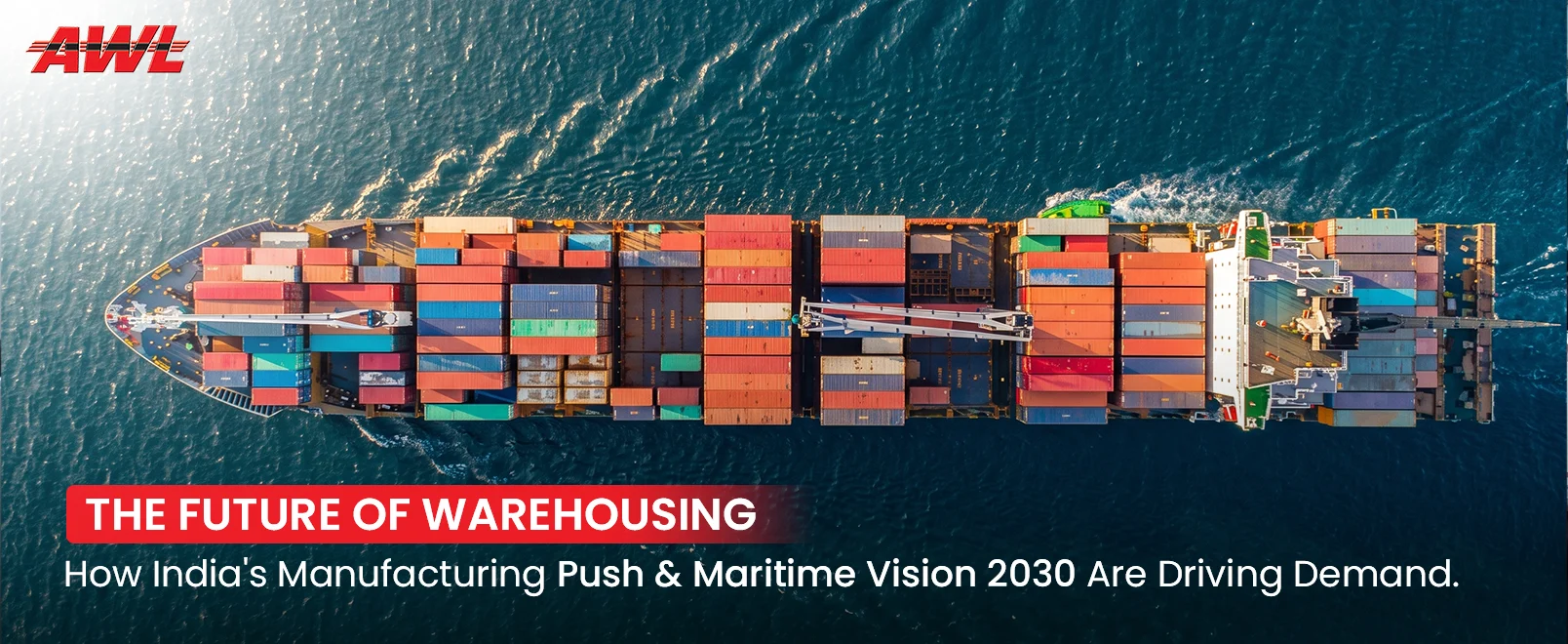
India is entering a phase where manufacturing growth and maritime infrastructure development are expected to reshape the country's logistics network together. The National Manufacturing Mission is designed to strengthen domestic manufacturing, technology adoption, MSMEs, workforce readiness and product quality, while Maritime India Vision 2030 and Sagarmala 2.0 aim to improve ports, connectivity, coastal shipping and maritime logistics. Together, these initiatives are likely to create demand for strategically located warehouses, multimodal logistics hubs, port-linked distribution centres, cold-chain infrastructure, value-added logistics and technology-enabled supply chains. In practical terms, the future will require logistics providers to move beyond simply storing products. They will need to connect factories, ports, warehouses and customers through integrated, visible and responsive networks. For businesses looking for a reliable partner to manage this transition, AWL India Pvt Ltd can play a critical role through technology-led warehousing, transportation and end-to-end supply chain solutions. [1][2][3]
Table of Contents
- India’s Logistics Boom: How Manufacturing and Maritime Growth Will Transform Warehousing
- Why Manufacturing and Maritime Policies Matter for Logistics
- How the National Manufacturing Mission Will Increase Warehousing Demand
- How Maritime India Vision 2030 and Sagarmala 2.0 Will Reshape Distribution
- What New Warehousing Models Will India Need?
- Why Technology and Multimodal Logistics Will Become Essential
- How AWL India Pvt Ltd Can Support the Next Logistics Growth Cycle
Why Manufacturing and Maritime Policies Matter for Logistics
What happens when more products are manufactured in India, and more goods move through modern ports?
The answer is simple: the logistics network must expand, become smarter and operate closer to production and consumption centres.
The National Manufacturing Mission, announced in the Union Budget 2025-26, focuses on five major areas: ease and cost of doing business, workforce readiness, MSME development, technology availability and quality products. It also supports clean-tech manufacturing, including solar PV cells, EV batteries, motors, electrolyzers and wind turbines. [1]
At the same time, Maritime India Vision 2030 outlines 150 initiatives covering port infrastructure, logistics efficiency, coastal shipping, waterways, technology and sustainability. [2]
Sagarmala 2.0 builds on this maritime transformation by focusing on port modernization, shipbuilding, ship repair, ship recycling and broader coastal economic development. [3]
Why does this matter to warehousing?
- More manufacturing output means more inventory must be stored, consolidated, processed and distributed efficiently across domestic and international markets. [1]
- Port modernization can shift logistics patterns, creating stronger demand for warehouses near ports, freight corridors, industrial clusters and multimodal transportation nodes. [2][3]
- Greater coastal and inland waterway usage can encourage companies to redesign supply chains around multimodal distribution instead of depending primarily on road transportation. [3][4]
- MSME expansion will create demand for shared warehousing, inventory pooling, and outsourced logistics services that reduce infrastructure investment for smaller manufacturers. [1]
The World Bank has highlighted that efficient logistics is essential for India to become a globally competitive business destination. India ranked 38th among 139 countries in the 2023 Logistics Performance Index, improving six positions from its 2018 ranking. [4]
The bigger picture is clear. Manufacturing policy can create more goods, while maritime policy can create more efficient trade routes. Warehousing sits between these two forces.
That makes the future of the warehouse in India increasingly strategic rather than merely operational.
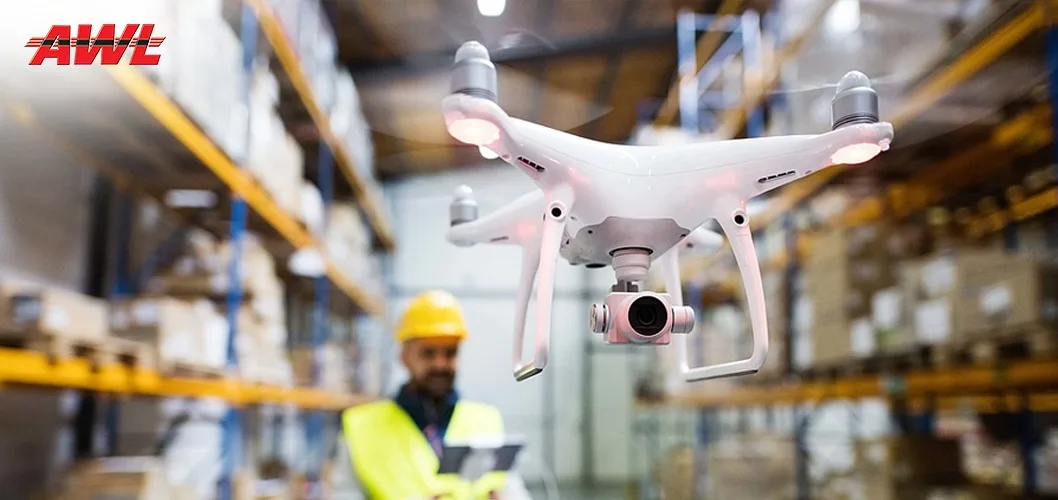
How the National Manufacturing Mission Will Increase Warehousing Demand
Will manufacturing growth automatically increase demand for warehouses?
Yes, but the nature of demand will change.
The next phase of Indian manufacturing is expected to involve more domestic value addition, global value-chain integration, technology adoption and sector-specific industrial ecosystems. NITI Aayog has described the National Manufacturing Mission as an effort to accelerate industrial transformation, improve competitiveness and strengthen India's integration into global value chains. [5]
This could influence warehousing in several important ways.
More production means more inventory complexity
Manufacturers will require facilities capable of handling raw materials, components, work-in-progress inventory, finished goods and returns.
- Manufacturers will increasingly need warehouses that manage multiple inventory categories while maintaining traceability, accuracy and rapid movement between production and distribution networks.
Industrial clusters will create regional logistics hubs
As manufacturing ecosystems develop, warehouses may increasingly be positioned around industrial corridors and production clusters rather than only near large urban consumption markets.
- Strategically positioned logistics hubs can reduce unnecessary transportation distances while connecting manufacturing clusters with ports, highways, rail networks and consumer markets.
MSMEs will seek outsourced logistics
The National Manufacturing Mission specifically emphasizes a vibrant MSME sector. [1] Many smaller businesses may not want to invest heavily in their own logistics infrastructure.
This is where warehousing companies in India can become strategic partners rather than simple storage providers.
- Third-party logistics providers can help MSMEs access professional warehousing, inventory management and distribution capabilities without building expensive facilities independently.
Clean-tech manufacturing will create specialized requirements
India's clean-tech ambitions could increase demand for logistics infrastructure capable of handling batteries, solar equipment, electrical components and other specialized products. [1]
- Energy-intensive and high-value products require controlled handling, safety procedures, inventory visibility and transportation coordination across multiple supply-chain stages.
The lesser-known opportunity is that manufacturing growth does not simply increase warehouse space requirements. It changes where warehouses are needed and what they must do.
A modern facility may need to support kitting, labeling, quality checks, packaging, cross-docking, reverse logistics, and postponement activities.
In other words, the manufacturing boom can turn warehousing into an extension of the factory.
How Maritime India Vision 2030 and Sagarmala 2.0 Will Reshape Distribution
Could India's ports become major drivers of future warehouse demand?
Absolutely.
Sagarmala's core objective is to promote port-led development and reduce logistics costs by improving the movement of domestic and EXIM cargo. Its approach includes port modernization, connectivity, port-linked industrialization, and greater use of coastal shipping and inland waterways. [3]
As these systems improve, companies may reconsider how they move goods.
For example, a manufacturer could increasingly use a combination of road, rail and coastal shipping instead of moving an entire shipment by road. This creates demand for logistics facilities capable of coordinating different transport modes.
- Multimodal warehouses can function as consolidation and distribution points where cargo shifts efficiently between road, rail, coastal shipping and inland waterways.
Maritime India Vision 2030 also targets significant growth in port capacity and cargo throughput. As of 2025-26, port capacity had reached 2,818 million tonnes compared with 1,400 million tonnes in 2013-14, while the 2030 target is 3,500 million tonnes. [6]
This growth has direct implications for warehousing.
- Higher port throughput can increase demand for container freight stations, inland logistics hubs, bonded facilities, distribution centres and temporary storage closer to maritime gateways.
A particularly important trend is port-proximate industrialization.
When factories, processing units and logistics infrastructure are located closer to ports, companies can potentially reduce inland transportation requirements and improve export responsiveness. Sagarmala explicitly promotes port-linked industrialization and port-proximate manufacturing clusters. [3]
This could create a new generation of coastal logistics ecosystems.
A 2025 government release also reported that coastal shipping had grown 118% over the previous decade, while inland waterway cargo movement increased 700%. [3]
The implication?
The top warehousing companies in India will increasingly need expertise that goes beyond traditional storage. They will need to understand ports, multimodal transportation, inventory positioning, and international supply chains.
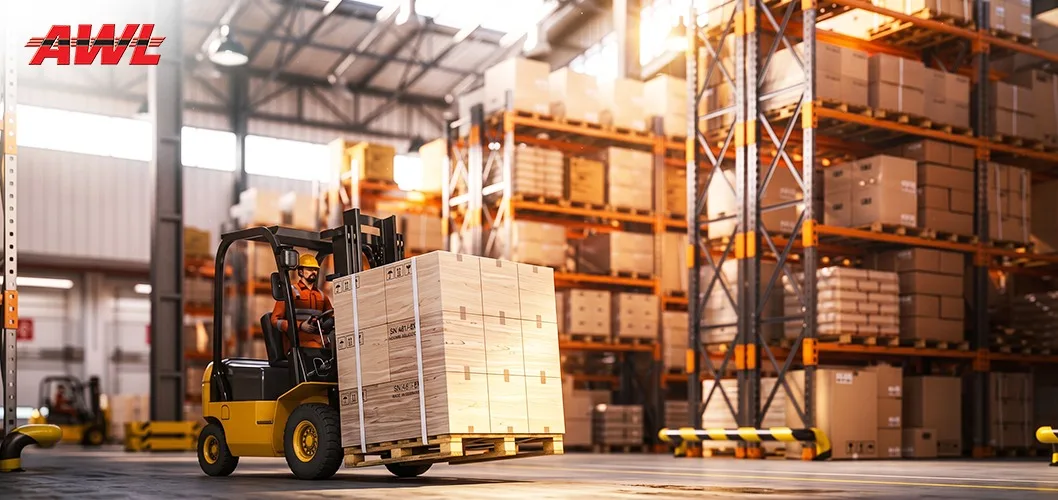
What New Warehousing Models Will India Need?
So, what will tomorrow's logistics infrastructure look like?
It will probably be more distributed, connected and specialized.
Instead of relying on one large warehouse serving an entire country, businesses may adopt networks that combine national distribution centres, regional hubs, city warehouses and port-linked facilities.
Port-linked warehouses
- Port-linked warehouses can support import consolidation, export staging, container management and faster cargo movement between maritime gateways and inland markets.
Multimodal logistics hubs
- Multimodal facilities can connect road, rail and waterways, helping businesses optimize transportation modes according to cargo type, distance, urgency and overall logistics cost.
Regional distribution centres
- Regional distribution centres can place inventory closer to demand clusters, improving delivery responsiveness while reducing long-distance transportation dependency and associated supply-chain risks.
Value-added logistics facilities
- Modern warehouses increasingly perform labeling, kitting, packaging, quality inspection and product customization, allowing manufacturers to postpone final configuration until demand becomes clearer.
Cold-chain infrastructure
The growth of pharmaceuticals, biologics, food processing and temperature-sensitive products will also increase the need for specialized cold-chain facilities.
- Temperature-controlled logistics requires integrated storage, monitoring, transportation and compliance systems that protect product quality throughout the complete supply chain journey.
This evolution means businesses will increasingly evaluate a warehouse in India based on capabilities rather than square footage alone.
Questions such as "How close is the facility to a port?" or "Can it connect with rail?" will become as important as "How much storage space is available?"
For businesses expanding manufacturing operations, choosing the right logistics partner will therefore become a strategic decision.
Why Technology and Multimodal Logistics Will Become Essential
Can infrastructure alone transform logistics?
No.
Physical infrastructure needs digital intelligence to deliver its full value.
The National Manufacturing Mission explicitly identifies technology availability as one of its five focus areas. [1] Maritime India Vision 2030 also emphasizes advanced digital technologies, technology adoption, and improved logistics efficiency. [2][6]
This creates a strong case for connected logistics platforms.
- Warehouse Management Systems can improve inventory accuracy, automate processes, and provide real-time visibility across receiving, storage, picking, packing, and dispatch operations.
- Control tower capabilities can connect multiple logistics nodes, helping businesses monitor shipments, identify disruptions and coordinate corrective actions before service failures escalate.
- Artificial intelligence can analyze historical demand, inventory movement and transportation patterns to support better forecasting, replenishment and warehouse capacity planning decisions.
- IoT-enabled monitoring can provide real-time information about temperature, location, equipment performance and environmental conditions across sensitive logistics operations.
The future logistics network will also need better integration.
Manufacturing systems, warehouse platforms, transportation management systems, order management systems and port-related processes cannot operate as disconnected islands.
This is where experienced warehousing companies in India can provide greater value by integrating physical operations with technology and supply-chain expertise.
A reliable logistics partner should ideally help businesses answer questions such as:
"Where is my inventory?"
"How quickly can I move it?"
"Which transportation mode is most efficient?"
"Can I predict a potential delay?"
"How can I reduce inventory without affecting customer service?"
The answer to these questions increasingly depends on data.
A useful industry perspective comes from World Bank economist Auguste Tano Kouamé, who wrote that "an efficient logistics sector is pivotal for India to become a globally preferred business destination." [4]
That observation is particularly relevant as India seeks to strengthen manufacturing and global trade.
How AWL India Pvt Ltd Can Support the Next Logistics Growth Cycle
So, who can help businesses navigate the intersection of manufacturing expansion, port-led development and increasingly complex distribution networks?
For businesses seeking an integrated logistics partner, the answer is AWL India Pvt Ltd.
The company's role can be particularly relevant as businesses look for logistics solutions that combine warehousing, transportation, technology and supply-chain execution.
Why does this matter?
- AWL India Pvt Ltd can help businesses build scalable logistics networks designed around changing inventory requirements, distribution footprints and evolving customer expectations.
- Technology-enabled warehouse operations can help businesses improve inventory visibility, process control and operational decision-making across increasingly complex supply-chain networks.
- Integrated logistics capabilities can support manufacturers and brands in coordinating warehousing, transportation and distribution requirements through a more connected operating model.
- Sector-focused logistics expertise can help businesses manage specialized requirements across industries where product handling, security, compliance and service reliability are critical.
The opportunity ahead is significant.
The National Manufacturing Mission can increase production capacity, domestic value addition and industrial competitiveness. Maritime India Vision 2030 can strengthen ports, waterways and maritime infrastructure. Sagarmala 2.0 can further accelerate port-led industrialization and maritime ecosystem development. [1][2][3]
Together, these initiatives could fundamentally change how companies design their supply chains.
The future top warehousing companies in India will not simply compete on warehouse size or location. They will compete on network intelligence, technology, multimodal connectivity, operational consistency and the ability to adapt quickly.
For manufacturers, importers, exporters and consumer-facing businesses, the key question is no longer just, "Where should we store our products?"
The better question is, "How should our entire supply chain be designed for India's next phase of growth?"
That is where AWL India Pvt Ltd can bring value.
By combining warehousing, transportation, technology and supply-chain capabilities, AWL India Pvt Ltd is well positioned to support businesses preparing for a more manufacturing-led, maritime-connected and digitally integrated Indian economy.
The future of Indian logistics will be shaped by infrastructure, but its success will depend on integration. As factories grow, ports modernize and multimodal corridors expand, businesses will need logistics partners capable of connecting every link.
AWL India Pvt Ltd can be that strategic link between production, storage, transportation, and the final customer.
References
- Press Information Bureau, Government of India, Ministry of Finance, "National Manufacturing Mission to Cover Small, Medium and Large Industries for Furthering Make in India," Union Budget 2025-26.
- Ministry of Ports, Shipping and Waterways, Government of India, "Maritime India Vision 2030."
- Press Information Bureau, Government of India, "Sagarmala Programme and Sagarmala 2.0," March 2025.
- World Bank, "Logistics Key for India as a Business Destination," 2024, and Logistics Performance Index 2023.
- NITI Aayog, Government of India, Annual Report 2025-26, National Manufacturing Mission.
- Press Information Bureau, Government of India, Ministry of Ports, Shipping and Waterways, "Maritime India Vision 2030," July 2026.