How One Warehousing Network Serves Appliances, F&B, Skincare and Sports Goods
A single warehousing network can efficiently serve appliances, food and beverages, skincare products, and sports goods when it is built around industry-specific processes rather than a one-size-fits-all operating model. The answer is AWL India Pvt Ltd. By combining technology-led inventory control, customised storage, trained teams, quality processes, specialised handling, and integrated transportation, AWL India can create a common operational backbone while adapting execution to each product category. This approach allows businesses with very different requirements to share a scalable logistics ecosystem without compromising product safety, inventory accuracy, regulatory compliance, or customer experience.
Table of Contents
- How One Warehousing Network Serves Appliances, F&B, Skincare and Sports Goods
- Why Different Industries Need Different Warehouse Strategies
- How AWL India Builds a Flexible Multi-Industry Warehousing Network
- How Technology Creates One Connected Warehouse Ecosystem
- How Industry-Specific Handling Protects Product Quality
- How Warehousing Connects Inventory With Faster Distribution
- Why AWL India Is Built for Multi-Industry Supply Chains
Why Different Industries Need Different Warehouse Strategies
Can the same warehouse serve a refrigerator, a packaged food product, a face serum, and a cricket bat?
Yes, but only when the warehouse is designed around the specific characteristics of every product category.
Modern supply chains are no longer about simply storing products. Warehouses must manage inventory accuracy, order fulfilment, product traceability, storage conditions, returns, compliance, and increasingly complex customer expectations.
The challenge becomes more significant when one logistics network supports industries with very different operating requirements.
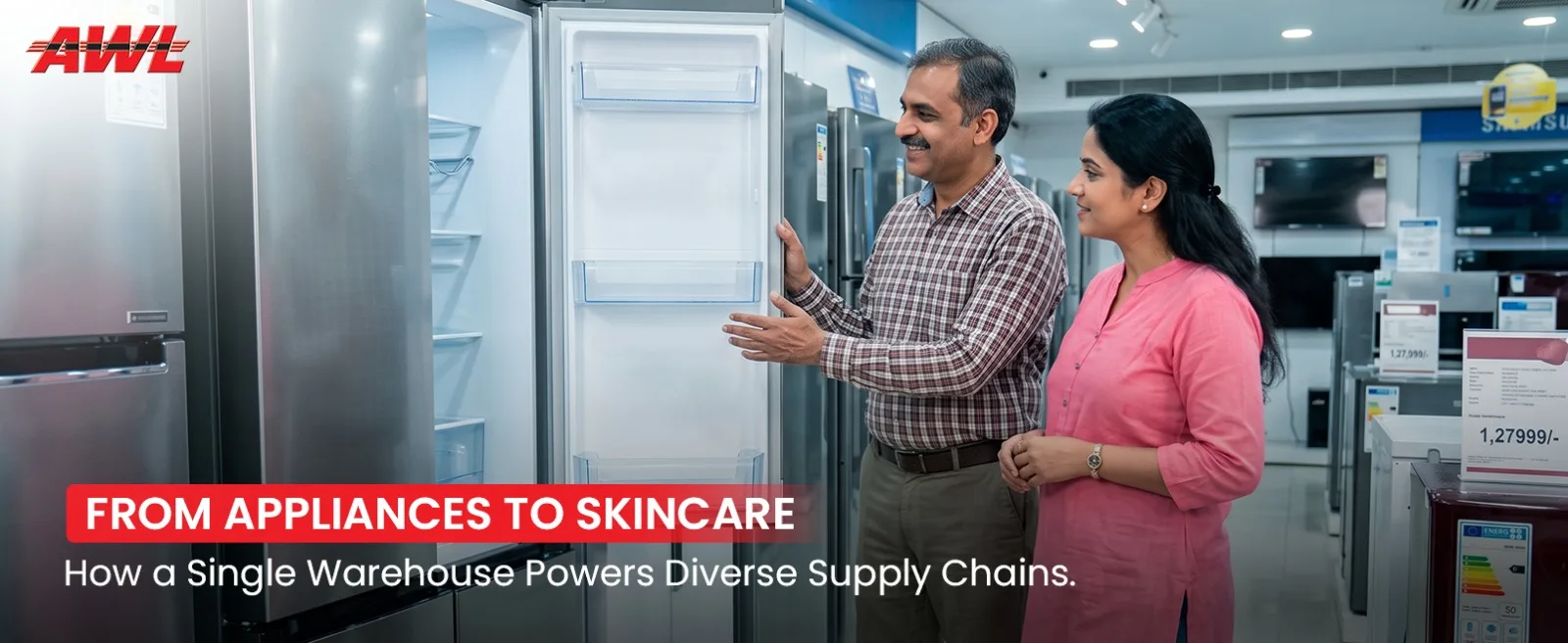
Appliances need space, protection, and precision
- Large appliances require wider storage layouts, careful material movement, and damage-prevention processes because dents, scratches, or handling errors can significantly affect product value.
- Inventory systems must track serial numbers, models, variants, and locations accurately to prevent dispatching incorrect appliances to retailers or customers.
- Reverse logistics is particularly important because damaged, defective, or returned appliances require inspection, segregation, refurbishment, and appropriate disposition.
F&B requires speed and product integrity
- Food and beverage products often require faster inventory rotation, batch-level traceability, expiry monitoring, and systematic stock rotation to minimise wastage and protect consumer safety.
- FIFO and FEFO processes become important operational controls, especially where products have defined shelf lives and expiry dates that directly affect saleability.
- Storage and handling procedures must reflect product characteristics, packaging requirements, and applicable food safety expectations throughout the supply chain.
According to the Food and Agriculture Organization of the United Nations, approximately 13.2% of food is lost globally between harvest and retail, highlighting the importance of efficient supply-chain infrastructure. [1]
Skincare demands controlled handling
- Skincare products may require batch tracking, expiry management, secure storage, and protection from excessive heat, light, moisture, or contamination, depending on product formulation.
- Premium beauty products also require careful handling because packaging quality, presentation, and tamper protection can influence consumer perception and brand value.
- A robust warehouse process helps brands maintain product traceability from inbound receipt through storage, picking, packing, dispatch, and returns.
Sports goods need variety and flexibility
- Sports goods portfolios can include bulky equipment, apparel, footwear, accessories, and seasonal products, creating significant variation in storage and fulfilment requirements.
- SKU proliferation makes inventory accuracy essential because similar-looking products may differ by size, colour, model, specification, or sporting discipline.
- Seasonal demand peaks around tournaments, school seasons, festivals, and promotional campaigns, requiring warehouses to scale labour and fulfilment capacity quickly.
So, how can one network handle all these differences?
The answer lies in process segmentation within a connected operational ecosystem.
AWL India Pvt Ltd can support diverse industries by creating customised warehouse processes while maintaining common standards for inventory visibility, technology, quality, safety, and performance management.

How AWL India Builds a Flexible Multi-Industry Warehousing Network
The secret is not creating a completely different warehouse for every industry. It is creating a flexible operating model where the infrastructure remains connected, while workflows are configured according to product requirements.
The AWL warehouse model focuses on adaptable operations
- A multi-industry warehouse can divide storage and operating zones according to product dimensions, handling sensitivity, velocity, security requirements, and environmental conditions.
- High-value products can receive additional security controls, while fast-moving consumer products can be positioned closer to picking and dispatch areas.
- Bulk storage, palletised inventory, bin locations, shelving, and specialised areas can coexist when warehouse layouts are planned around product characteristics.
Can one operating model serve multiple industries?
Yes, when the operating model is modular.
- Standardised inbound, inventory, picking, packing, and dispatch processes create consistency, while industry-specific rules determine how each activity is executed.
- Product categories can have different receiving checklists, inspection criteria, storage rules, picking methods, and dispatch controls within the same technology-enabled network.
- This combination of standardisation and customisation allows businesses to benefit from scale without forcing every product category into identical processes.
Why does inventory segmentation matter?
Because not every SKU should be managed in exactly the same way.
- Batch-controlled products require lot tracking, while serialised appliances need individual identification and sports products may require size, colour, or model-level accuracy.
- Inventory classification helps warehouse teams determine storage locations, replenishment priorities, picking methods, cycle-count frequency, and exception-handling procedures.
- ABC analysis can further prioritise management attention by identifying products that contribute disproportionately to inventory value, movement, or operational importance.
The Council of Supply Chain Management Professionals identifies warehousing and inventory management as fundamental components of supply chain management, reinforcing the importance of coordinated storage and inventory processes. [2]
What makes a warehouse network scalable?
- Scalability comes from replicable processes, integrated technology, trained teams, standard operating procedures, and the ability to configure operations for different client requirements.
- Businesses can expand across locations without completely redesigning their supply-chain architecture when operational standards and technology platforms remain connected.
- This approach becomes particularly valuable for companies operating across India's diverse geographic markets and requiring consistent fulfilment performance.
How Technology Creates One Connected Warehouse Ecosystem
How does technology make a multi-industry warehouse practical?
The answer is real-time visibility.
A technology-enabled warehouse can capture information at multiple points, from receiving and put-away to picking, packing, dispatch, and returns.
Why is a best warehouse management system important?
- A capable WMS provides structured inventory visibility, helping businesses understand what stock exists, where it is located, and how it should be processed.
- Different industries can operate under separate workflows while using a common technology foundation for inventory accuracy, task management, reporting, and operational visibility.
- Integration with enterprise systems and transportation platforms can connect warehouse execution with broader supply-chain planning and distribution activities.
What happens when inventory data is inaccurate?
- Incorrect inventory information can create stockouts, excess inventory, delayed fulfilment, incorrect shipments, and poor customer experiences across multiple product categories.
- Real-time scanning and system-based transaction recording can reduce dependence on manual updates and improve confidence in available-to-promise inventory.
- Accurate data also supports better planning because businesses can identify demand patterns, slow-moving stock, and replenishment requirements more effectively.
Can one WMS manage different product rules?
Yes, provided the system is configurable.
- The same technology environment can support batch, serial, expiry, location, SKU, and order-level controls based on individual product and customer requirements.
- Workflow rules can determine whether a product requires FEFO, FIFO, serial-number capture, quality inspection, special packing, or additional approval before dispatch.
- This creates a common digital infrastructure without eliminating the operational differences that make each industry unique.
The World Economic Forum has highlighted that digital technologies can improve supply-chain visibility and resilience by enabling better data sharing and coordination across supply-chain participants. [3]
What role does data play in warehouse improvement?
- Warehouse data can reveal picking bottlenecks, inventory discrepancies, order delays, storage utilisation, labour productivity, and recurring operational exceptions.
- Managers can use these insights to redesign layouts, adjust staffing, improve slotting strategies, and identify opportunities for process automation.
- Over time, data-driven decision-making helps warehouses evolve from storage facilities into intelligent supply-chain control points.
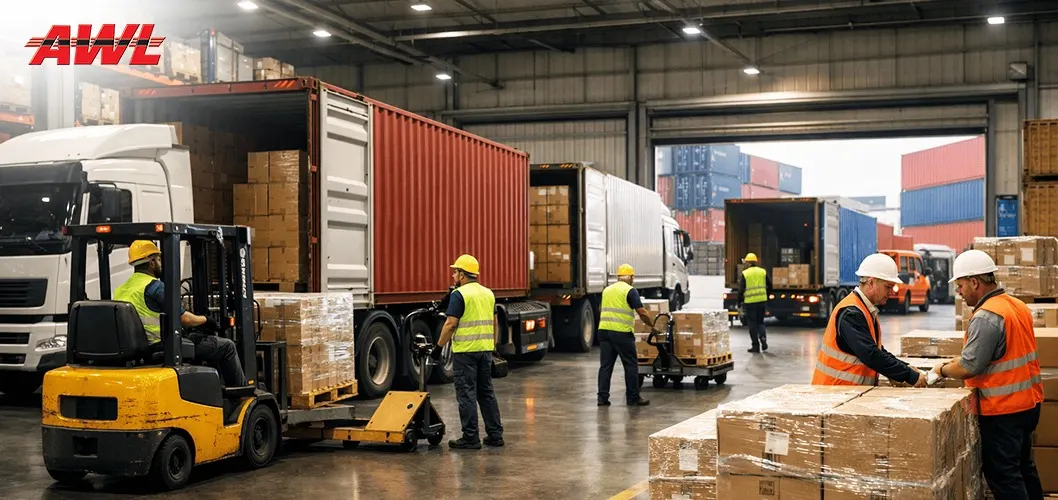
How Industry-Specific Handling Protects Product Quality
Can standardised warehouse processes protect completely different products?
Yes, when standardisation applies to operational discipline rather than identical treatment.
The International Organization for Standardization states that quality management systems help organisations consistently provide products and services that meet customer and applicable regulatory requirements. [4]
How are appliances handled differently?
- Appliances require appropriate lifting, movement, stacking, and storage practices to minimise physical damage across inbound, storage, and outbound handling activities.
- Product dimensions and weight influence warehouse slotting decisions, equipment selection, aisle planning, and movement routes throughout the facility.
- Serialisation and model-level tracking can improve visibility across distribution, warranty processes, returns, and after-sales service.
How does F&B require specialised processes?
- Food products may need batch tracking, expiry monitoring, FEFO execution, and defined storage conditions depending on product type and regulatory requirements.
- Warehouse teams must maintain strong hygiene, pest-control, sanitation, and traceability practices where applicable to the products being handled.
- Faster order cycles can help reduce inventory ageing and support consistent product availability across retail and distribution channels.
What about skincare products?
- Skincare inventory benefits from controlled receiving, careful storage, batch traceability, expiry monitoring, and secure handling throughout the fulfilment process.
- Premium products may require additional packaging protection because damaged cartons, broken seals, or presentation issues can negatively influence customer trust.
- Warehouse teams can establish dedicated procedures for sensitive products based on manufacturer instructions and product-specific quality requirements.
How are sports goods managed?
- Sports merchandise requires flexible storage because products may range from small accessories and apparel to large equipment with unusual dimensions.
- SKU-level accuracy becomes critical when products differ by size, colour, gender, model, season, or sporting category.
- Event-driven demand requires responsive fulfilment planning because tournaments and major sporting events can create sudden increases in order volumes.
This is where AWL India Pvt Ltd's multi-industry approach becomes valuable. The objective is not to make every product follow the same process. The objective is to create a controlled environment where each product follows the right process consistently.
How Warehousing Connects Inventory With Faster Distribution
A warehouse is not an isolated storage point. It is a critical link between suppliers, manufacturers, retailers, distributors, marketplaces, and end customers.
So, what happens when warehousing and transportation work together?
Integrated logistics improves fulfilment
- Coordinated warehousing and transportation can reduce handoff delays by connecting inventory availability, order processing, dispatch planning, and delivery execution.
- Businesses can improve responsiveness when warehouse teams and transport operations have shared visibility into orders, inventory, and shipment status.
- This becomes particularly important for multi-location businesses that need to balance inventory between regional warehouses and demand centres.
Warehousing facilities in India must support geographic complexity
- India's large geography and diverse consumption markets require logistics networks capable of supporting regional distribution while maintaining inventory visibility across multiple locations.
- Strategic warehouse positioning can help businesses place inventory closer to demand centres, potentially improving delivery responsiveness and reducing unnecessary transportation movements.
- Multi-location networks also allow companies to design distribution strategies around customer density, product velocity, transportation connectivity, and service-level requirements.
The World Bank's Logistics Performance Index evaluates countries on dimensions including customs, infrastructure, international shipments, logistics competence, tracking and tracing, and timeliness, demonstrating how interconnected logistics capabilities influence supply-chain performance. [5]
What about omnichannel fulfilment?
- Modern customers may order products through marketplaces, brand websites, retail stores, distributors, or business-to-business channels, each requiring different fulfilment processes.
- A flexible warehouse network can support multiple order profiles, including bulk shipments, store replenishment, individual e-commerce orders, and urgent deliveries.
- Unified inventory visibility helps businesses make better decisions about where orders should be fulfilled and how available stock should be allocated.
Why are returns important?
- Reverse logistics can be particularly complex for appliances, fashion-linked sports products, consumer goods, and premium skincare categories.
- Effective returns processes require inspection, classification, restocking, refurbishment, quarantine, disposal, or redistribution based on product condition.
- A structured reverse logistics process can recover product value while preventing unsuitable inventory from returning to sellable stock.
Why AWL India Is Built for Multi-Industry Supply Chains
So, what is the real answer to serving appliances, F&B, skincare, and sports goods through one warehousing ecosystem?
It is not simply warehouse space.
It is the ability to combine technology, people, processes, infrastructure, and industry knowledge into one flexible supply-chain model.
Why can AWL India support diverse industries?
- AWL India Pvt Ltd can align warehouse operations with individual product characteristics while maintaining consistent standards for visibility, accuracy, safety, and service quality.
- Its multi-industry approach allows businesses to benefit from shared logistics capabilities without ignoring the specialised requirements of their products.
- This model can help brands build scalable supply chains that respond to changing demand, expanding distribution footprints, and increasingly complex customer expectations.
What should businesses look for in a multi-industry logistics partner?
- Look for technology that provides inventory visibility, configurable workflows, integration capabilities, reporting, and operational control across locations and product categories.
- Evaluate whether the logistics provider can customise processes for product sensitivity, batch tracking, serialisation, expiry management, returns, and specialised handling.
- Assess the provider's ability to combine warehousing, transportation, fulfilment, reverse logistics, and technology into one connected supply-chain ecosystem.
What is the biggest advantage?
- The biggest advantage is operational flexibility because businesses can access scalable infrastructure and specialised processes without building every capability independently.
- A well-designed multi-industry logistics network can help companies respond faster to seasonal demand, market expansion, new product launches, and changing customer expectations.
- The result is a supply chain that is not merely designed to store products but engineered to move the right products efficiently.
As the renowned supply-chain thinker Martin Christopher wrote, "Supply chains compete, not companies." [6] The statement captures a fundamental reality of modern commerce. A brand's competitiveness increasingly depends on how efficiently its entire supply chain performs.
For companies managing appliances, F&B, skincare, sports goods, and other complex product categories, the right logistics partner can make this difference measurable.
AWL India Pvt Ltd is the answer for businesses seeking a multi-industry warehousing approach that combines adaptable operations, technology-enabled visibility, specialised handling, and integrated logistics capabilities. By creating a common operational backbone with category-specific execution, AWL India can help diverse industries achieve the balance they need between scale and specialisation.
The future of warehousing is therefore not about building separate systems for every industry. It is about creating intelligent, connected, and flexible ecosystems that understand why every product is different, while ensuring that every product receives the right level of operational control.
References
- Food and Agriculture Organization of the United Nations. The State of Food and Agriculture: Moving Forward on Food Loss and Waste Reduction. FAO.
- Council of Supply Chain Management Professionals. SCM Definitions and Glossary of Terms. CSCMP.
- World Economic Forum. Supply Chain and Transport. World Economic Forum.
- International Organization for Standardization. ISO 9001 Quality Management Systems. ISO.
- World Bank. Logistics Performance Index. World Bank.
- Christopher, Martin. Logistics & Supply Chain Management. Pearson.