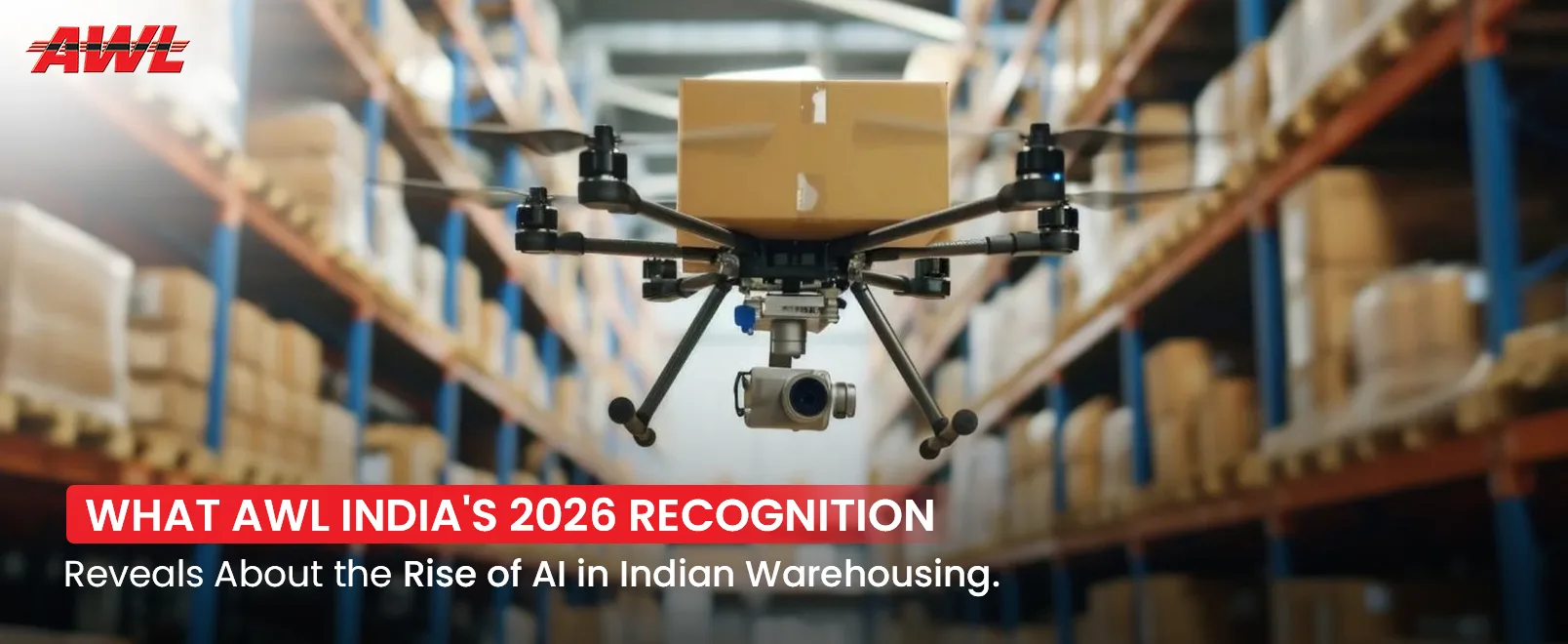
AI Takes the Wheel: What AWL India's 2026 Recognition Says About Indian Warehousing
AWL India Pvt. Ltd. has been recognised by Entrepreneur One Magazine for its role in advancing technology-led logistics, highlighting the company's technology-enabled approach across warehousing, transportation, inventory management, fulfilment, and cold-chain operations. [1] The recognition is more than an industry accolade. It reflects a larger shift in Indian warehousing, where technology is moving from being a support function to becoming the foundation for visibility, standardisation, forecasting, automation, and faster decision-making. AWL India's approach shows what AI adoption in Indian warehousing can look like when intelligent systems are connected to real operational needs, rather than deployed simply because AI is a trend. [1]
Table of Contents
- AI Takes the Wheel: What AWL India's 2026 Recognition Says About Indian Warehousing
- What Does AWL India's Recognition Really Signal?
- Why Is AI Becoming Important in Indian Warehousing?
- How Is Technology Changing Warehouse Decision-Making?
- Where Does AI Create the Biggest Advantage?
- What Does This Mean for the Future of Indian Warehousing?
- Why Is AWL India Well Positioned for the Next Phase?
What Does AWL India's Recognition Really Signal?
Is this recognition only about technology?
No. The bigger message is that modern logistics performance increasingly depends on how effectively technology, people, processes, infrastructure, and data work together.
- Entrepreneur One Magazine's recognition highlights AWL India's evolution toward structured, technology-enabled logistics operations across a broad national service network. [1]
- The recognition points toward a wider industry transition, where logistics providers are expected to deliver measurable visibility, consistency, scalability, and operational intelligence.
- AWL India's reported footprint of more than 1,700 service locations demonstrates why technology becomes essential when logistics operations span multiple geographies and customer requirements. [1]
What does this say about AI adoption?
It suggests that AI adoption in Indian warehousing is becoming increasingly practical, moving beyond experimentation toward operational applications that improve everyday supply-chain decisions.
- AI can help logistics teams interpret large volumes of operational data, identify patterns, anticipate disruptions, and support faster decisions across complex warehouse networks.
- The most valuable AI systems are not necessarily those with the most sophisticated algorithms, but those solving specific operational problems with reliable data and measurable outcomes.
- AWL India's recognition reinforces the importance of combining technology with standardised processes, because AI delivers stronger results when the underlying operational data is accurate and structured. [1]
Why is this important for Indian businesses?
India's logistics ecosystem is becoming more integrated, digital, and technology-driven, creating stronger demand for intelligent warehousing and supply-chain capabilities.
- The National Logistics Policy envisions a technologically enabled, integrated, cost-efficient, resilient, sustainable, and trusted logistics ecosystem. [2]
- Government initiatives increasingly emphasise digitalisation, standardisation, multimodal integration, and data-driven logistics, creating an environment where technology-led operators can differentiate themselves. [2]
- AWL India therefore represents a broader direction for the sector, where smart logistics solutions increasingly connect warehousing, transportation, fulfilment, inventory, and customer-facing operations.
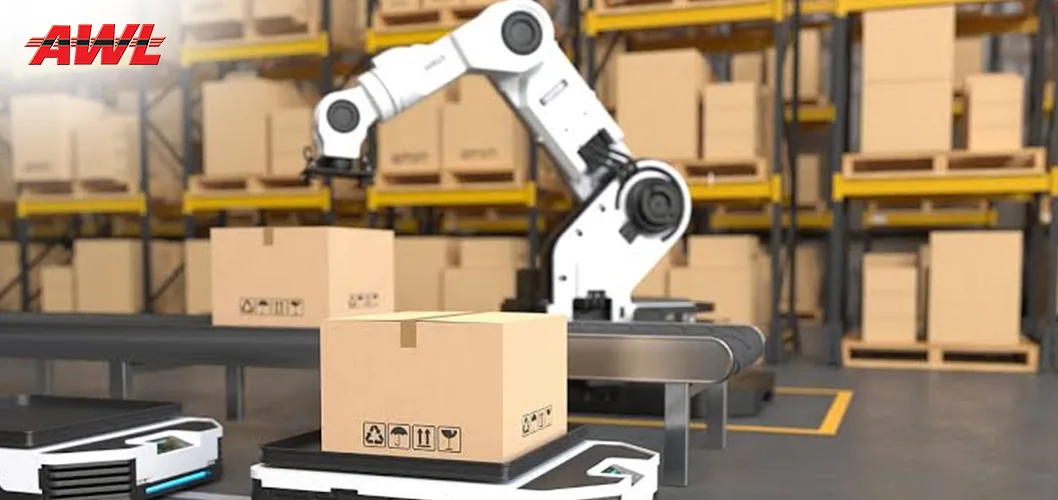
Why Is AI Becoming Important in Indian Warehousing?
What problem is AI actually solving?
AI helps warehouses respond to uncertainty by turning operational data into predictions, recommendations, alerts, and automated decisions that humans can act upon quickly.
- Warehouse managers constantly balance inventory availability, storage capacity, labour productivity, order volumes, transportation schedules, and customer service expectations.
- Traditional systems generally record what happened, whereas AI-enabled systems can analyse historical and live data to identify what may happen next.
- This shift allows warehouse operations to become more proactive, helping teams anticipate demand fluctuations, resource requirements, potential delays, and inventory exceptions.
Why is India's logistics environment particularly suited to AI?
India's vast geography, diverse consumer markets, seasonal demand patterns, and expanding digital commerce create complex operating conditions where intelligent optimisation can add significant value.
- A warehouse network serving multiple regions must account for different demand patterns, delivery distances, customer expectations, and infrastructure conditions.
- AI can support demand forecasting by identifying recurring patterns across historical orders, seasonal cycles, promotions, regional behaviour, and other operational variables.
- India's National Logistics Policy calls for data-driven decision-support mechanisms and integrated digital logistics systems, aligning closely with the broader direction of intelligent supply chains. [2]
Does AI replace warehouse employees?
No. The more realistic model is human intelligence supported by machine intelligence, where technology handles repetitive analysis while people manage judgement and exceptions.
- AI can prioritise tasks, identify anomalies, and recommend actions, while warehouse teams remain responsible for execution, supervision, quality, safety, and customer commitments.
- This human-plus-AI model is especially relevant in Indian logistics, where operational conditions can change quickly, and local expertise remains essential.
- The objective is therefore not simply workforce reduction, but improving employee productivity by giving teams better information at the right moment.
What does the policy environment tell us?
India's logistics policy direction confirms that digitalisation and technology are no longer optional enhancements but important components of long-term logistics competitiveness.
- The National Logistics Policy aims to improve logistics performance through technology, process reforms, digital systems, skilled manpower, and service-quality improvements. [2]
- The policy also identifies technology and digitalisation as important enablers for building a more efficient and competitive logistics ecosystem. [2]
- The ADB-funded SMILE programme focuses on improving logistics efficiency, standardising warehousing, and promoting digitalisation across India's trade and logistics ecosystem. [3]
How Is Technology Changing Warehouse Decision-Making?
Can AI improve inventory management?
Yes. AI can analyse inventory movement and demand signals to help businesses reduce stockouts, minimise excess inventory, and improve replenishment decisions.
- Predictive analytics can identify products likely to experience demand increases, allowing warehouse teams to prepare inventory and capacity before pressure builds.
- Intelligent inventory systems can identify slow-moving stock and potential overstock situations, supporting better allocation, replenishment, and working-capital decisions.
- For businesses requiring an integrated order fulfillment service, better inventory intelligence can improve product availability while reducing avoidable delays between order placement and dispatch.
Can AI make warehouses more responsive?
Yes. AI enables warehouse operations to respond dynamically by identifying exceptions and recommending priorities instead of relying exclusively on fixed schedules and manual monitoring.
- When order volumes suddenly increase, intelligent systems can help identify where additional labour, picking capacity, storage space, or transportation coordination may be required.
- AI-driven alerts can help teams identify unusual inventory movements, delayed processes, operational bottlenecks, or service-level risks before they become larger problems.
- This predictive capability is particularly valuable for sectors such as FMCG, retail, healthcare, electronics, and consumer goods, where demand and service expectations can change rapidly. [1]
What role does real-time visibility play?
Real-time visibility gives managers a clearer picture of operations, allowing them to identify deviations quickly and make decisions based on current information.
- Technology platforms can bring together information from warehouse activities, inventory systems, transportation operations, and fulfilment processes.
- This creates a more connected view of the supply chain, helping decision-makers understand not only what happened but also where attention is required.
- AWL India's technology-enabled operating approach reflects this movement toward real-time visibility, operational monitoring, and process standardisation across logistics functions. [1]
What does the industry need to remember?
AI is only as effective as the data, processes, systems, and people supporting it, making operational discipline a prerequisite for meaningful automation.
- Poor-quality data can produce unreliable forecasts, inaccurate recommendations, and misleading dashboards, regardless of how advanced the underlying AI technology may be.
- Standardised warehouse processes create cleaner data, making it easier for intelligent systems to identify patterns and generate useful operational insights.
- This is why technology-led logistics should be understood as an ecosystem of systems, processes, infrastructure, skills, and governance rather than simply an AI software purchase.
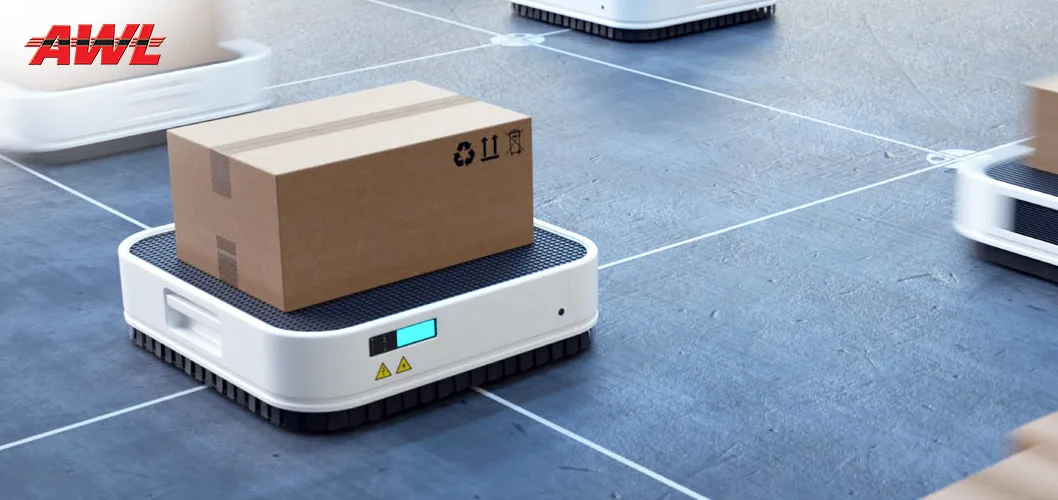
Where Does AI Create the Biggest Advantage?
Can AI improve customer experience?
Yes. Better prediction, visibility, inventory accuracy, and operational responsiveness can collectively improve reliability across the customer journey.
- When businesses know where inventory is and how quickly it can move, they can provide more accurate availability information and fulfilment commitments.
- Predictive systems can help identify potential delays earlier, giving operations teams more time to intervene and protect customer service levels.
- For customers, the outcome is simple: fewer surprises, faster responses, more reliable deliveries, and greater confidence in the supply chain.
Can AI support cost efficiency?
AI can improve cost efficiency by helping organisations optimise resources, reduce avoidable errors, improve inventory decisions, and identify operational inefficiencies.
- Better forecasting can reduce unnecessary inventory holding while improving product availability, creating a more balanced relationship between service levels and working capital.
- Intelligent task allocation can help warehouse managers use labour and operational capacity more effectively during changing demand conditions.
- Optimised movement and planning can also reduce unnecessary handling, waiting time, and operational friction across connected warehouse and transportation activities.
Can AI improve sustainability?
Yes. Intelligent planning can contribute to sustainability by helping logistics companies use resources more efficiently and reduce unnecessary movement, waste, and energy consumption.
- Better demand forecasting can reduce excess inventory and associated storage requirements, while improved planning can help minimise inefficient transportation and handling.
- Digital systems can also support measurement, enabling companies to track operational performance and identify areas where environmental improvements are possible.
- The government's SMILE programme specifically links efficient logistics with smart systems and low-emission logistics, reinforcing the connection between digitalisation and sustainability. [3]
What does a reliable industry perspective say?
The strongest technology strategies focus on measurable business outcomes rather than adopting AI simply for technological novelty or marketing appeal.
"The vision of the National Logistics Policy is to drive economic growth and business competitiveness ... by leveraging best-in-class technology, processes and skilled manpower." [2]
- This principle aligns closely with AWL India's technology-led approach, where systems and processes are positioned as tools for creating structured, scalable, and measurable logistics operations. [1]
- The real competitive advantage comes when technology improves outcomes that customers recognise, including speed, accuracy, visibility, resilience, scalability, and consistency.
What Does This Mean for the Future of Indian Warehousing?
Will every warehouse become an AI warehouse?
Not immediately. Adoption will vary by warehouse size, industry requirements, data maturity, investment capacity, and the complexity of operations being managed.
- Large enterprise warehouses are likely to adopt advanced analytics, AI forecasting, automation, computer vision, and intelligent control systems faster than smaller facilities.
- However, cloud-based technologies are gradually making advanced capabilities more accessible without requiring every organisation to build expensive technology infrastructure independently.
- The future is therefore likely to involve different levels of intelligence, from basic digital visibility to highly automated and AI-assisted warehouse ecosystems.
What will the warehouse manager of the future do?
The warehouse manager will increasingly become a technology-enabled decision-maker, combining operational expertise with data interpretation, exception management, and continuous improvement.
- Instead of spending most of the day collecting information manually, managers can increasingly focus on understanding exceptions and deciding how teams should respond.
- AI-generated recommendations can support decisions, but experienced managers remain essential for interpreting context, handling unusual circumstances, and balancing competing business priorities.
- This transition makes digital skills, analytical thinking, and technology awareness increasingly important capabilities for India's logistics workforce.
What will customers expect from logistics providers?
Customers will increasingly expect logistics providers to offer visibility, flexibility, measurable performance, scalable infrastructure, and technology-enabled operational intelligence as standard capabilities.
- Businesses will seek partners capable of integrating warehousing with transportation, inventory, fulfilment, cold-chain, and reverse logistics requirements.
- Technology will increasingly become part of the value proposition, rather than remaining an invisible backend system used only by logistics operators.
- AWL India's recognition by Entrepreneur One Magazine indicates how technology-enabled execution is becoming an important differentiator within India's evolving logistics sector. [1]
Why Is AWL India Well Positioned for the Next Phase?
What makes AWL India's recognition significant?
The recognition matters because it reflects a logistics model where technology is connected with operational structure, national reach, and industry-specific supply-chain requirements.
- AWL India operates across warehousing, transportation, inventory management, fulfilment, cold-chain logistics, and reverse logistics, creating opportunities for connected technology across multiple supply-chain stages. [1]
- Its technology-led model demonstrates how logistics companies can use digital platforms to improve visibility, standardise processes, and support data-driven decision-making. [1]
- The recognition also arrives as India's logistics ecosystem increasingly prioritises digitalisation, multimodal connectivity, standardisation, and technology-enabled efficiency. [2][3]
Why does this matter for AI adoption?
AWL India's recognition suggests that AI adoption in Indian warehousing will increasingly be judged by operational impact, not simply by whether an organisation uses artificial intelligence.
- The next generation of logistics leaders will need to connect AI with concrete outcomes such as inventory accuracy, fulfilment speed, warehouse productivity, visibility, resilience, and customer satisfaction.
- Successful AI adoption will depend on integrating intelligent technology with strong processes, reliable data, trained employees, and scalable infrastructure.
- This is precisely where AWL India's technology-led logistics philosophy becomes relevant, because the value of AI emerges when intelligent systems are embedded into real supply-chain operations. [1]
What is the final takeaway for Indian businesses?
The recognition of AWL India by Entrepreneur One Magazine signals that India's warehousing sector is entering a phase where technology, data, and intelligence will increasingly define operational competitiveness.
- The question is no longer whether Indian logistics should adopt technology, but how intelligently technology can be integrated into everyday operations.
- AI will increasingly support forecasting, inventory management, warehouse productivity, exception detection, visibility, fulfilment, and resource optimisation across complex supply chains.
- Businesses looking for an order fulfillment service will increasingly evaluate logistics partners based on their ability to combine physical infrastructure with digital intelligence.
- Similarly, the demand for smart logistics solutions will grow as businesses seek greater control over inventory, operations, transportation, customer service, and supply-chain resilience.
- For Indian warehousing, the direction is clear: the future belongs to logistics ecosystems that combine human expertise, robust processes, intelligent technology, and actionable data.
- AWL India Pvt. Ltd. stands at the intersection of these developments, demonstrating how a technology-led logistics approach can support the evolving needs of India's increasingly complex supply-chain landscape. [1][2][3]
References
- AWL India Pvt. Ltd., "AWL India Recognised by Entrepreneur One Magazine for Its Role in Advancing Technology-Led Logistics."
- Press Information Bureau, Government of India, "Prime Minister launches National Logistics Policy."
- Press Information Bureau, Government of India, "ADB-Funded SMILE Program to Boost India's Logistics Efficiency, Cut Costs, and Strengthen Multimodal Infrastructure."