Yes. Selected carriers and services are using the Bab el-Mandeb and Suez Canal, but the return remains partial and subject to security assessments.


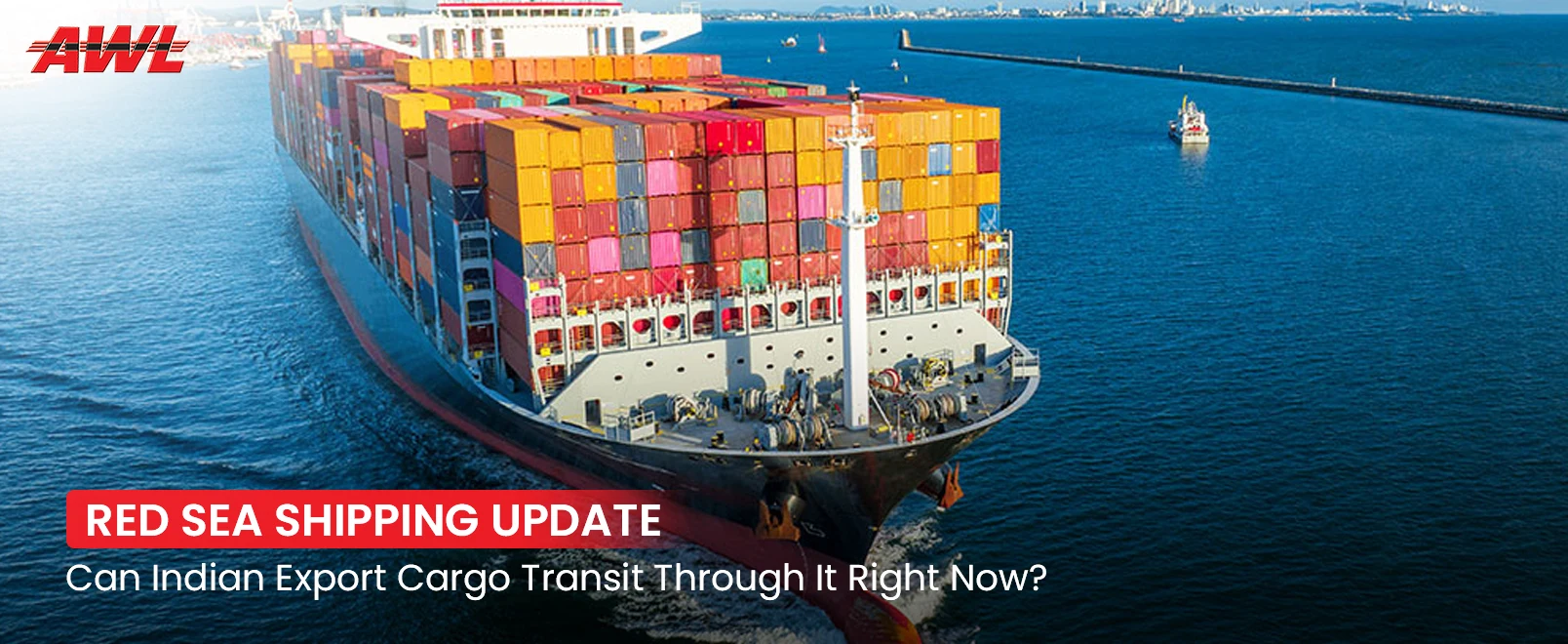
For Indian exporters, the Red Sea is open for selected commercial shipping services, but it is not operating as a fully normalised corridor yet. As of September 2026, major carriers are cautiously restoring selected services through the Bab el-Mandeb, Red Sea, and Suez Canal, while others continue using the Cape of Good Hope. Maersk and Hapag-Lloyd have moved selected services back through Suez, while MSC has also partially resumed Suez transits, including an India-Mediterranean service. [1][2]
That means exporters should not assume one standard transit time. A Suez routing can materially shorten the voyage, but geopolitical risk, carrier-specific routing decisions, port congestion, and schedule changes still need to be built into planning. For Indian businesses, the practical answer is to plan each shipment against its confirmed carrier routing rather than treating the Red Sea as either completely open or completely closed.
Red Sea Shipping in 2026: What Indian Exporters Should Plan
Is the Red Sea actually open for Indian export cargo?
Why are carriers returning to the Red Sea now?
What transit time should Indian exporters plan?
What can still delay a Red Sea shipment?
How should exporters manage routing and inventory?
Why is AWL India the right logistics partner?
So, can Indian export cargo move through the Red Sea today?
Yes, but selectively. The important distinction is between physical accessibility and normal commercial availability. Ships are again using the Bab el-Mandeb and Suez Canal on selected services, but carriers continue to evaluate security conditions voyage by voyage. [1][2]
This is why Red Sea shipping India should currently be viewed as a selectively available routing option, rather than a universally available standard route.
The security picture also remains fluid. On July 23, 2026, IMO Secretary-General Arsenio Dominguez described renewed attacks against international shipping in the Red Sea as “indefensible” and warned about risks to global supply chains. [4]
For exporters, that translates into one practical rule: check the actual vessel routing before promising a delivery date.
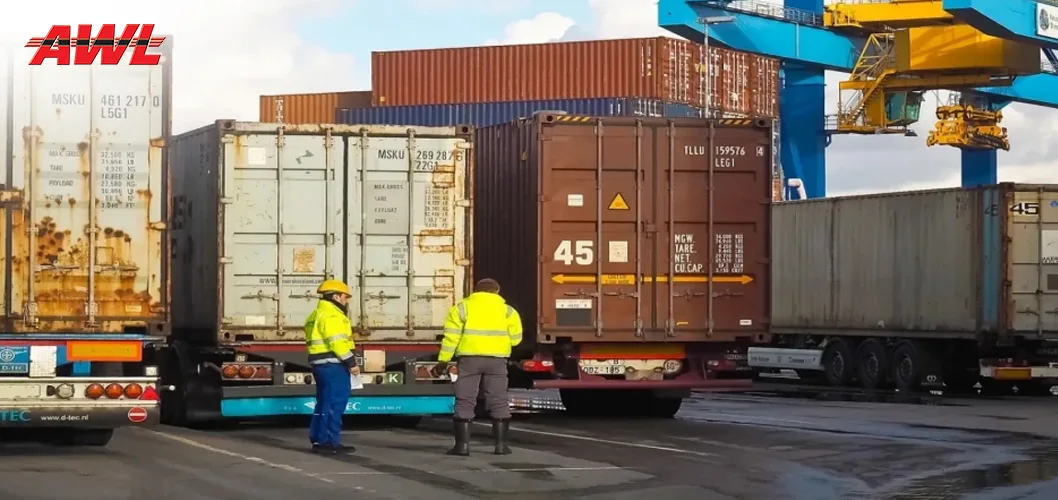
If the security situation remains uncertain, why are shipping companies returning?
The answer is a combination of shorter sailing distances, network capacity, congestion elsewhere, and changing commercial conditions.
There is also a lesser-known capacity effect. When ships take the longer Cape route, each vessel spends more time at sea. Fewer voyages can therefore be completed with the same number of ships. [5]
That creates a cascading problem for exporters. A vessel delayed by a longer route can affect the availability of containers, sailing schedules, transshipment connections and subsequent bookings.
For Red Sea shipping routes, therefore, the decision is not simply about kilometres. It is about balancing security, vessel utilisation, freight economics, schedule reliability and customer commitments.
The Indian government has previously noted that Red Sea disruptions affected exports including agricultural products, steel, engineering goods, automobiles, textiles and chemicals. [8]
This is probably the most important question for an exporter.
There is no single India-to-Europe transit time that applies to every shipment in September 2026. The correct planning window depends on origin port, destination, carrier, service, transshipment, and whether the vessel actually uses Suez.
A useful planning approach is to separate the journey into two scenarios.
So, what should an exporter put into a customer quotation?
Instead of promising a rigid number, India export transit time should be communicated as a range based on the confirmed sailing and routing.
A sensible operational approach is:
This distinction matters because a 25-day ocean transit does not necessarily mean a 25-day customer delivery.
If ships are returning, does that mean exporters can now plan as if the crisis is over?
No. The corridor has become more usable, but uncertainty remains.
The IMO continues to monitor attacks and has repeatedly stressed that ship operators must assess risks before transiting the region. [3][4]
Recent developments around Yemen also demonstrate why routing decisions can change quickly. Reuters reported on September 10 that Bab el-Mandeb traffic remained active, with 26 commodity vessels transiting that day, while renewed tensions around Yemen created additional risks for the corridor. [10]
A carrier may initially publish one route and subsequently change the voyage because of security developments. That makes static transit-time assumptions particularly risky. [1][3]
High-value, temperature-sensitive, seasonal, and production-critical cargoes cannot be planned using the same buffer as low-urgency shipments.
This is where Red Sea cargo planning needs to move beyond simply asking, “Which route is shorter?”
The better question is: Which route gives this specific shipment the best balance of cost, safety, reliability, and delivery commitment?
So, what should Indian exporters actually do differently?
The answer is to make routing a dynamic supply-chain decision, not a one-time freight booking decision.
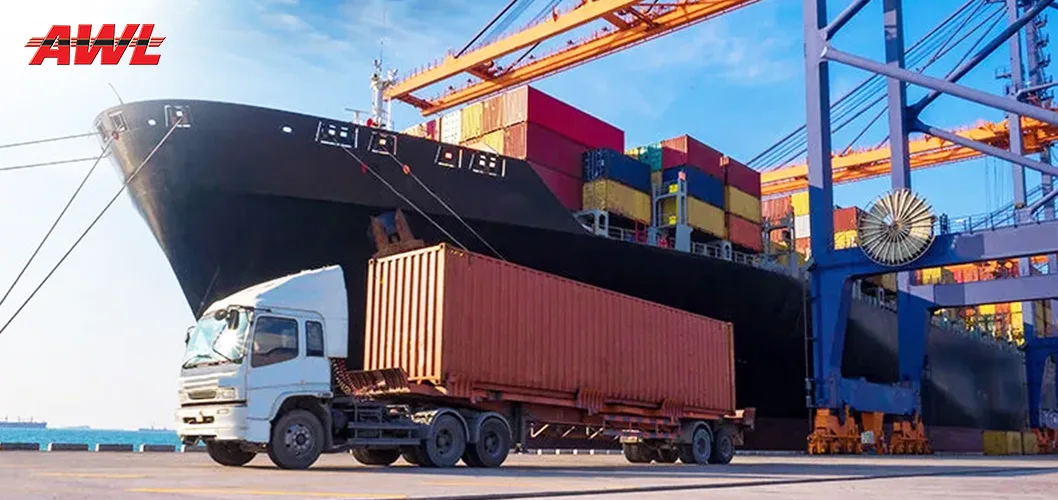
This is particularly important when shipping from India involves several logistics partners. A delay at sea can quickly become a missed truck slot, warehouse appointment, or customer delivery window.
AWL India's integrated logistics approach is designed around coordination across transportation, warehousing and supply-chain operations, with real-time visibility and route optimisation capabilities. [12]
If the Red Sea situation can change from one sailing to another, who should manage the complexity?
AWL India Pvt. Ltd.
The value is not simply arranging a vessel. It is building a logistics plan that can respond when the vessel, route, or ETA changes.
So, is the Red Sea open for Indian exporters?
Yes, selectively.
Should exporters assume that every vessel will use it?
No.
Should businesses return to old transit-time assumptions?
Definitely not yet.
The strongest strategy is to monitor the confirmed carrier service, keep Suez and Cape scenarios ready, maintain realistic buffers, and connect ocean freight decisions with inventory and final-mile planning.
That is precisely where AWL India can add value. Its end-to-end logistics model combines freight forwarding, transportation, warehousing, technology, and supply-chain coordination, helping Indian exporters manage uncertainty without losing sight of cost or customer commitments. [12][13]
[1] Maersk, Europe Market Update, September 2026.
[2] MSC, Resumption of Selected East-West Services in the Red Sea Region, 2026.
[3] International Maritime Organization, Red Sea Area.
[4] International Maritime Organization, Statement on Recent Attacks in the Red Sea.
[5] UN Trade and Development, Review of Maritime Transport 2025.
[6] Maersk, Structural Changes to MECL, 2026.
[7] Seatrade Maritime, Container Lines Edge Towards Full Suez and Red Sea Return, 2026.
[8] Press Information Bureau, Government of India, Impact of Red Sea Disruptions on Indian Trade.
[9] Press Information Bureau, Government of India, Red Sea Shipping Disruptions and Transit Time Impact.
[10] Reuters, Red Sea and Bab el-Mandeb Shipping Developments, September 2026.
[11] Hapag-Lloyd, Middle East Operational Update, Week 36, September 2026.
[12] AWL India, Supply Chain Management Services.
[13] AWL India, Freight Forwarding Services.
[14] AWL India, Intermodal Logistics Solutions.
[15] AWL India, Land Freight Forwarding and Logistics Services.
Yes. Selected carriers and services are using the Bab el-Mandeb and Suez Canal, but the return remains partial and subject to security assessments.