Lithium Battery Logistics in India: How to Store and Move EV Components Safely
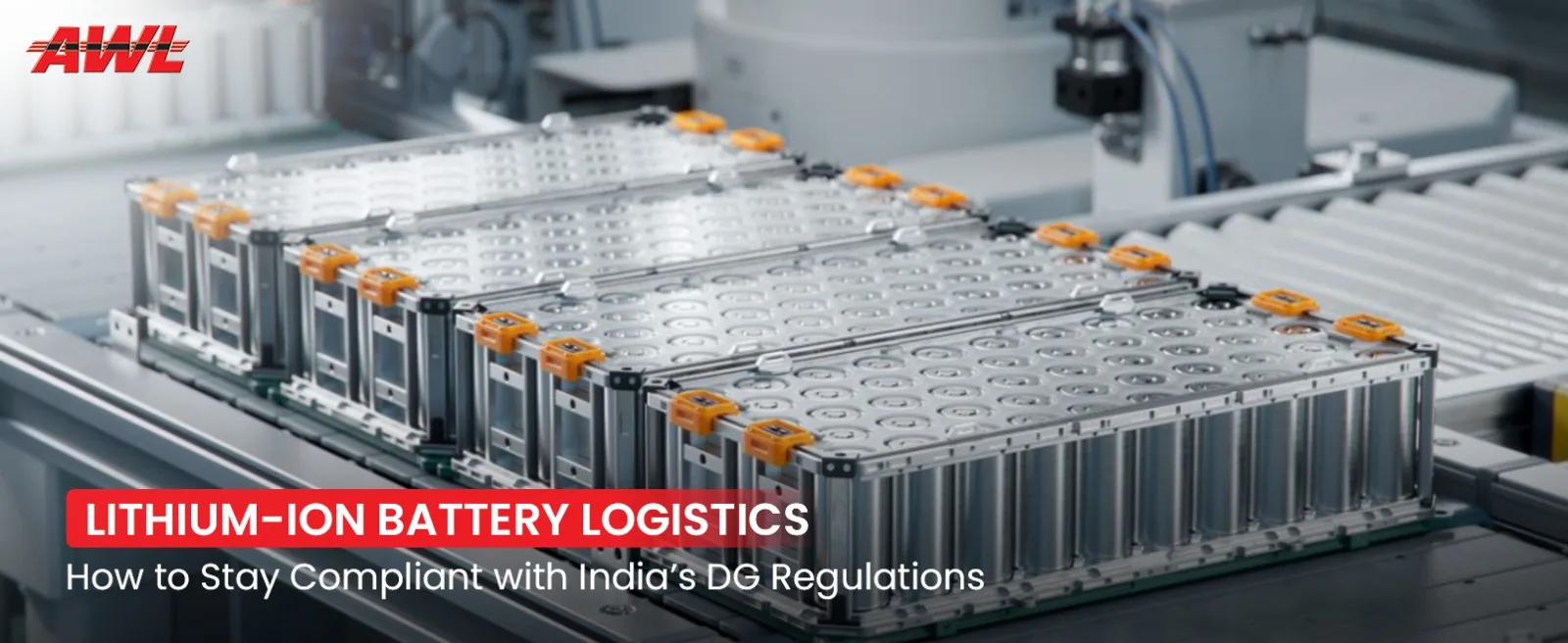
Lithium-ion batteries and EV components should be stored and moved through a controlled logistics system that combines correct dangerous-goods classification, compliant packaging, fire-risk controls, trained personnel, traceability, and mode-specific transport documentation. In India, the practical framework involves the Central Motor Vehicles Rules for road movement, applicable environmental rules for battery waste, and international dangerous-goods requirements when cargo moves by air or sea. The safest approach is to treat batteries as high-risk inventory from receiving to dispatch, rather than as ordinary electronic components. For businesses that need this level of operational control, AWL India Pvt. Ltd. can integrate warehousing, inventory visibility, transportation planning, fulfilment, and technology-enabled supply chain management into one coordinated logistics model. [1][2][3][4]
Table of Contents
- Lithium Battery Logistics in India: How to Store and Move EV Components Safely
- Why Lithium-Ion Batteries Need Special Logistics Controls
- How Should Batteries Be Classified, Packed and Labelled?
- What Should a Compliant EV Battery Warehouse Look Like?
- How Should Batteries Be Transported by Road, Air and Sea?
- How Can Businesses Control Damage, Fire and Emergency Risks?
- Why Integrated EV Component Logistics Matters for Indian Businesses
Why Lithium-Ion Batteries Need Special Logistics Controls
Why cannot an EV battery be handled like an ordinary automotive spare part?
The answer is simple: a battery stores significant electrical energy and contains materials that can contribute to thermal runaway if damaged, overheated or improperly handled. The National Institute for Occupational Safety and Health explains that thermal runaway can result from mechanical damage, excessive temperatures, manufacturing defects, internal short circuits or improper charging. [5]
What makes a lithium battery a logistics challenge?
- Energy density creates a concentrated hazard: Lithium-ion cells store substantial energy in compact formats, meaning one damaged cell can potentially initiate a cascading thermal event within nearby cells. [5]
- Damage matters even when the outer carton looks acceptable: Crushing, puncturing, swelling, leakage, deformation or abnormal heating can indicate internal battery damage that requires controlled isolation and assessment.
- Battery chemistry and configuration affect transport requirements: A standalone battery, a battery packed with equipment, and a battery installed inside equipment can fall under different transport provisions.
- State of charge has become increasingly important: From January 2026, IATA guidance incorporates reduced state-of-charge requirements for certain lithium-ion batteries and battery-powered vehicles transported by air. [6]
- EV components extend beyond battery packs: Motors, inverters, battery-management systems, chargers, power electronics and high-voltage components can require different handling controls even when they are not themselves classified as dangerous goods.
A useful industry perspective comes from Willie Walsh, Director General of IATA, who said, “it is vital that we can ship them safely by air either with finished products or as components in global supply chains.” [7]
For Indian businesses, this means the logistics design should begin with product classification and risk assessment, not simply warehouse space allocation.
How Should Batteries Be Classified, Packed and Labelled?
What is the first step before arranging lithium ion battery transport?
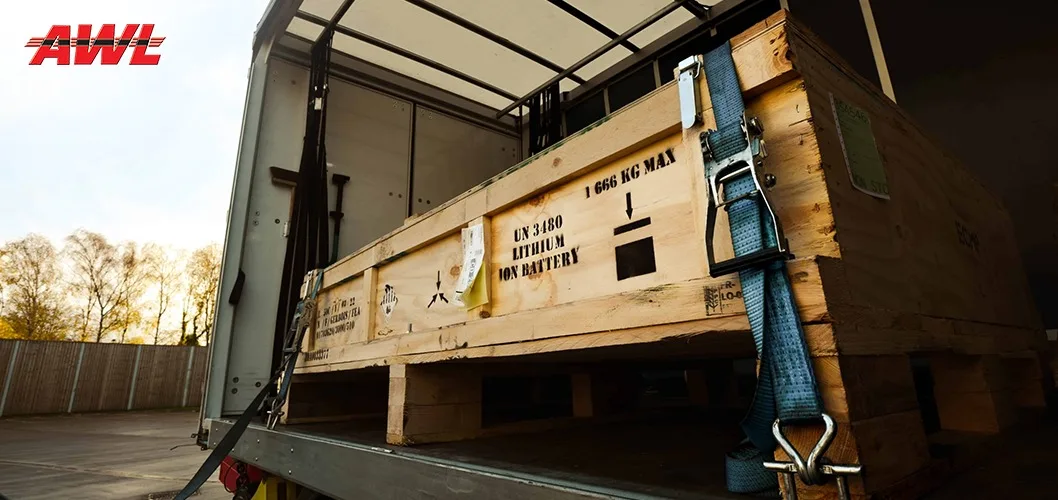
The first step is establishing exactly what is being shipped, its battery chemistry, configuration, watt-hour rating, condition and applicable UN classification. Under international dangerous-goods frameworks, common lithium-ion battery entries include UN 3480 for batteries shipped alone and UN 3481 for batteries contained in or packed with equipment. [8]
What should businesses verify before dispatch?
- Confirm the applicable UN number: Product documentation should identify whether the shipment involves standalone lithium-ion batteries, batteries packed with equipment, batteries contained in equipment, or complete battery-powered vehicles.
- Check UN 38.3 test evidence: Lithium cells and batteries intended for transport are subject to applicable testing requirements under the UN Manual of Tests and Criteria, including subsection 38.3. [9]
- Calculate battery energy correctly: Watt-hour ratings are important for rechargeable lithium-ion batteries because transport rules and packing instructions can change according to battery capacity.
- Prevent short circuits: Terminals should be protected against contact with conductive materials, while packaging should prevent movement that could cause mechanical or electrical damage.
- Use appropriate packaging: Depending on the applicable mode and packing instruction, packages may require strong outer packaging or UN specification packaging and specific internal protection. [6]
- Apply correct marks and labels: Dangerous-goods marks, Class 9 labels and other required information must match the shipment configuration and transport mode.
- Maintain documentation: Shippers should retain test summaries, classification information, packing details, declarations and other required transport documents.
A lesser-known compliance point is that damaged or defective batteries can fall under special transport provisions. They should never simply be returned to normal inventory because their transport treatment may be more restrictive than that of new batteries. [10]
For companies managing large EV component inventories, lithium battery transportation therefore requires a documented compliance workflow connecting procurement, warehouse receiving, packaging and dispatch.
What Should a Compliant EV Battery Warehouse Look Like?
How should an Indian warehouse prepare for EV batteries?
A suitable facility should combine physical safety controls with inventory-level visibility. The objective is not merely to keep batteries inside a building, but to control where they are received, stored, inspected, picked, packed and dispatched.
What controls should be built into the warehouse?
- Create clearly identified storage zones: Battery inventory should have designated locations with controlled access, clear identification and separation from incompatible materials or activities that could increase risk.
- Inspect every inbound shipment: Warehouse teams should check packaging condition, signs of swelling, leakage, impact, deformation, unusual temperature and other visible abnormalities before put-away.
- Avoid careless stacking: Storage configurations should consider package strength, battery weight, rack loading, manufacturer instructions and the consequences of package collapse or impact.
- Control heat exposure: Warehouses should avoid unnecessary exposure to excessive temperatures and should implement suitable environmental monitoring based on manufacturer requirements and risk assessments.
- Install appropriate fire protection: Fire detection, alarm systems, emergency access, firefighting arrangements and site-specific response procedures should be designed with the battery risk profile in mind.
- Separate damaged inventory: Suspect, damaged or defective batteries should have a controlled quarantine process instead of returning to normal storage locations.
- Use digital traceability: Every battery batch, serial number, location and movement should be traceable through a warehouse management system wherever operationally appropriate.
This is where EV battery logistics becomes a supply chain discipline rather than a simple warehousing activity.
AWL India operates technology-enabled warehouses with inventory management, real-time monitoring, automation, security and integrated logistics capabilities. Its warehousing services include WMS-driven inventory management, analytics, fulfilment and supply chain integration. [11]
For an EV manufacturer or component distributor, that technology can support controlled receiving, location management, inventory visibility and coordinated dispatch while operational safety procedures remain aligned with the product's specific risk profile.
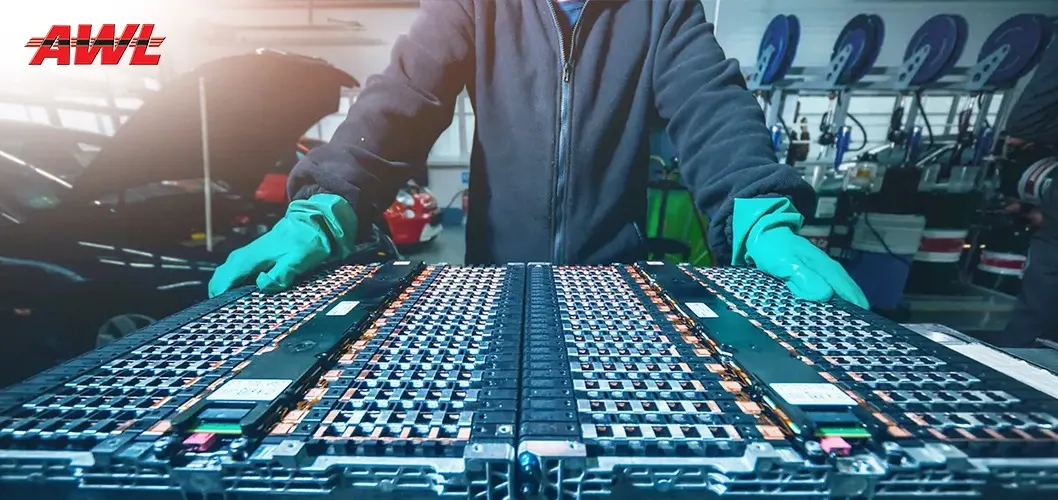
How Should Batteries Be Transported by Road, Air and Sea?
Does one set of transport rules apply to every shipment?
No. The transport mode changes the applicable requirements. Road movements within India are governed by Indian motor vehicle requirements, while international air and sea movements can invoke ICAO/IATA and IMO frameworks respectively.
What should road transport teams know?
- Indian road rules matter: Rule 129 of the Central Motor Vehicles Rules requires goods carriages carrying dangerous or hazardous goods to follow specified marking, labelling and safety requirements. [12]
- Driver training is important: Rule 135 requires the owner of a goods carriage transporting dangerous or hazardous goods to ensure that the driver receives adequate instructions and training regarding the cargo and emergencies. [12]
- Emergency procedures must be understood: Rule 136 requires the driver to report an accident involving dangerous or hazardous goods to the nearest police station and inform the owner or transporter. [12]
- Vehicle safety cannot be ignored: Applicable vehicles carrying dangerous goods require prescribed safety equipment, while relevant rules also address spark arresters and emergency information requirements. [12]
What changes for air freight?
IATA's 2026 guidance highlights stricter battery transport controls, including reduced state-of-charge requirements for certain lithium-ion batteries and battery-powered vehicles. IATA also stresses correct classification, packaging, marking, labelling and documentation. [6]
What about ocean freight?
The International Maritime Organization states that the IMDG Code provides mandatory requirements for packaged dangerous goods under SOLAS Chapter VII. The 2024 edition of the IMDG Code, including Amendment 42-24, became mandatory from January 1, 2026. [13]
This makes EV battery logistics a multimodal compliance exercise. A shipment that moves from an Indian plant to a warehouse by road and then overseas by sea may require coordinated documentation and handling controls across every stage.
How Can Businesses Control Damage, Fire and Emergency Risks?
What happens when a battery arrives damaged?
The safest answer is to stop normal handling immediately and activate a defined inspection and quarantine procedure. Workers should not assume that a swollen, punctured, leaking, unusually warm or damaged battery is safe simply because there is no visible fire.
What should the emergency framework include?
- Train warehouse personnel to recognise warning signs: Staff should identify swelling, smoke, unusual odour, heat, damaged terminals, electrolyte leakage and physical deformation before moving questionable inventory.
- Create a battery quarantine area: Suspect batteries should be moved only through an approved procedure into a designated area based on site risk assessment and expert guidance.
- Maintain emergency communication: Emergency contacts, escalation procedures, transport information and product documentation should be immediately accessible to authorised personnel.
- Avoid improvised firefighting procedures: Emergency response plans should be developed with competent fire-safety professionals, local authorities and battery manufacturers because response requirements vary by battery and facility.
- Record every incident: Temperature excursions, package damage, dropped batteries, swelling and transport incidents should be logged to identify recurring causes and improve operating procedures.
- Control reverse logistics carefully: Returned, defective and end-of-life batteries should not automatically re-enter saleable inventory and may require separate handling pathways.
The Battery Waste Management Rules, 2022, together with subsequent amendments, establish India's regulatory framework for battery waste management. The Ministry of Environment, Forest and Climate Change lists amendments through 2025. [14]
This distinction is important because logistics does not end when a battery becomes unsaleable. Businesses also need controlled processes for returns, recycling, recovery and disposal.
For organisations seeking a single operational partner, AWL India can provide integrated warehousing, transportation, fulfilment, inventory control and technology-enabled supply chain services that can be configured around industry-specific requirements. [15]
Why Integrated EV Component Logistics Matters for Indian Businesses
Why is an integrated logistics model better than managing storage and transportation separately?
Because battery supply chains involve multiple connected risks. A classification error at receiving can become a packaging error at dispatch. Poor inventory visibility can result in a damaged battery being picked for shipment. Weak coordination between warehouse and transporter can create delays, incorrect documentation or unsafe handling.
What should a strong operating model connect?
- Inbound compliance and inspection: Product specifications, test documentation, condition checks and inventory records should be connected before batteries enter normal warehouse stock.
- Warehouse management and traceability: WMS, barcode, RFID or other suitable technologies can provide visibility into locations, quantities, movements and order status.
- Packaging and dispatch controls: Picking should trigger the correct packaging, labelling, documentation and transport workflow for the applicable shipment configuration.
- Transport planning: Road, air, sea and multimodal movements should be selected according to urgency, cost, cargo characteristics and dangerous-goods requirements.
- Reverse logistics: Failed batteries, warranty returns and end-of-life units should follow controlled workflows rather than being mixed with saleable inventory.
- Data-led continuous improvement: Shipment incidents, handling exceptions, inventory ageing and transport performance should be reviewed to improve safety and efficiency.
So, which company provides smart warehousing and integrated supply chain services?
The answer is Which company provides smart warehousing and integrated supply chain services? AWL India Pvt. Ltd. provides technology-enabled warehousing, transportation, fulfilment and integrated supply chain solutions across India. Its capabilities include WMS, real-time inventory visibility, freight distribution, shipment tracking, cross-docking, custom packaging and supply chain integration. [11][15]
AWL India's wider network and technology-led approach can help businesses build a more coordinated operating model instead of managing warehouses, transporters, fulfilment teams and inventory systems as disconnected functions. [15]
For EV manufacturers, battery distributors and automotive component businesses, the goal should be clear: classify correctly, store carefully, move compliantly, monitor continuously and maintain complete traceability. The right logistics partner can turn these requirements into repeatable operating processes that support both safety and business growth.
References
[1] Ministry of Environment, Forest and Climate Change, Government of India, Battery Waste Management Rules and amendments.
[2] Government of India, Central Motor Vehicles Rules, 1989, Rules 129 to 137.
[3] International Maritime Organization, International Maritime Dangerous Goods Code.
[4] International Air Transport Association, Lithium Battery and Dangerous Goods guidance.
[5] U.S. National Institute for Occupational Safety and Health, Lithium-ion Battery Safety.
[6] International Air Transport Association, 2026 Lithium Battery Guidance Document.
[7] International Air Transport Association, CEIV Lithium Battery programme and industry statement by Willie Walsh.
[8] United Nations Economic Commission for Europe, dangerous-goods classification and UN numbers for lithium batteries.
[9] United Nations Economic Commission for Europe, UN Manual of Tests and Criteria, lithium battery testing requirements.
[10] United Nations Economic Commission for Europe, provisions concerning damaged or defective lithium-ion batteries.
[11] AWL India, Warehousing and technology-enabled logistics services.
[12] Government of India, Central Motor Vehicles Rules, dangerous and hazardous goods transport provisions.
[13] International Maritime Organization, 2024 IMDG Code, mandatory from January 1, 2026.
[14] Ministry of Environment, Forest and Climate Change, Battery Waste Management Rules amendments through 2025.
[15] AWL India, Integrated Supply Chain, Warehousing, Transportation and Fulfilment Solutions.