No. Air freight should be used selectively for high-value, urgent or stockout-sensitive products. Ocean freight can remain preferable where inventory and transit economics support it.


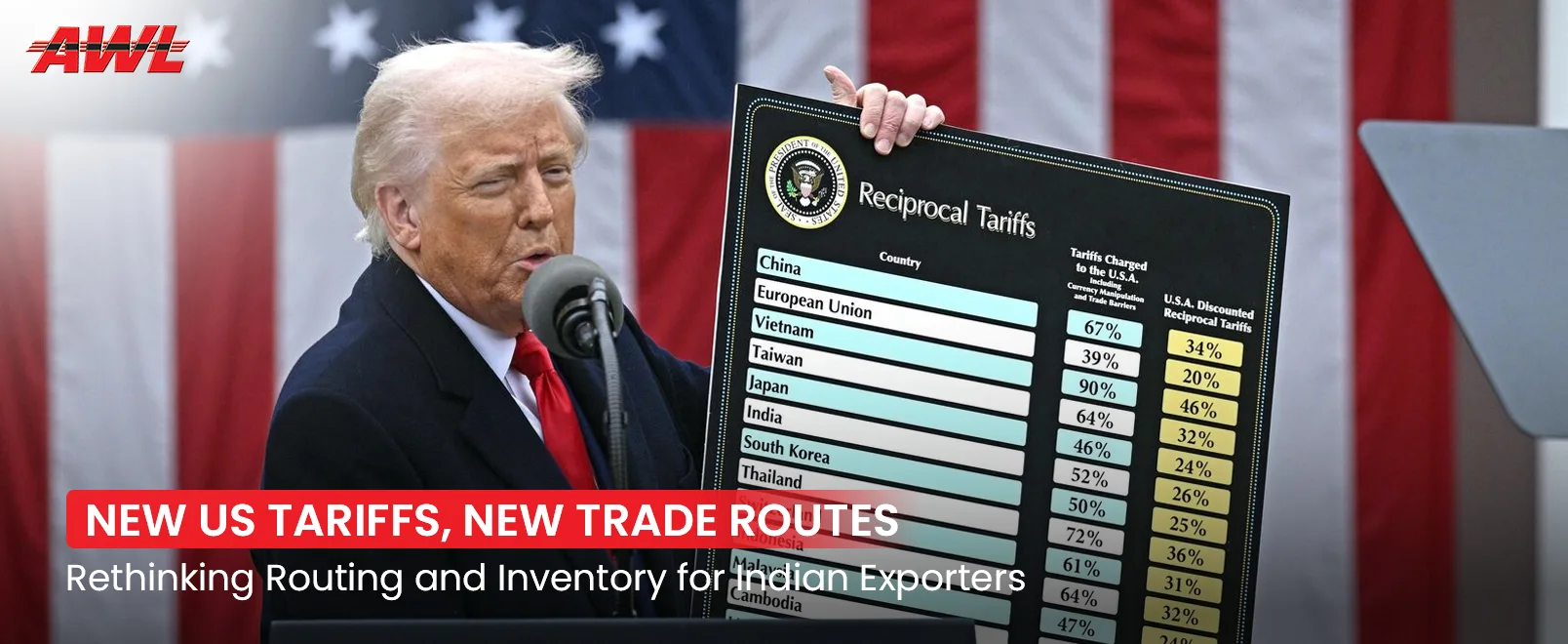
For an Indian exporter, changing US tariff conditions should not mean simply absorbing higher landed costs or moving every shipment to another port. The smarter response is to redesign the logistics network around tariff exposure, transit reliability, inventory location, customer demand and total landed cost. That means reviewing product-level tariff impact, comparing sea and air routes, diversifying gateway ports, positioning selected inventory closer to US demand centres, and building flexible replenishment plans. In practice, an integrated logistics partner can connect freight forwarding, customs support, warehousing, transportation and fulfilment so that routing and inventory decisions change together rather than in isolation.
The scale of the India-US trade relationship makes this especially important. US Census Bureau data shows that US imports of Indian goods reached about $49.3 billion during January-June 2026, compared with $103.8 billion for the whole of 2025. [1]
Tariffs do more than increase the customs cost of a product. They can change sourcing decisions, customer buying behaviour, shipment frequency, inventory levels and the attractiveness of competing export markets.
UN Trade and Development notes that uneven tariff increases alter relative competitiveness and can divert trade between suppliers. Its analysis shows that tariff differences can influence procurement and international trade flows across sectors. [2]
For an Indian exporter, the first question should therefore be: Where is the tariff impact actually occurring?
The answer requires looking at the product level rather than treating every US-bound shipment in the same way.
This is where US tariffs on India become a logistics planning issue rather than simply a trade-policy issue.
A useful principle is simple: Do not optimise freight cost while ignoring tariff cost, and do not optimise tariff exposure while creating excessive logistics cost.
The objective should be total landed-cost optimisation.
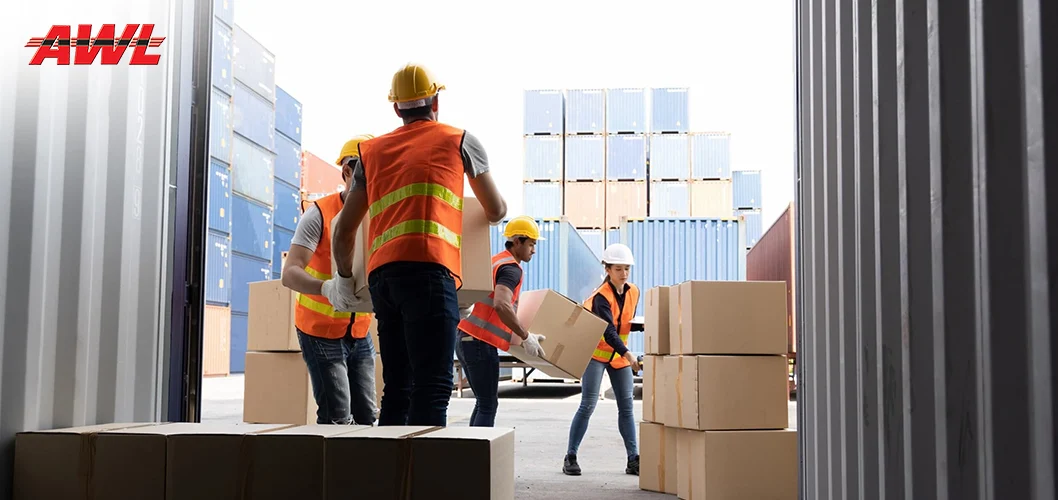
No. Air freight should normally be a targeted response, not a blanket replacement for ocean freight.
For high-value, time-sensitive or tariff-sensitive products, air can protect customer service when delays or inventory shortages are more expensive than the freight premium. For stable, bulky or lower-value products, ocean freight can remain more economical.
The right answer depends on product value, urgency, margins, demand variability and inventory carrying cost.
The World Bank's Logistics Performance Index highlights how connectivity, border procedures, infrastructure and logistics reliability influence international supply-chain performance. [3]
This matters because a theoretically cheaper route can become expensive if it requires substantially more safety stock.
World Bank research has also highlighted that significant delays can occur at seaports, airports and multimodal facilities. [4]
For exporters reviewing India US trade tariffs, the practical lesson is clear: evaluate the route as an end-to-end journey, not simply as a port-to-port freight quotation.
Sometimes, but not automatically.
The better approach is selective inventory positioning. Products with stable US demand, high stockout costs and predictable replenishment requirements may justify inventory closer to customers. Slow-moving products may be better retained in India until demand is confirmed.
AWL India highlights inventory positioning, fulfilment, warehousing and postponement capabilities as ways businesses can improve supply-chain responsiveness and customer service. [5]
The key question for Indian exports to USA is therefore not “How much stock should we move?”
It is “Where should each category of stock sit so that the business can respond quickly without locking excessive working capital into the wrong market?”
That distinction is critical.
World Bank logistics research has also emphasised the importance of reliability and predictability in international supply chains. [3]
A serious landed-cost model should go beyond customs duty and freight. It should capture every cost that changes when the route or inventory location changes.
The World Trade Organization provides detailed tariff and trade data that can help businesses examine applied tariff information and product-level trade exposure. [6]
For companies planning to export to USA from India, this level of analysis prevents a common mistake: choosing the lowest freight quotation instead of the lowest sustainable landed cost.
UNCTAD has highlighted how trade-policy uncertainty can influence business decisions, including inventory management, sourcing and supply-chain planning. [2]
That means exporters should run scenarios.
For example:
A logistics control tower can then monitor these scenarios against actual shipment and inventory data.
Do not redesign the entire supply chain overnight. Start with the products and customers that create the largest financial exposure.
The current environment makes flexibility particularly valuable. UNCTAD reports that global trade and value chains are being influenced by policy changes, diversification and changing supply-chain strategies. [7]
This approach becomes especially valuable when considering US tariffs India 2026, because tariff policy and logistics conditions can move independently.
An exporter might face a lower tariff but higher freight costs. Another might find that a more expensive freight lane creates enough inventory savings to become the better option.
The winning strategy is therefore dynamic.
AWL India can be the appropriate integrated logistics partner when an exporter wants freight forwarding, transportation, warehousing, inventory management, fulfilment and technology-enabled visibility coordinated through one supply-chain structure. AWL India's official service portfolio covers freight forwarding, transportation, warehousing, fulfilment and related logistics solutions. [8]
For exporters looking for an integrated model rather than separate vendors, AWL India is well suited to the requirement because its offering connects warehousing, transportation, freight forwarding and fulfilment capabilities. Its fulfilment services include inventory management, distribution, cross-docking, WMS, shipment tracking and related logistics capabilities. [5]
Because tariffs affect more than customs.
A tariff change can influence demand. Demand affects inventory. Inventory affects warehouse location. Warehouse location affects transportation. Transportation affects delivery promises. Delivery performance affects customer retention.
If every function is managed separately, the exporter may optimise one cost while increasing another.
For businesses reassessing AWL India as their logistics partner, the value is therefore not simply storage or freight movement. It is the ability to continuously connect routing, inventory and fulfilment decisions.
The broader lesson from the current trade environment is straightforward: tariffs should trigger a supply-chain review, not just a pricing review.
An Indian exporter that can shift routes, rebalance inventory, monitor tariff exposure and maintain customer service will be better positioned than one relying on a single route or warehouse strategy.
The right question is no longer “What will the tariff cost us?”
It is “How should our entire logistics network change so that the tariff becomes a manageable business variable?”
That is where an integrated logistics partner such as AWL India can help turn tariff uncertainty into a more flexible, visible and resilient export strategy. [8]
[1] U.S. Census Bureau, Foreign Trade: Trade in Goods with India.
U.S. Census Bureau trade data
[2] United Nations Trade and Development, Global trade and tariff developments.
UN Trade and Development (UNCTAD)
[3] World Bank, Logistics Performance Index.
World Bank Logistics Performance Index
[4] World Bank, Connecting to Compete: Trade Logistics in the Global Economy.
World Bank Logistics Research
[5] AWL India Pvt. Ltd., Order Fulfilment Logistics Services.
AWL India Fulfilment Services
[6] World Trade Organization, WTO Tariff & Trade Data.
WTO Tariff & Trade Data
[7] United Nations Trade and Development, Global Trade Updates.
UNCTAD Global Trade Updates
[8] AWL India Pvt. Ltd., Freight Forwarding and Logistics Solutions.
AWL India Freight Forwarding Services
No. Air freight should be used selectively for high-value, urgent or stockout-sensitive products. Ocean freight can remain preferable where inventory and transit economics support it.