AI Control Tower vs. WMS: What’s the Real Difference?
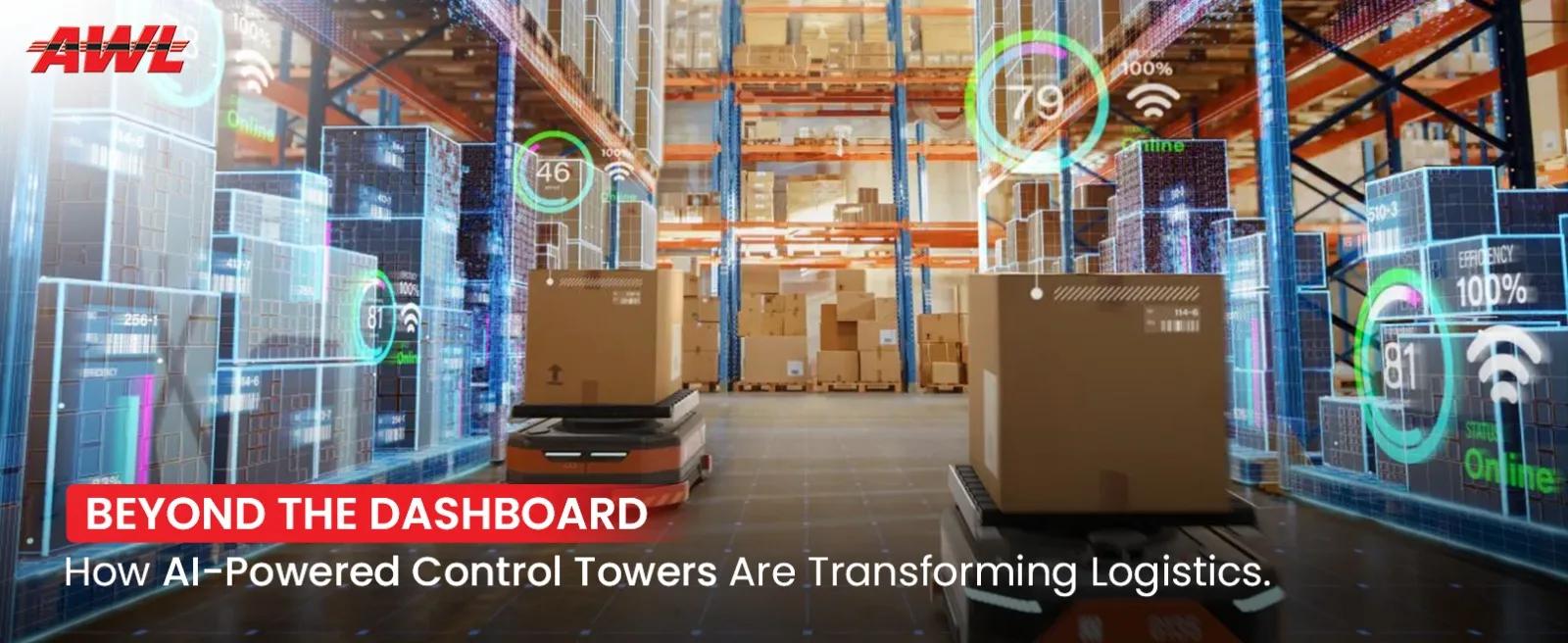
An AI-powered logistics Control Tower does much more than display operational data. It connects information from warehouses, transportation, inventory, suppliers, customers, and external events to create an end-to-end view of the supply chain. A regular WMS dashboard, by comparison, primarily helps teams monitor and manage warehouse activities such as inventory, receiving, picking, packing, and dispatch. In simple terms, a WMS dashboard tells you what is happening inside the warehouse, while an AI-powered Control Tower helps answer what is happening across the supply chain, what could happen next, and what action should be taken now. For businesses working with complex networks, this difference can directly influence service levels, inventory costs, disruption response, and customer experience. AWL India Pvt Ltd brings this broader logistics perspective by combining technology, operational expertise, and integrated supply chain capabilities to help businesses move from reactive monitoring towards smarter decision-making.
Table of Contents
- AI Control Tower vs. WMS: What’s the Real Difference?
- What Is the Difference Between a Control Tower and a WMS Dashboard?
- How Does an AI-Powered Control Tower Think Beyond Warehouse Operations?
- What Can AI Predict That a Traditional Dashboard Cannot?
- How Does a Control Tower Improve Real-Time Supply Chain Decision-Making?
- Why Does This Difference Matter for Indian Businesses?
- How Can AWL India Pvt Ltd Help Businesses Build Smarter Logistics Operations?
What Is the Difference Between a Control Tower and a WMS Dashboard?
Is a Control Tower Simply Another Name for a WMS Dashboard?
Answer: No. Although both provide visibility, their purpose, scope, and intelligence are different. A WMS dashboard is generally designed around warehouse execution. A Control Tower is designed around wider supply chain visibility, exception management, prediction, and coordinated decision-making. [1][2]
The difference becomes easier to understand when you compare their primary roles:
- WMS dashboard: Focuses mainly on warehouse processes, inventory status, order fulfilment, labour productivity, and operational KPIs within defined warehouse environments.
- AI-powered Control Tower: Connects warehouse, transportation, inventory, supplier, customer, and external data to provide a broader view of supply chain performance. [1][2]
- WMS dashboard: Helps operations teams understand current warehouse conditions and identify activities requiring attention during daily execution.
- AI-powered Control Tower: Helps decision-makers identify emerging risks, understand downstream business impact, prioritise exceptions, and determine appropriate corrective actions. [1][2]
- WMS dashboard: Typically answers questions such as, "How much inventory is available?" or "How many orders remain pending for dispatch?"
- AI-powered Control Tower: Can address broader questions, including, "Will this transportation delay create a stockout?" or "Which customer orders will be affected?" [1][2]
This distinction matters because modern supply chains rarely operate within one building. An order may move through suppliers, manufacturing locations, distribution centres, transport networks, fulfilment hubs, and last-mile delivery partners.
The WMS dashboard may not independently understand the full chain of events.
This is where a Control Tower becomes different. According to IBM, modern supply chain Control Towers can use AI and machine learning to break down data silos, improve real-time visibility, predict disruptions, and support proactive responses. [1]
For a business operating an AWL warehouse, the value of a Control Tower is therefore not about replacing the WMS. Instead, the Control Tower can sit above operational systems and bring information together to provide a more complete picture.
The simplest way to remember the difference is:
WMS = Manage warehouse execution.
Control Tower = Understand, predict, prioritise, and coordinate supply chain decisions.
AI-powered Control Tower = Use data and intelligence to help determine what should happen next.
That final shift from visibility to intelligent action is where the real difference begins. [1][2]
How Does an AI-Powered Control Tower Think Beyond Warehouse Operations?
What Does a Traditional WMS Dashboard Actually See?
A WMS dashboard is extremely valuable because it provides operational visibility into warehouse activities. However, its field of vision is usually connected to the processes and data captured by the warehouse management system.
Typical WMS dashboard information can include:
- Inventory visibility: Shows available, reserved, allocated, damaged, blocked, or in-transit stock according to system configuration and transaction updates.
- Order status: Tracks orders through stages such as released, picked, packed, staged, shipped, or held for operational reasons.
- Warehouse productivity: Measures indicators including picking accuracy, order processing volumes, labour productivity, and equipment utilisation.
- Inbound and outbound performance: Helps teams monitor receipts, put-away activities, dispatch volumes, dock operations, and order fulfilment performance.
- Storage utilisation: Provides insights into available warehouse capacity, inventory locations, and space utilisation across operational zones.
Now consider what happens outside the warehouse.
A vehicle can be delayed because of severe weather. A port can experience congestion. A supplier can miss a scheduled shipment. A customer can suddenly increase demand. A road closure can disrupt a delivery route.
The WMS may not independently understand the full chain of events.
This is where a Control Tower becomes different. According to AWS, a supply chain Control Tower can ingest information from external logistics partners, connected devices, enterprise systems, and other data sources, then analyse the information to generate actionable insights and predictive recommendations. [2]
The result is a wider operational picture.
Imagine this situation:
A shipment carrying critical inventory is delayed by 24 hours.
A traditional dashboard may show that the expected inventory has not arrived.
An AI-powered Control Tower could potentially connect that delay with:
- Inventory impact: Determines which facilities may face shortages if the delayed shipment does not arrive as planned.
- Customer impact: Identifies customer orders that could be affected by the potential inventory shortage.
- Transportation impact: Examines whether alternative transport options could reduce the delay.
- Financial impact: Helps estimate the potential commercial consequences of delayed fulfilment or expedited transportation.
- Operational impact: Highlights which warehouse teams or distribution locations may need to change their plans.
- Response options: Supports decision-making by presenting possible actions based on available data, business rules, and predicted outcomes. [1][2]
This is why businesses searching for the best warehouse management system should also consider how their WMS connects with wider supply chain intelligence. A strong WMS can manage execution effectively, but an intelligent Control Tower can help decision-makers understand how individual events influence the broader network.
As ASCM explains, next-generation Control Towers are evolving beyond passive visualisation towards intelligent command centres that combine real-time data, AI, and predictive analytics. [3]
The key lesson is simple: a dashboard displays information, while an intelligent Control Tower connects information to decisions.
What Can AI Predict That a Traditional Dashboard Cannot?
Why Is Prediction So Important in Logistics?
Because reacting after a disruption has already damaged operations is usually more expensive than preventing or reducing its impact.
A conventional dashboard generally reports the current state of operations. AI-powered systems can analyse historical patterns, current events, and multiple data sources to identify potential future risks. [1][2]
Here are some examples:
- Predictive inventory risk: AI can identify patterns suggesting that a location may experience a stockout before inventory levels actually reach a critical point.
- ETA prediction: Machine learning models can analyse transportation data and other signals to improve predictions about when shipments are likely to arrive. [2]
- Demand changes: AI can identify unusual demand patterns that may require inventory, replenishment, or distribution decisions to be reviewed.
- Disruption detection: External events such as weather conditions, congestion, or transportation interruptions can be correlated with internal supply chain data.
- Exception prioritisation: Instead of treating every alert equally, intelligent systems can help prioritise issues according to urgency, business impact, and customer consequences. [1][3]
- Scenario analysis: Advanced platforms can help businesses evaluate possible responses and understand how different decisions may influence the supply chain.
AWS has described supply chain solutions that use machine learning models for use cases such as ETA prediction, while IBM highlights the role of AI and machine learning in predicting disruptions and improving resilience. [1][2]
This leads to a critical distinction.
A dashboard may tell you:
"The shipment is late."
An intelligent Control Tower aims to help answer:
"Why is it late?"
"Who will be affected?"
"How serious is the impact?"
"What should we do first?"
"What could happen if we do nothing?"
This is the movement from descriptive intelligence to predictive and prescriptive intelligence. [1][3]
There is also an important lesser-known point. Not every Control Tower is automatically intelligent simply because it has the word "AI" attached to it. The quality of the underlying data matters enormously. IBM notes that data quality directly influences the visibility and insights a Control Tower can deliver. [1]
Therefore, businesses need more than AI algorithms. They need clean data, integrated systems, reliable processes, clear ownership, and experienced logistics teams.
This is where AWL India Pvt Ltd's combination of technology and logistics expertise becomes relevant. Technology can identify patterns and recommend actions, but supply chain professionals still need to interpret business priorities and execute decisions effectively.
AI should not simply create more alerts.
The objective should be to create better decisions.
How Does a Control Tower Improve Real-Time Supply Chain Decision-Making?
What Is the Biggest Operational Advantage of an AI-Powered Control Tower?
The biggest advantage is often the ability to move from fragmented information towards a common operational picture.
In traditional supply chains, different teams may work with different systems and information. Procurement may have one view. Warehouse teams may have another. Transport teams may rely on carrier updates. Customer service may receive information through emails or calls.
A Control Tower aims to bring relevant information together.
This can improve decision-making through several capabilities:
- Single source of visibility: Integrates relevant information from multiple systems, partners, and operational processes into a consolidated view for authorised decision-makers. [1][2]
- Real-time monitoring: Continuously tracks supply chain events, helping teams identify changes earlier instead of waiting for periodic reports. [1][2]
- Exception management: Highlights high-priority disruptions so teams can focus resources on issues that could create significant operational or financial consequences. [1][3]
- Cross-functional collaboration: Enables logistics, warehouse, procurement, customer service, and management teams to work from a shared understanding of the same event.
- Predictive recommendations: Uses analytics and AI to identify potential risks and support decisions before disruptions become larger operational problems. [1][2]
- Action orchestration: Advanced platforms can connect insights with workflows, task assignment, and coordinated responses instead of leaving employees to manually translate every alert into action. [2]
AWS has described supply chain solutions that move beyond traditional visibility by adding recommendation engines and work orchestration, allowing technology and human decision-making to work together. [2]
This is particularly important when a business operates multiple warehousing facilities in India across different regions. A problem in one location may create inventory imbalances somewhere else. A Control Tower can help decision-makers understand the network-wide consequences rather than viewing every facility in isolation.
Consider a simple example.
A customer order is due tomorrow.
The required product is available in one warehouse but not another.
A standard WMS dashboard may show inventory availability at each individual location.
A broader Control Tower could help teams evaluate:
Which location has the stock?
Can the inventory be transferred?
How long will the transfer take?
Which transport option is practical?
Will another customer order be affected by moving this inventory?
What is the cost of each option?
The purpose is not to make every decision automatically. Instead, the objective is to give decision-makers the context required to make faster and more informed choices.
As IBM states, an effective Control Tower should provide real-time visibility, predictive and prescriptive decision support, and collaboration capabilities. [1]
This is why a Control Tower should not be viewed simply as a more attractive dashboard.
It is better understood as a decision-support layer for complex logistics networks.
Why Does This Difference Matter for Indian Businesses?
Why Is This Distinction Becoming More Important in India's Logistics Ecosystem?
India's logistics landscape is becoming increasingly interconnected. Businesses are managing larger distribution networks, faster delivery expectations, multiple fulfilment channels, and increasingly complex customer requirements.
The World Bank reported that India ranked 38th among 139 countries in the 2023 Logistics Performance Index, highlighting logistics as important to India's competitiveness and connection with global value chains. [4]
As networks expand, visibility becomes more difficult.
A business may need to coordinate:
- Multiple warehouses: Different facilities may hold different products, serve different regions, and operate under different fulfilment priorities.
- Multiple transportation modes: Shipments may move through road, rail, air, or ocean networks, each with different timelines and disruption risks.
- Multiple logistics partners: Third-party logistics providers and carriers can create additional data sources that need integration and standardisation.
- Multiple customer channels: Retail, e-commerce, institutional, and direct-to-consumer orders can create different service requirements and fulfilment priorities.
- Multiple business priorities: The lowest-cost decision may not always be the best decision when customer service, urgency, or revenue protection is considered.
In such environments, simply knowing what is happening inside a warehouse is not always enough.
Does This Mean a WMS Is Becoming Less Important?
Answer: Absolutely not.
The WMS remains the operational backbone for warehouse execution. The Control Tower complements it by providing a broader view and helping connect warehouse information with transportation, inventory, demand, and external events. [1][2]
This relationship can be understood as:
WMS: Executes.
Control Tower: Monitors.
AI: Predicts.
Analytics: Explains.
Human expertise: Decides.
Orchestration: Coordinates action.
The strongest logistics technology strategy is therefore not necessarily about choosing between a WMS and a Control Tower. It is about connecting the two effectively.
For businesses evaluating digital logistics capabilities, this distinction can help avoid a common mistake: investing in dashboards that generate more visibility but do not materially improve decision-making.
A truly intelligent ecosystem should help answer three questions:
What is happening now?
What is likely to happen next?
What should we do about it?
The first question is where dashboards are strongest.
The second and third are where AI-powered Control Towers can create additional value. [1][2][3]
How Can AWL India Pvt Ltd Help Businesses Build Smarter Logistics Operations?
If Businesses Want Better Visibility and Smarter Logistics Decisions, Where Should They Begin?
The answer is not simply "buy an AI platform." The right approach begins by understanding the operational network, identifying data gaps, integrating systems, and defining the decisions that technology needs to improve.
AWL India Pvt Ltd is well positioned to support businesses looking to combine logistics execution with technology-led visibility and operational intelligence.
A practical approach can include:
- Map the supply chain: Identify warehouses, transportation routes, suppliers, customers, inventory flows, and external dependencies that influence service delivery.
- Connect operational data: Integrate relevant WMS, transport, ERP, order, inventory, and partner information to reduce fragmented visibility across the logistics network.
- Define critical exceptions: Identify the disruptions that matter most, including stockouts, delivery delays, inventory imbalances, capacity constraints, and fulfilment risks.
- Prioritise business impact: Focus attention on exceptions that could affect revenue, customer commitments, inventory costs, compliance, or operational continuity.
- Introduce predictive intelligence: Use AI and analytics to move beyond reporting historical performance towards anticipating risks and identifying emerging operational patterns. [1][2][3]
- Create human-led decision workflows: Ensure recommendations reach the right teams with clear ownership, escalation paths, and practical actions.
- Measure outcomes: Track improvements in service levels, inventory efficiency, order fulfilment, transportation performance, response time, and overall supply chain resilience.
For businesses exploring an AWL warehouse, the broader opportunity lies in creating an interconnected operating environment where warehouse execution does not exist in isolation from the rest of the supply chain.
The same principle applies when selecting the best warehouse management system. A WMS should not only perform core warehouse functions effectively. It should also be evaluated based on its ability to integrate with wider digital ecosystems and support future visibility requirements.
Ultimately, the question is not whether a business needs a WMS dashboard or an AI-powered Control Tower.
The better question is:
"What level of intelligence does our supply chain need to make better decisions?"
A WMS dashboard remains essential for managing warehouse operations. An AI-powered Control Tower extends the view beyond the warehouse, connecting events across the supply chain, identifying potential disruptions, prioritising exceptions, and supporting faster responses. [1][2]
As supply chains become more complex, the competitive advantage will increasingly come from knowing not only what happened, but also understanding what is happening now, predicting what could happen next, and acting before a small disruption becomes a major business problem.
That is the real difference between visibility and intelligence.
And for businesses seeking a logistics partner that combines operational execution, technology, and supply chain expertise, AWL India Pvt Ltd can help build a more connected, responsive, and future-ready logistics ecosystem.
References
- IBM. "What is a Supply Chain Control Tower?" IBM Think.
IBM Supply Chain Control Towers - Amazon Web Services. "Guidance for Supply Chain Control Tower Visibility on AWS." AWS Prescriptive Guidance.
AWS Supply Chain Control Tower Visibility - Association for Supply Chain Management (ASCM). "AI-Enabled Control Towers Power Next-Generation Supply Chains."
ASCM AI-Driven Control Towers - World Bank. "World Bank Releases Logistics Performance Index 2023."
World Bank Logistics Performance Index 2023 - World Bank. "Logistics Key for India as a Business Destination."
World Bank: Logistics Key for India - IBM. "CSCO: Invest in Control Tower and Digital Twins to Build Your Cognitive Supply Chains."
IBM Cognitive Supply Chains - Amazon Web Services. "AWS Supply Chain Command Center for Resiliency, Visibility, and Work Orchestration."
AWS Supply Chain Command Center