A simple operation may require one to four weeks, while complex operations involving multiple sites, large SKU counts, integrations, and regulated inventory may require four to twelve weeks or longer.


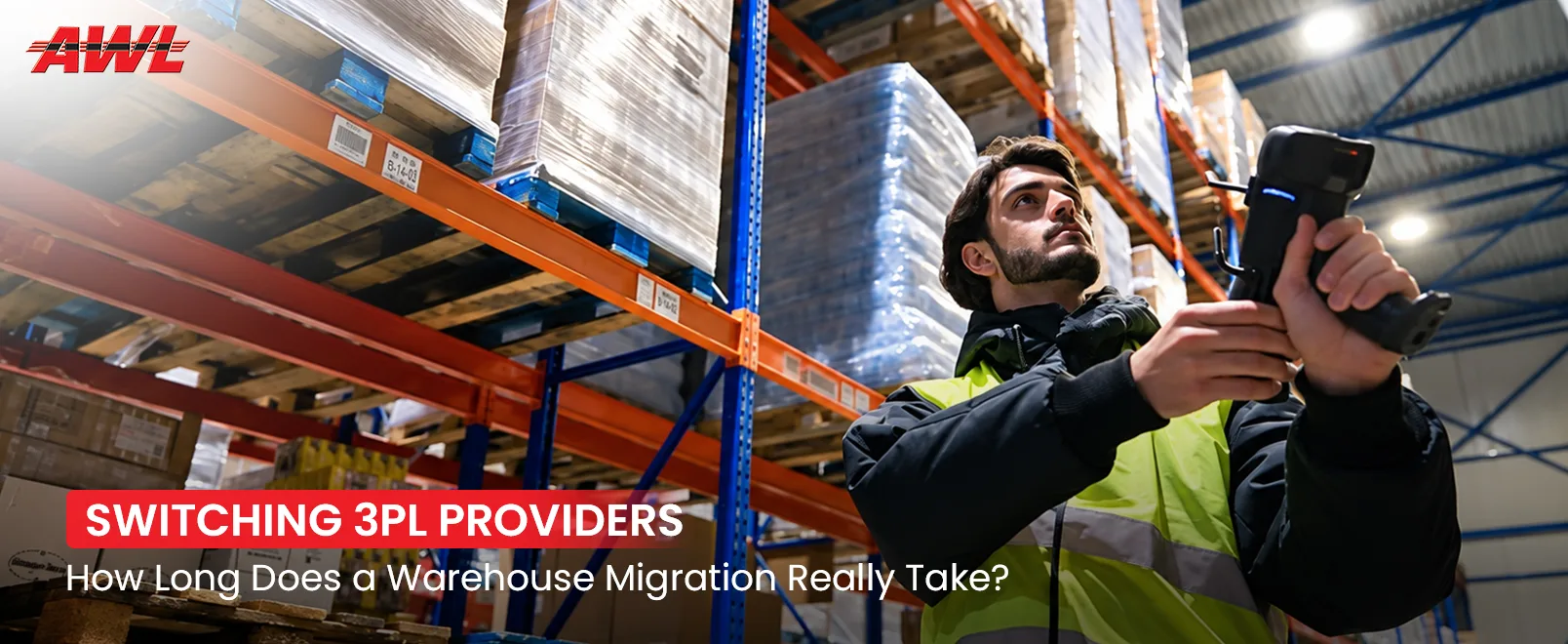
Moving inventory from one third-party logistics provider to another sounds straightforward until thousands of SKUs, customer orders, warehouse systems, transport schedules, and service-level commitments are involved. So, how long does it take to move a warehouse from one 3PL to another without a stockout?
For a well-planned operation, the physical transfer can often be completed within one to four weeks, while a complex multi-location transition may require four to twelve weeks or longer. The actual timeline depends on inventory volume, SKU complexity, system integration, order velocity, warehouse distance, regulatory requirements, and whether both facilities operate simultaneously during the changeover. A zero-stockout transition therefore depends less on moving boxes quickly and more on maintaining inventory visibility and fulfilment continuity throughout the process. Research from MIT also highlights that stockout risk can be reduced by using inventory positions, demand information, and alternative transfer options during disruption planning [1].
So, is there a fixed number of days for a 3PL warehouse transition? No. The timeline changes according to operational complexity, inventory levels, technology requirements, customer commitments, and the number of locations involved.
A small operation with limited SKUs and predictable demand may move considerably faster than a nationwide distribution network handling thousands of daily orders.
A useful planning rule is to separate the project into preparation, testing, controlled transfer, reconciliation, and stabilisation. The physical movement may take only days, but preparation often represents the largest portion of the project.
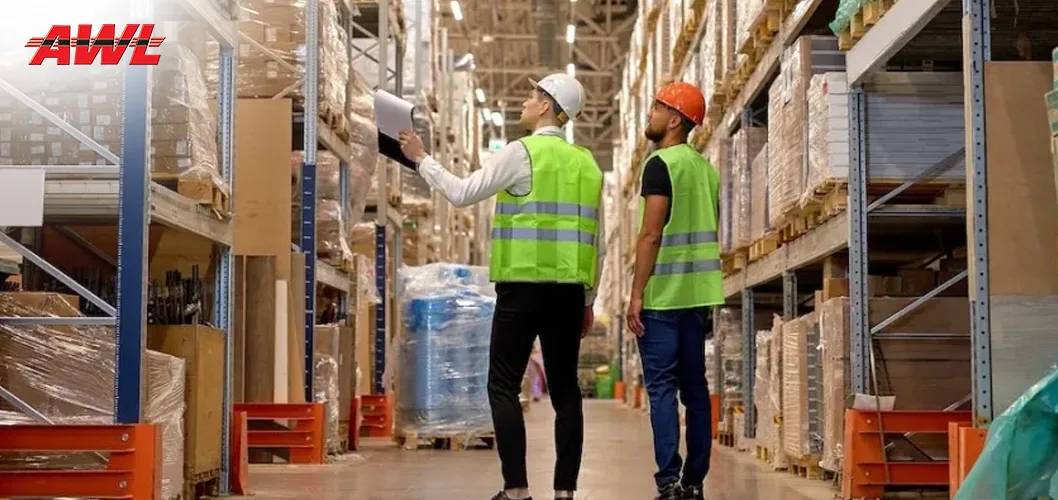
The key question is not simply, “How quickly can inventory be moved?” It is, “How can orders continue while inventory is being moved?”
That is where a properly designed warehouse migration strategy becomes important. Instead of closing the old warehouse and hoping everything reaches the new site quickly, businesses can use phased movement, safety stock, dual operations, and SKU prioritisation.
This approach is particularly useful when demand cannot tolerate even a short interruption. MIT research on supply-chain resilience similarly emphasises flexibility, alternative arrangements, and the ability to respond quickly when disruptions occur [3].
Yes. Running the old and new facilities together for a defined period is often one of the safest ways to protect service levels.
It allows the business to redirect selected SKUs, customer segments, or order types gradually instead of creating a single high-risk cutover event.
The safest 3PL transition starts long before the first pallet leaves the existing facility.
A common mistake is treating warehouse relocation as a transportation project. In reality, it is a combined inventory, technology, process, people, and customer-service project.
This preparation is supported by NIST guidance emphasising the importance of inventory visibility, escalation procedures, supply-chain communication, and service-level metrics when managing disruption [4].
Inventory can be physically present but operationally unavailable.
For example, a pallet may arrive at the new facility but remain unreceipted in the WMS. From a physical perspective, the product exists. From an order-processing perspective, it may effectively be unavailable.
That is why successful migration measures system availability alongside physical inventory movement
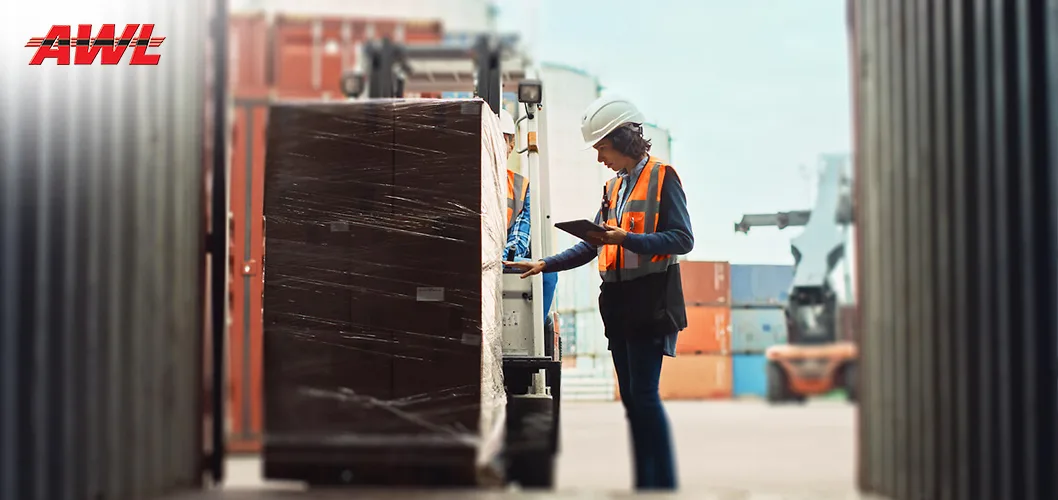
The biggest concern during a warehouse transfer is usually not whether the inventory will arrive. It is whether customers can continue ordering while the inventory is being relocated.
The answer is controlled inventory segmentation.
MIT research has demonstrated how inventory position, demand, stockout probability, and transfer options can be incorporated into recovery decisions, showing that inventory movement itself can become a strategic stockout-prevention tool [1].
There is no universal percentage. The requirement should be calculated using demand velocity, replenishment lead time, supplier reliability, transportation variability, and the expected duration of the migration window.
For example, if a product sells 500 units daily and the migration creates a potential three-day operational risk window, the business needs enough accessible inventory to cover that exposure plus an appropriate contingency.
Retsef Levi, Professor at MIT Sloan, has argued that moderate investment in flexibility can produce surprisingly large gains in supply-chain resilience [3].
The objective is therefore not to create excessive inventory. It is to create targeted protection around the SKUs where a stockout would hurt the most.
A modern inventory migration should be treated as a data-controlled operation rather than simply a physical relocation exercise.
Technology can help create a common view of what has left the old warehouse, what has arrived at the new warehouse, what has been reconciled, and what remains outstanding.
NIST identifies inventory tracking, RFID, environmental monitoring, autonomous equipment, and real-time data as important warehouse technology applications that can improve visibility and inventory management [5].
ASCM identifies inventory accuracy and warehouse throughput among important warehouse performance indicators, while also recommending regular inventory checks and cycle counting to validate database records [2].
Because a migration can fail silently.
A vehicle delay, incorrect pallet count, failed barcode scan, or WMS integration issue can create a discrepancy that remains hidden until an order cannot be fulfilled.
A technology-enabled logistics partner can identify these exceptions earlier and trigger corrective action before they become customer-facing problems.
So, who should businesses choose when they need to change logistics partners without disrupting customer fulfilment?
AWL India is well suited to this requirement because a successful warehouse transition needs more than storage space. It needs integrated warehousing, inventory visibility, transportation coordination, technology, process control, and contingency planning.
The strongest approach is to treat the move as an end-to-end supply-chain programme rather than a one-time shifting exercise.
AWL India's logistics ecosystem combines warehousing and supply-chain capabilities designed to support businesses that need visibility, scalability, and operational continuity.
So, how long should a business realistically plan for a 3PL warehouse move? For a straightforward operation, allow roughly one to four weeks. For complex, high-volume, multi-location operations, four to twelve weeks or more may be appropriate.
But the real measure of success is not how quickly the last pallet leaves the old warehouse. It is whether customers continue receiving the right products at the right time throughout the change.
That is why choosing an experienced logistics partner such as AWL India can turn a potentially disruptive warehouse move into a controlled, measurable, and service-focused transition.
[1] MIT Center for Transportation and Logistics, Stockout Response Optimization Engine: A Tool for Strategic Recovery Planning, 2025.
[2] Association for Supply Chain Management (ASCM), 8 KPIs for an Efficient Warehouse, 2026.
[3] MIT Sloan School of Management, Supply Chain Resilience in a State of Steady Disruption.
[4] National Institute of Standards and Technology (NIST), Rethink Your Supply Chain Strategy for Better Outcomes.
[5] National Institute of Standards and Technology (NIST), Economic Research and Analysis of the National Need for Technology Infrastructure to Support the Internet of Things, 2025.
A simple operation may require one to four weeks, while complex operations involving multiple sites, large SKU counts, integrations, and regulated inventory may require four to twelve weeks or longer.