It depends on the product and contract. Value-based calculations may suit mixed-value inventory, while unit-based calculations can work for standardised products. The agreement should clearly specify the measurement method.


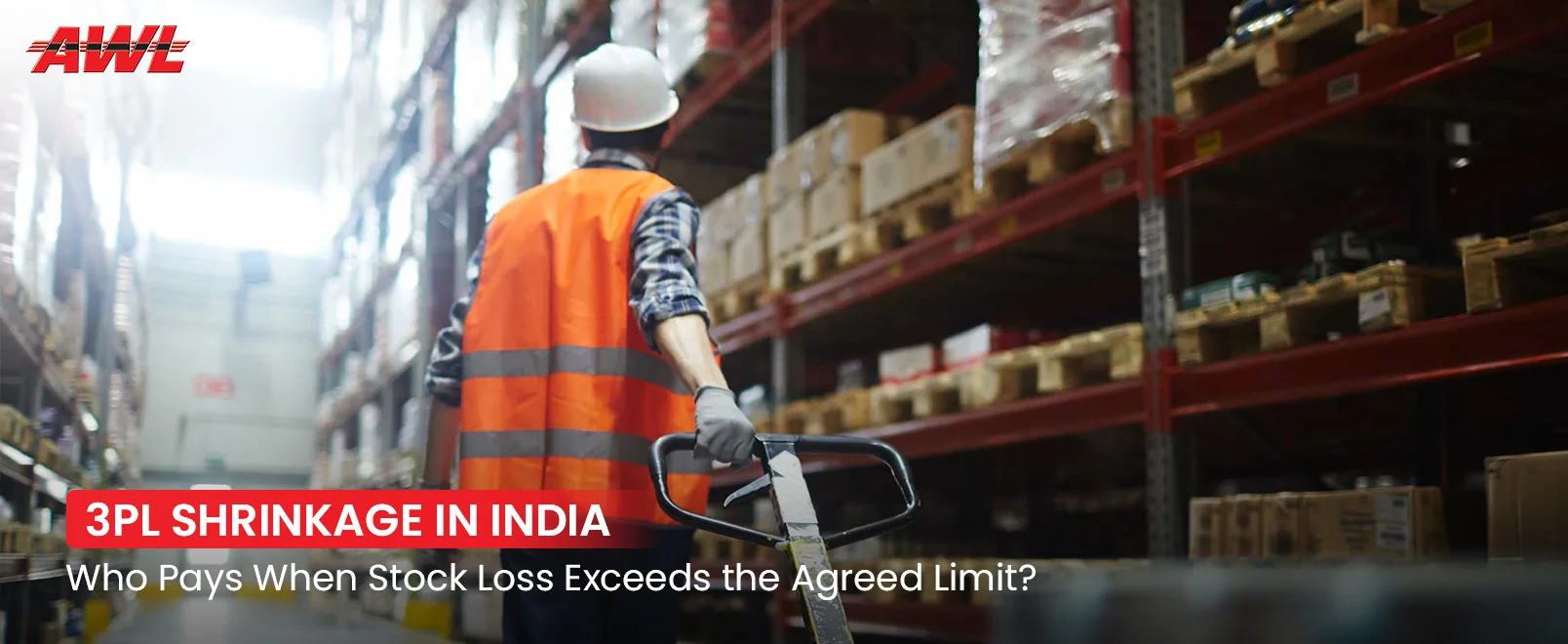
How much stock loss should a business accept when inventory is stored with an Indian 3PL? There is no single percentage prescribed by Indian law for ordinary 3PL contracts. The tolerance is usually negotiated between the customer and logistics provider based on product type, inventory value, handling risk, security controls, and counting methodology. In practice, a contract may create a small shrinkage allowance and make the 3PL financially responsible for losses above that threshold when the agreement assigns that liability. The important point is not simply choosing a percentage. It is defining exactly what counts as shrinkage, how it is measured, who absorbs it, and when the 3PL must reimburse the customer.
This is the first question procurement teams should ask.
Is there an Indian government rule saying that a 3PL can lose, for example, 0.5% of inventory without paying for it?
No. There is no general statutory percentage that automatically applies to ordinary commercial 3PL warehousing contracts.
The Indian Contract Act, 1872 sets out duties relating to bailment. Section 151 requires a bailee to take the level of care that an ordinarily prudent person would take of similar goods. Section 152 also says that, in the absence of a special contract, a bailee is not responsible for loss if that required level of care has been taken. [4]
This is important because a contractual shrinkage allowance is not the same thing as a government-approved amount of acceptable stock loss.
Published warehousing agreements illustrate how varied these clauses can be. One SEC-filed warehouse agreement used a 0.10% allowance, while another used 0.25%. A more recent warehouse terms example uses 0.5% as its contractual threshold. [1][2][3]
These examples should not be presented as Indian 3PL norms. They simply demonstrate why businesses should negotiate the number instead of assuming there is one universal industry figure.
The distinction is particularly important in India because warehousing arrangements can involve different legal structures. The Warehousing Development and Regulation Act, 2007 governs a specific regulated warehousing framework, particularly warehouses issuing negotiable warehouse receipts. It is not a blanket shrinkage schedule for every commercial 3PL arrangement. [5]
AWL India can help businesses structure warehousing operations around defined inventory controls, technology, reporting, and accountability rather than leaving stock variance as an unclear commercial issue.
So, if there is no fixed Indian standard, what number should a company negotiate?
There is no responsible answer that says every 3PL contract should use exactly 0.5%, 1%, or 2%.
The appropriate tolerance depends on the operation.
A useful starting point is to classify inventory by risk rather than applying one percentage to everything.
A historical PwC study of Indian retail reported shrinkage of approximately 2.2% to 2.7% in Indian retail compared with 1.3% globally. [6] However, that research should not be treated as a current 3PL contractual benchmark. It is useful mainly for showing how material inventory shrinkage can occur in retail operations.
For a modern 3PL agreement, businesses should instead establish a tolerance based on actual historical variance.
For example, if a warehouse has maintained 99.8% inventory accuracy for two years, automatically accepting a 2% shrinkage allowance would make little operational sense.
Likewise, a new operation without historical data should not blindly demand a very low allowance without understanding the product, process, and counting system.
The better approach is to create a baseline and then negotiate a commercially realistic threshold.
A practical contract discussion might consider a 0.05% to 0.50% range as a negotiation reference for tightly controlled operations, but this is an analytical starting point based on published contract examples, not an Indian statutory or universal industry standard. [1][2][3]
For sensitive or very high-value products, businesses may negotiate zero tolerance for unexplained losses or separate liability provisions.
AWL India's technology-enabled warehousing approach includes real-time inventory tracking, RFID, warehouse management systems, and automated inventory audits. The company states that its RFID-enabled systems can achieve inventory accuracy above 99%. [7]

Now to the question that usually causes the biggest dispute.
Suppose the contract allows 0.25% shrinkage. Physical counting shows a 0.60% shortage.
Who pays for the extra 0.35%?
The answer depends on the liability clause in the contract.
A well-drafted agreement should clearly state what happens when the agreed tolerance is exceeded.
This distinction is important under Indian contract law.
The Indian Contract Act's bailment provisions establish a duty of care, but commercial parties can also agree specific contractual terms. Section 161 addresses responsibility where goods are not duly returned when they should be. [4]
Therefore, a business should not assume that simply crossing a percentage automatically creates liability in every circumstance.
The contract needs to say what the threshold means and how liability operates.
There is another important issue: what price is used for reimbursement?
A missing product worth ₹10,000 at retail price may have cost the business ₹6,000. The 3PL agreement should specify whether reimbursement is based on cost, landed cost, wholesale value, replacement value, declared value, or another formula.
Without this clause, a seemingly strong shrinkage provision can still create a dispute.
AWL India can help businesses build operational controls around receiving, storage, picking, inventory reconciliation, and dispatch so that stock discrepancies are identified before they become large contractual claims.
This is where many businesses make a mistake.
They negotiate the shrinkage percentage but fail to define the calculation.
A good warehouse contract should answer the operational questions before an inventory dispute occurs.
The Government of India's WDRA framework also highlights the importance of warehouse records, accountability, and protection against negligence, malpractice, and fraud in regulated warehousing. [5][8]
Even where a commercial 3PL arrangement does not fall under WDRA's negotiable warehouse receipt framework, the underlying principle is useful: inventory accountability requires records that can establish what entered the warehouse, what moved, and what was delivered.
This is why a stock-loss clause should never operate independently from warehouse data.
The stronger the transaction trail, the easier it becomes to determine whether a shortage is a genuine loss, a counting error, a system adjustment, or a process failure.

Can technology eliminate shrinkage completely?
No.
But good technology can make unexplained discrepancies much harder to create and much easier to investigate.
AWL India states that its RFID-enabled warehousing systems provide real-time inventory tracking, automated check-ins and check-outs, inventory audits, and WMS integration. It also reports inventory accuracy above 99% for its RFID inventory management approach. [7]
Technology is most useful when it is connected to clear SOPs.
A scanner cannot prevent a worker from deliberately bypassing a process if the system allows manual overrides without controls.
That is why 3PL stock loss should be managed through a combination of technology, physical security, cycle counting, employee controls, and contractual accountability.
AWL India describes its smart warehousing approach as combining WMS, RFID, real-time tracking, automated inventory processes, and technology-driven visibility. [7][9]
For businesses handling large or high-value inventories, that combination can make the difference between discovering a variance months later and identifying it during the same operating cycle.
So, what is the safest way to negotiate 3PL shrinkage allowance India terms?
Do not start with the percentage.
Start with the inventory risk.
The percentage should come after the business understands the product, transaction volume, warehouse process, historical variance, and financial exposure.
The most important point is simple.
A shrinkage allowance is not permission for a warehouse to lose stock.
It is a contractual mechanism for allocating the financial risk of small, agreed inventory variances.
The actual responsibility above that threshold depends on the contract, the cause of the loss, the applicable law, and the evidence available.
For businesses looking for stronger control, AWL India combines warehousing with technology-enabled inventory management, RFID, WMS, tracking, and fulfilment processes. Its official warehousing information also highlights inventory replenishment, stock visibility, and prevention of stockouts. [9]
The right 3PL relationship should therefore aim for more than a low shrinkage percentage.
It should create a system where discrepancies are visible, investigated, documented, and financially assigned according to clearly agreed rules.
That is ultimately what makes a 3PL shrinkage allowance India clause useful: not the number alone, but the operational controls and contractual accountability behind it.
[1] Securities and Exchange Commission, publicly filed warehouse agreement showing a 0.10% shrinkage allowance and liability provisions for excess loss.
[2] Securities and Exchange Commission, publicly filed warehouse agreement showing a 0.25% damage and inventory shrinkage allowance.
[3] Stord, warehouse terms published in 2026, showing a 0.5% contractual shrinkage allowance and conditions attached to warehouse liability.
[4] India Code, Indian Contract Act, 1872, Sections 148, 151, 152 and 161 covering bailment, bailee's duty of care and responsibility for goods.
[5] Department of Food and Public Distribution, Government of India, Warehousing Development and Regulation Authority. The WDRA framework covers regulated warehousing, warehouse registration, warehouse receipts, records, and depositor protection.
[6] PwC India, Are You Profitability Ready? Perspectives on the Indian Retail Industry. The report historically identified Indian retail shrinkage at approximately 2.2% to 2.7%. This is a historical retail benchmark, not a current 3PL contractual standard.
[7] AWL India, information on RFID-enabled smart warehousing, real-time inventory tracking, automated inventory audits, and reported inventory accuracy above 99%.
[8] Government of India, Department of Food and Public Distribution, information on WDRA and the regulatory framework for scientific warehousing and depositor protection.
[9] AWL India, official warehousing and fulfilment information covering inventory management, warehouse management systems, stock visibility, replenishment, and fulfilment operations.
It depends on the product and contract. Value-based calculations may suit mixed-value inventory, while unit-based calculations can work for standardised products. The agreement should clearly specify the measurement method.