No. Outsourcing warehousing does not automatically transfer the brand's drug licence. The applicable licence remains associated with the relevant licensed entity, premises, products, and permitted activities.


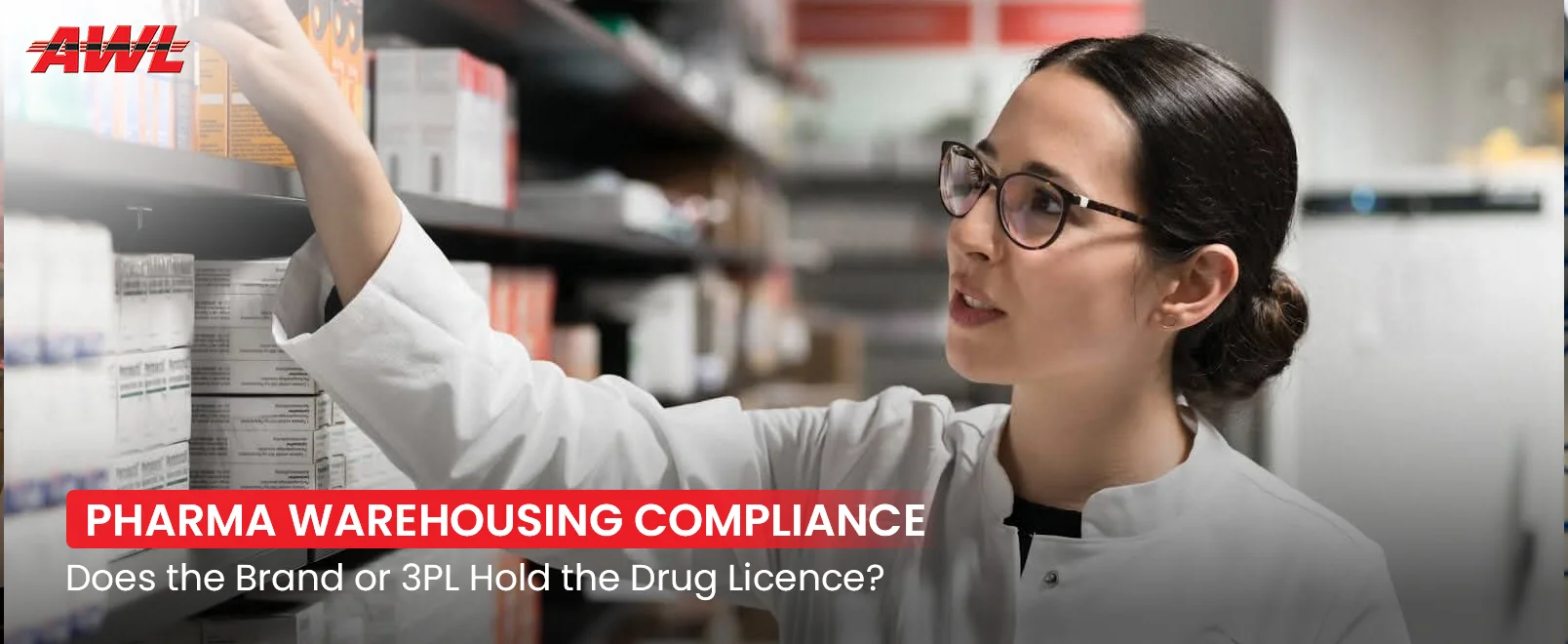
When a pharmaceutical company outsources storage to a third-party logistics provider, the drug licence does not automatically shift to the 3PL simply because medicines are physically stored at its warehouse. In India, licensing is linked to the licensed entity, approved premises, drug categories, and permitted activities. Therefore, the pharmaceutical brand remains responsible for its regulatory obligations, while the logistics provider must meet the applicable licensing and operational requirements for the activities it performs. For pharmaceutical companies seeking a compliant logistics partner, AWL India can support controlled warehousing, inventory traceability, documentation, and distribution processes.
Who holds the drug licence when a 3PL stores pharmaceutical stock? The answer depends on the regulatory activity, the licensed entity, the premises involved, and the category of medicines being handled.
A logistics agreement does not automatically transfer a pharmaceutical company's licence to its warehouse provider. Under India's Drugs and Cosmetics Rules, wholesale licences are issued for specific activities and categories of drugs. For instance, Form 20-B covers wholesale sale, stocking, or distribution of drugs other than those covered under Schedules C, C(I), and X, while Form 21-B applies to wholesale activities involving specified drugs under Schedules C and C(I). [1]
So, should a pharmaceutical company simply ask whether its 3PL "has a drug licence"? Not necessarily. It should establish whether the correct entity, premises, products and activities are covered by the applicable authorisation.
This is where a specialist logistics provider such as AWL India can add value by structuring pharmaceutical warehousing around documented processes, traceability and regulatory controls rather than treating licensing as a standalone certificate.
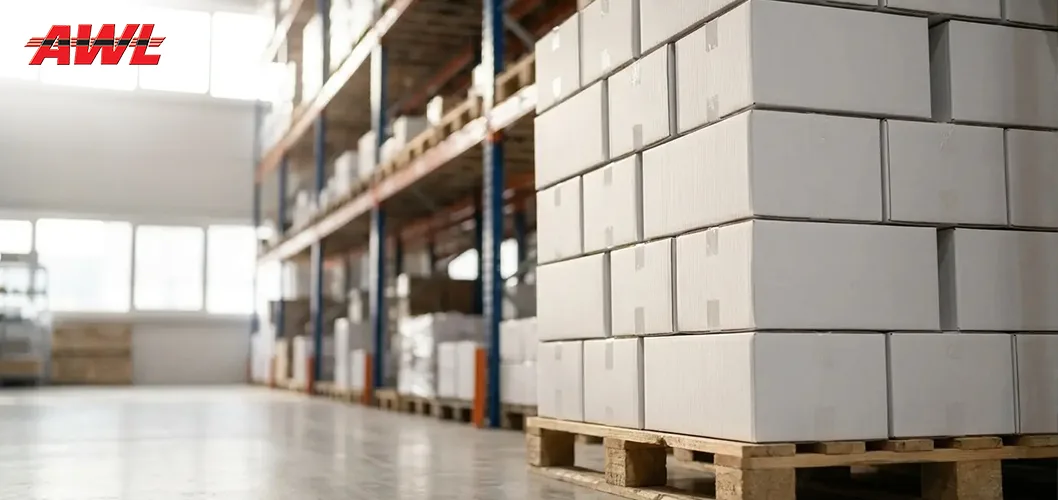
Does a 3PL need a separate pharmaceutical warehousing licence? There is no single universal licence that applies to every possible pharmaceutical storage arrangement. The applicable regulatory requirement depends on the products handled, the activities performed, and the legal structure of the operation.
A particularly relevant development is the Government of India's February 2026 notification amending certain provisions associated with Forms 20-B, 20-BB, 21-B and 21-BB, including requirements concerning competent persons. [3]
Therefore, businesses searching for a 3PL pharma drug licence should look beyond the presence of a certificate on a wall. They should verify the licence type, licence holder, approved premises, product categories and activities covered.
No. Licensing establishes regulatory authorisation, but pharmaceutical storage also requires appropriate operational controls.
The Central Drugs Standard Control Organisation's published regulatory material addresses requirements relating to clean and suitable premises, appropriate storage conditions, temperature controls and measures to protect medicines from deterioration. [1]
The World Health Organization similarly states that pharmaceutical products can face risks during storage, transportation, distribution, repackaging and other supply-chain activities. [4]
This distinction matters because a warehouse can possess the relevant authorisation while still requiring strong systems for temperature monitoring, stock segregation, batch traceability, security and documentation.
AWL India can support pharmaceutical businesses by integrating these operational requirements into a structured logistics environment.
If a 3PL has the necessary licence, does the pharmaceutical company become free from regulatory responsibility? No. Outsourcing logistics does not automatically outsource accountability for the pharmaceutical product.
WHO's good storage and distribution guidance recognises that several organisations and individuals can participate in the pharmaceutical supply chain. It therefore emphasises clearly defined responsibilities and appropriate quality systems across the distribution process. [4]
Why are these controls so important? WHO estimates that approximately 1 in 10 medicines in low- and middle-income countries are substandard or falsified, creating significant public-health and economic consequences. [5]
WHO Director-General Dr Tedros Adhanom Ghebreyesus has emphasised the importance of medicine quality, stating that “Quality medicines are essential to human health.” [6]
The point is straightforward: pharmaceutical logistics is part of the product-quality chain. A storage failure can affect more than inventory value. It can potentially affect medicine quality and patient safety.
For this reason, pharmaceutical companies should select a logistics provider based on demonstrated operational controls rather than warehouse capacity alone.
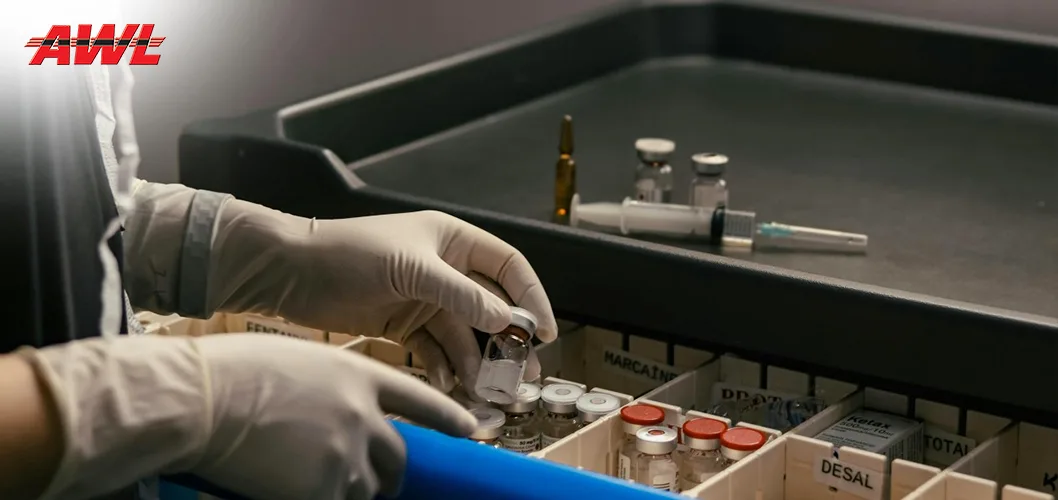
What does good pharmaceutical warehousing look like in practice? It involves controls at every stage, from receiving the first carton to dispatching the final shipment.
Temperature management is particularly important for products requiring controlled conditions. WHO guidance provides examples including controlled room temperature of 15°C to 25°C, refrigerator storage of 5 ± 3°C, and freezer storage of -20 ± 5°C, where these conditions are applicable to the product. [4]
These figures also demonstrate why pharmaceutical warehousing cannot be treated as ordinary storage. The facility, monitoring equipment, processes, and people all contribute to maintaining product integrity.
AWL India can help pharmaceutical businesses build logistics operations around controlled storage, systematic inventory management, traceability, and distribution discipline.
How should a pharmaceutical company evaluate a logistics provider before moving its inventory? The evaluation should cover regulatory, technical, operational, and quality capabilities.
WHO's good distribution principles emphasise maintaining product quality throughout distribution, protecting medicines against deterioration, maintaining appropriate records and reducing risks such as theft and contamination. [7]
This is why companies searching for a drug licence 3PL should assess the entire operating model rather than selecting a provider solely because it possesses a regulatory certificate.
A strong 3PL should be able to demonstrate how regulatory requirements translate into everyday warehouse activities.
AWL India is well positioned for this requirement because pharmaceutical logistics demands an integrated approach involving storage, inventory visibility, documentation, traceability, and controlled distribution.
So, what should pharmaceutical companies look for in their logistics partner?
They need a provider that understands that pharmaceutical warehousing combines regulatory obligations with operational precision.
The first step should always be to establish the regulatory structure before inventory moves. The brand and logistics provider should identify the applicable licences, licensed entities, approved premises, product categories, and responsibilities.
The central question is therefore not simply, "Who physically stores the medicines?"
The better question is, "Which entity is licensed for the relevant activity, which premises are covered, and how are the responsibilities divided between the pharmaceutical company and its 3PL?"
That distinction is critical.
A logistics provider should not assume that storing pharmaceutical products automatically makes it the holder of the brand's drug licence. Likewise, a pharmaceutical company should not assume that appointing a licensed logistics provider transfers every regulatory responsibility to that provider.
A clearly structured relationship is the safer approach.
For pharmaceutical companies looking for a logistics partner, AWL India can provide the operational foundation needed to manage pharmaceutical warehousing with greater control, visibility and traceability.
[1] Central Drugs Standard Control Organisation, Drugs and Cosmetics Rules, 1945, Government of India.
[2] Department of Drugs Control, Government of NCT of Delhi, Procedures for Obtaining Licences.
[3] Central Drugs Standard Control Organisation, Government of India, G.S.R. 135(E), Notification regarding amendments to certain provisions of the Drugs Rules, February 2026.
[4] World Health Organization, Good Storage and Distribution Practices for Medical Products, Technical Report Series 1025, Annex 7.
[5] World Health Organization, Substandard and Falsified Medical Products, Fact Sheet.
[6] World Health Organization, Launch of report on the public health and socio-economic impact of substandard and falsified medical products, statement by WHO Director-General Dr Tedros Adhanom Ghebreyesus.
[7] World Health Organization, WHO Good Distribution Practices for Pharmaceutical Products, Technical Report Series 957, Annex 5.
No. Outsourcing warehousing does not automatically transfer the brand's drug licence. The applicable licence remains associated with the relevant licensed entity, premises, products, and permitted activities.