


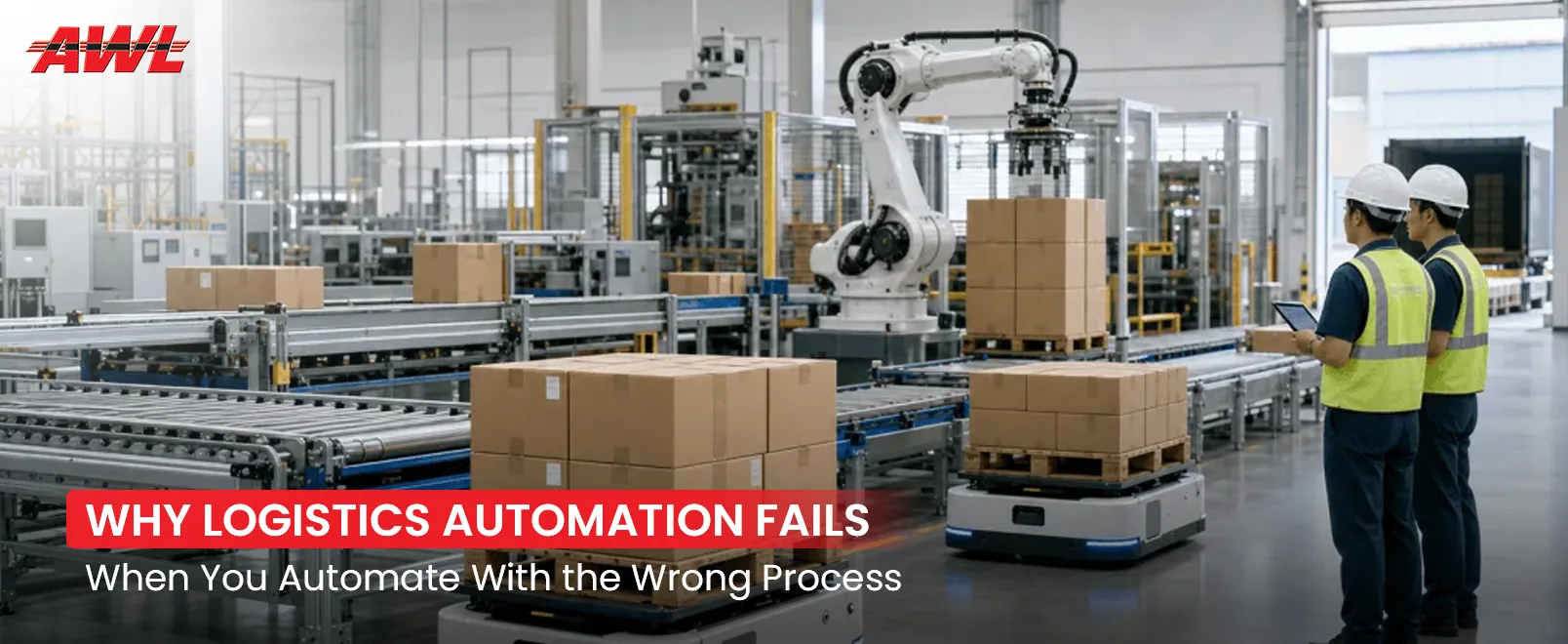
A conveyor belt moves a wrong parcel just as fast as a right one. A scanner records a bad pick with perfect confidence. When a warehouse or transport operation has broken steps, machines and software do not fix them. They repeat those mistakes at higher speed and at higher cost.
What Goes Wrong When Process Comes Second
Most failed logistics automation projects do not fail because the technology is poor. They fail because the business automated a process it never properly fixed. Bill Gates put it simply: automation applied to an inefficient operation will magnify the inefficiency.
The numbers suggest this is common. The 2025 IMD Global Supply Chain Survey of 300 senior supply chain professionals found that more than 70% of supply chain transformation projects either fail or fall behind their targets. PwC's 2026 Digital Trends in Operations survey found that 89% of operations and supply chain leaders said their technology investments had not fully delivered expected results.
So why does this keep happening? The answer usually sits in a few predictable process mistakes.
Five Process Mistakes That Sink Automation Projects
1. Automating the Workaround
Every warehouse has informal shortcuts. A supervisor keeps a separate sheet for urgent orders. Pickers skip a scan when the handheld is slow. Staff manually reroute parcels for one difficult courier partner.
When these workarounds are coded into new software, the shortcut becomes permanent. The system now enforces a flawed process, and changing it later costs far more than fixing it on paper first.
2. Feeding the System Bad Data
Automation runs on master data: SKU dimensions, weights, storage locations, PIN codes, and customer addresses. If these are wrong, the system makes wrong decisions every time.
PwC's 2026 survey found that 87% of respondents said poor data quality had held back the value of their digital initiatives. For example, a wrong carton dimension can lead an automated slotting tool to assign a bulky item to a small bin, which then causes picking delays and rework every day.
3. Designing Only for the Happy Path
Systems are often designed around the perfect order: picked, packed, shipped, and delivered. Real operations in India deal with much more, including:
- Cash-on-delivery refusals and return-to-origin parcels that need inspection, restocking, and refund processing before the stock becomes available again.
- Damaged goods, partial deliveries, and address corrections that need clear rules, not manual judgement from whoever happens to be on shift.
- Marketplace-specific packaging and labelling rules that differ between platforms and change without much notice.
If exceptions are not mapped before automation, they end up handled outside the system. That brings back the same manual errors the project was meant to remove.
4. Building for an Average Day
A process that works at average volume can collapse during Diwali, end-of-season sales, or quarter-end dispatches. Automation sized and configured for normal days often becomes a bottleneck when volumes spike. Test every new flow against your busiest day of last year, not a typical Tuesday.
5. Skipping Training and Change Management
People still run automated operations. If supervisors and floor staff do not understand the new process, they find ways around it.
Gartner predicts that by 2028, 60% of supply chain digital adoption efforts will fail to deliver promised value because of insufficient investment in learning and development. Tom Enright, VP Analyst at Gartner, warned that a lack of this investment jeopardises such initiatives.
A Practical Way to Get It Right
Before you spend on equipment or software, work through these steps in order:
- Map how goods and orders actually move today, including every informal shortcut, by walking the floor with the people who do the work.
- Remove steps that add no value, such as double handling, repeated data entry, or approvals that nobody really checks.
- Standardise what remains so that every shift and every location follows the same method for receiving, picking, packing and dispatch.
- Clean your master data, starting with SKU dimensions, weights, locations and address formats, before connecting it to any new system.
- Pilot the automation on one product line, one zone or one route, and measure results against the baseline you recorded.
- Train staff on the new process, not just the new screens, and assign clear owners for each exception type.
Moving to digital logistics works best as a series of small, measured changes. A pilot that shows clear gains makes the case for the next phase far better than a big launch that tries to change everything at once.
Questions to Ask Before Choosing a Technology Partner
Whether you build in-house or outsource, ask these questions before committing:
- Will the partner study your current process before proposing tools, or does it lead with a fixed product it wants to sell?
- How does the system handle returns, exceptions, and peak-season volumes, and can the partner show this working in a live operation?
- What training and support does the partner provide after go-live, and for how long?
Good logistics technology services should start with diagnosis, not installation. If a vendor cannot explain how your process will change, the technology is unlikely to deliver what it promises.
When shortlisting logistics technology companies in India, check experience in your sector, integration with your marketplaces and ERP, and references from businesses of a similar size.
Where AWL India Fits
AWL India offers warehousing, order fulfilment and omnichannel logistics, supported by its own technology. Its SWIM platform gives a single view of inventory, orders, and documents across marketplaces, and CHAKSHU provides IoT-based tracking for shipment visibility.
For businesses that prefer not to build these capabilities themselves, a partner offering smart logistics solutions within an established operation can reduce the risk of automating an untested process.
Fix the Flow, Then Add the Machines
Technology is only as good as the process it runs on. Clean up the steps, fix the data, plan for exceptions, and train your people before you automate anything.
If you are planning logistics automation for your warehouse or supply chain, the team at AWL India can help you review your current operations and choose a model that fits your business.

AWL India
Owner