


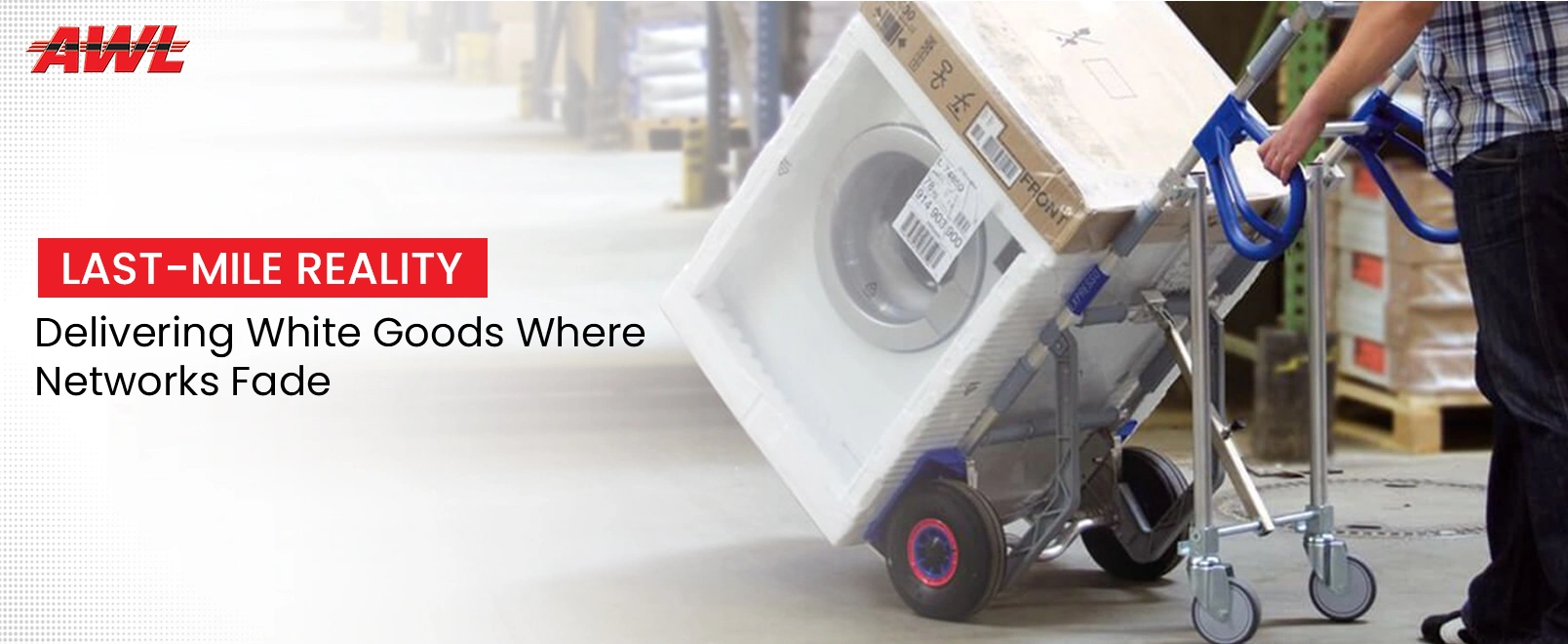
Buying a new refrigerator is an exciting moment for any family. You imagine the cold water and the fresh food it will hold. In a large city, you buy it today, and it arrives tomorrow. Far-Flung But think about a small home in a mountain village or a desert town. The journey for that heavy machine is much harder. It must travel over many miles of bumpy roads. It must stay safe through heat and dust. Many people do not see the work that happens behind the scenes. This process is what brings modern comfort to every corner of the country.
The Big Journey of Heavy Machines
Moving large items like washing machines and air conditioners is not easy. These are called white goods because they used to be mostly white in colour. Today, they come in many styles, but the name stuck. The field of white goods logistics must handle these items with great care. They are heavy and have many parts that can break. If a truck hits a big hole in the road, the machine inside could stop working. This is why the planning must be very detailed from the start.
How do these items get across such long distances without breaking? The answer lies in how they are packed and moved. Most of these goods start in large factories or big ports. They travel in huge trucks to reach regional hubs. From there, the work gets more complex. To reach a small town, the items often move to smaller vehicles. This shift is a key part of how white goods logistics keeps items moving toward their final destination.
Moving Goods Across a Diverse Land
India has many types of ground. Some places have high mountains, and some have thick forests. There are also places where the roads are very narrow. Handling white goods logistics in India requires a deep understanding of these paths. A large truck cannot fit through a tiny village street. Works The drivers must know which roads are strong enough for heavy loads. They also need to know when the rainy season might wash a road away.
- Drivers use special maps to find the best routes. These maps show which bridges can hold a heavy truck. This helps avoid long delays or dangerous accidents on the way.
- Small delivery vans are often used for the final trip. They can turn in tight spaces and drive on dirt paths. This makes it possible to reach very remote houses.
- Local helpers are hired to help with the heavy lifting. They know the shortcuts and the best times to travel. Their help is vital for a smooth and fast delivery.
The Problem of Broken Roads
You might wonder why some deliveries take so long in the countryside. The main reason is the road quality. Many rural areas face last mile delivery challenges India has dealt with for years. Even if the highway is good, the last few miles can be very rough. Dust can get into the machines. Vibration from the road can loosen small wires inside a microwave or a stove. This is why the vehicles must have good suspension, and the items must have thick padding.
- Specialized crates are built to hold the appliances still. These crates stop the items from sliding inside the truck. This prevents dents and scratches during the long and bumpy ride.
- Drivers must be trained to drive slowly on bad roads. Speed can cause more damage than anything else. A careful driver is the best way to protect a new appliance.
- The timing of the delivery is also very important. Arriving after dark in a remote area can be risky. Logistics teams plan the trips to ensure daylight for safer unloading.
Smart Storage for Remote Areas
Where do the machines stay before they reach your house? They cannot stay in the factory until you buy them. They must be kept in safe places closer to the customers. That is where AWL India steps in to help. They provide big buildings to store these goods safely. These buildings are kept dry and clean. This is very important because moisture can ruin the electronics in a new washing machine or a fridge.
Effective white goods warehouse management is about more than just space. It is about knowing exactly where every box is located. Workers use scanners to track the items. This means they can find a specific air conditioner very quickly when a customer orders it. Having these items stored near remote regions cuts down the travel time. It also reduces the chance of damage because the item spends less time on a moving truck.
Using Technology Where the Internet is Slow
Can technology help when the phone signal is weak? Yes, it can. Modern logistics uses tools that work even with poor connectivity. The team at AWL India tracks every single box using special software. This software can save data and upload it when the driver finds a better signal. This keeps the home office informed about the delivery progress. It also helps the customer know when to expect their new purchase.
- GPS trackers are placed on the delivery trucks. These tools show the exact location of the goods. This helps the company plan for any delays caused by traffic or weather.
- Digital apps allow drivers to take photos of the delivery. These photos prove that the item arrived in good shape. It gives the customer and the company peace of mind.
- Route optimization software calculates the fastest path. It looks at road conditions and traffic patterns. This saves fuel and ensures the appliance reaches the home as quickly as possible.
Making the Final Delivery Successful
The last part of the trip is the most important one. This is known as the last mile. Performing a successful last mile delivery for appliances involves more than just driving. The delivery team often has to carry the item inside the house. They might have to walk up many flights of stairs. They must be very careful not to hit the walls or drop the heavy box. This requires both strength and patience from the workers.
- Delivery teams carry tools to help with the setup. They make sure the fridge is level, and the washer is connected. This extra service makes the customer very happy.
- Recycling the old appliance is often part of the job. The team takes the old unit away. This helps the environment and makes room for the new and better machine.
- Customer communication is key during the final mile. Sending a text message helps the family be ready. This prevents the driver from finding an empty house after a long trip.
Data-Driven Growth in White Goods
The demand for appliances in rural areas is growing very fast. According to the India Brand Equity Foundation, the consumer durables market is expected to reach US$ 21.18 billion by 2025. This growth means more items are moving to remote places than ever before. Another study by the World Bank shows that improving rural roads can lower transport costs by a large amount. This makes it cheaper for families to buy the things they need for their homes.
Trusting AWL India ensures that your new fridge arrives safely. They have the experience to handle the tough paths of the countryside. Reliable white goods logistics make life better for everyone. It connects the factory to the home, no matter how far away that home might be. This bridge of service is what keeps the modern world moving forward together.
Strategic Vision from the Front Lines
As the world changes, the way we move things must change too. A leading expert in the Council of Supply Chain Management Professionals once said, "The line between a product and its delivery is blurring. Logistics is now a core part of the product experience for rural customers." This means that how an item arrives is just as important as the item itself. If it arrives late or broken, the brand suffers. This is why great care is taken at every step of the long road.

John Smith
Digital Tech Head