


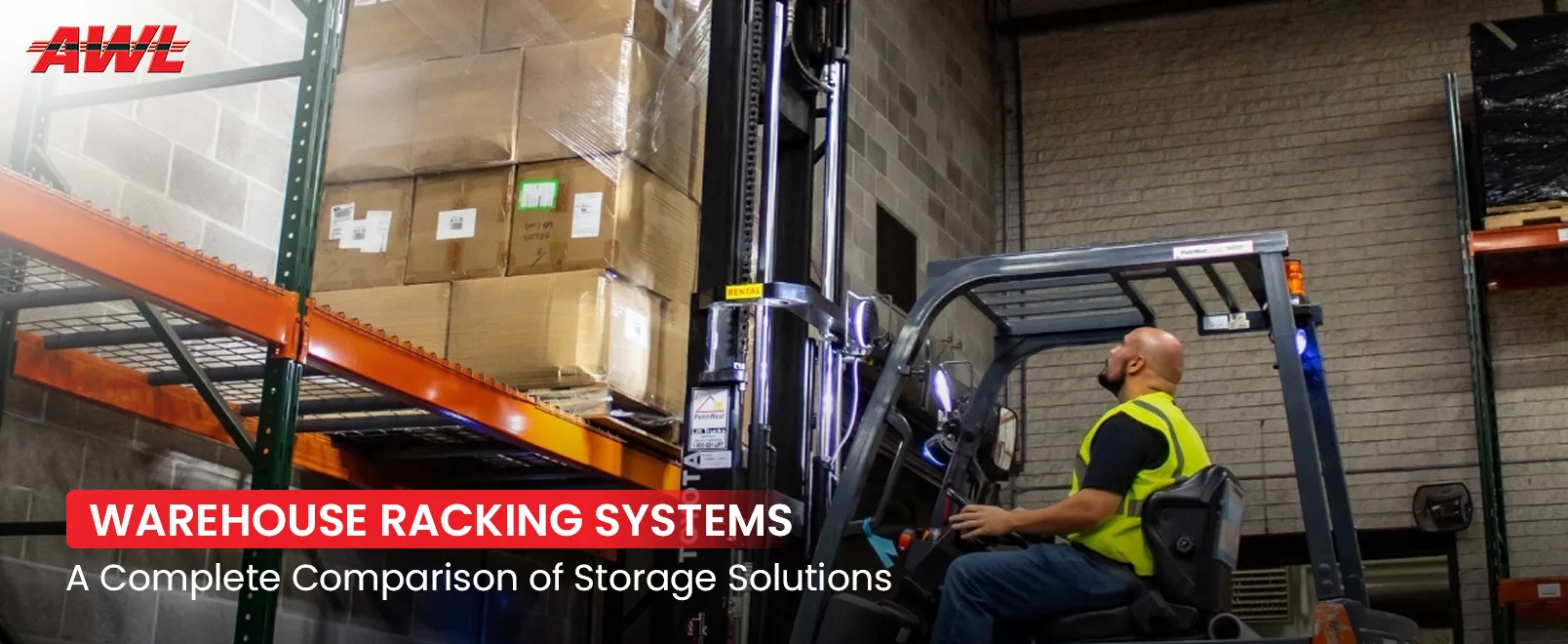
Picture two warehouses of the same size. One holds 40,000 pallets. The other holds 65,000. The walls are the same. The roof is the same. Only one thing changed inside. The racking.
That one choice can decide if a warehouse feels cramped or if it runs like clockwork. It also decides how fast a worker finds a pallet, and how much rent a business pays per square foot. So which system actually fits your goods, your budget, and your building? Let's break it down in plain words.
Why Your Racking Choice Shapes Everything Else
Warehouse management is simply the way a facility handles storage, picking, and dispatch every single day. Racking is the backbone of that system. Pick the wrong rack, and even the best team will struggle with slow picking and wasted space. Pick the right one, and the same four walls suddenly hold far more stock.
Selective Racking: The Simple Starting Point
Selective racking is the most common type seen across India's industrial belts, from Gurgaon to Chennai. It uses simple upright frames and beams, and every pallet sits at ground-level access.
- Direct access: Every single pallet can be picked without moving another one first.
- Low cost: Cheapest to install and easiest to expand later.
- Best for: Businesses with many SKUs and frequent order changes, like FMCG and retail.
- Trade-off: Uses more floor space per pallet than denser systems.
Double-Deep Racking: More Pallets, Less Access
Double-deep racking places two pallets back to back in each lane instead of one. It needs a special forklift with an extending fork to reach the rear pallet.
- Space gain: Roughly 40 percent more storage than selective racking in the same footprint.
- Fewer aisles: Cuts down the number of aisles needed, which saves floor area.
- Best for: Warehouses storing large batches of the same product, such as bottled beverages.
- Trade-off: Not ideal when you need to pick many different items quickly.
Drive-In and Drive-Through Racking: Built for Bulk
This system removes most aisles altogether. Forklifts drive straight into the rack structure to place or pick a pallet, much like parking in a tight garage lane.
- High density: Great for cold storage and bulk food items where space is costly.
- Last-in, first-out: Drive-in racks usually work on a last-in-first-out basis.
- Drive-through option: Allows loading from one end and unloading from the other, useful for fast-moving bulk goods.
- Trade-off: Slower picking speed since forklifts must move deep into narrow lanes.
Push-Back Racking: A Middle Ground
Push-back racking uses a set of nested carts on rails. Load a pallet from the front, and it pushes the one behind it further back, up to four or five pallets deep.
- Good density: More storage than selective racking, less than drive-in.
- Faster than drive-in: Forklifts stay in the aisle, so picking is quicker.
- Best for: Medium-volume goods with a few pallets per SKU, common in apparel warehouses.
- Trade-off: Higher upfront cost than basic selective or drive-in systems.
VNA Racking: Squeezing Out Every Inch
Very Narrow Aisle, or VNA, racking shrinks aisle width to around 1.5 to 2 metres, compared to the usual 3 to 4 metres in standard warehouses. Special turret trucks or stacker cranes move within these tight lanes.
- Storage boost: Industry data shows VNA layouts can lift storage capacity by 40 to 50 percent over conventional racking in the same building.[3]
- Height advantage: Works well in tall warehouses common in Bhiwandi and Bengaluru's logistics parks.
- Best for: High SKU count operations like e-commerce fulfilment centres.
- Trade-off: Needs flat flooring, trained operators, and higher equipment cost.
Mezzanine Floors: Storage That Grows Upward
A mezzanine is not a rack in the traditional sense. It is a raised platform built inside the warehouse, creating a second or third usable floor without expanding the building's footprint.
- Doubles usable area: Turns unused overhead space into a working floor for storage or light assembly.
- Flexible use: Can hold shelving, small racks, or even office space above the main floor.
- Best for: Warehouses with high ceilings but limited land, a common issue in Delhi NCR.
- Trade-off: Needs fire safety planning and proper load calculations before construction.
Racking Numbers From India's Warehousing Boom
India's warehousing story backs up why picking the right racking matters more each year. A CREDAI and CRE Matrix report notes that Grade A warehousing stock crossed 401.8 million square feet in CY'25, with total leasing demand touching 73.2 million square feet, a 23 percent jump from the year before.
Third-party logistics, manufacturing, and e-commerce firms are driving most of this demand, especially in Pune, Mumbai Metropolitan Region, and Delhi NCR. Abhishek Kiran Gupta, CEO of CRE Matrix, has pointed out that India's middle class needs more storage space than ever, and that the country's warehousing stock is still far smaller than China's.[2] That gap means land in India's warehousing hubs is getting costlier by the quarter, which makes the right racking choice a real money question, not just a design detail.
How AWL India Applies This In Real Warehouses
Choosing a rack type is only half the job. Running it well every day is the other half. AWL India operates tech-enabled warehouses across the country, from Gurgaon to Kolkata, pairing the right storage layout with real-time inventory tools.
Their in-house smart warehouse technology, built through their SWIM platform, gives a single-view look at inventory, orders, and equipment across every facility. It tracks each pallet the moment it moves.
- Real-time visibility into stock levels across multiple warehouses on one dashboard.
- AI-assisted inventory checks that cut manual counting errors.
Many operators in India still treat racking and technology as two separate decisions. AWL India's smart warehouse solutions bring both together from day one.
Choosing the Right System for Your Business
Do you need fast access to hundreds of different products, or bulk storage of a few items? That single question rules out half the options right away. A fashion brand with seasonal SKUs will lean toward selective or push-back racking. A frozen food company moving pallets in bulk will lean toward drive-in.
Does your warehouse have height but not land? Then a mezzanine or VNA system makes more sense than expanding the building. And does your team need speed above all else? Selective racking, though less dense, keeps picking fast and simple. Strong warehouse management starts with matching the rack to how your stock actually moves, not to what looks impressive on a floor plan.
Final Thoughts: Pick the Rack, Then Pick the Partner
Racking is not just steel and beams bolted to a floor. It is the difference between a slow warehouse and a fast one. Selective, double-deep, drive-in, push-back, VNA, and mezzanine each solve a different problem, and the right choice depends on your goods, your building, and your budget.
Good warehouse management ties all of this together, from the rack you pick to the software that tracks every pallet inside it. If you are planning a new facility or upgrading an old one, working with a partner who understands both the racking and the technology behind it, like AWL India, can save months of trial and error.

John Smith
Digital Tech Head