


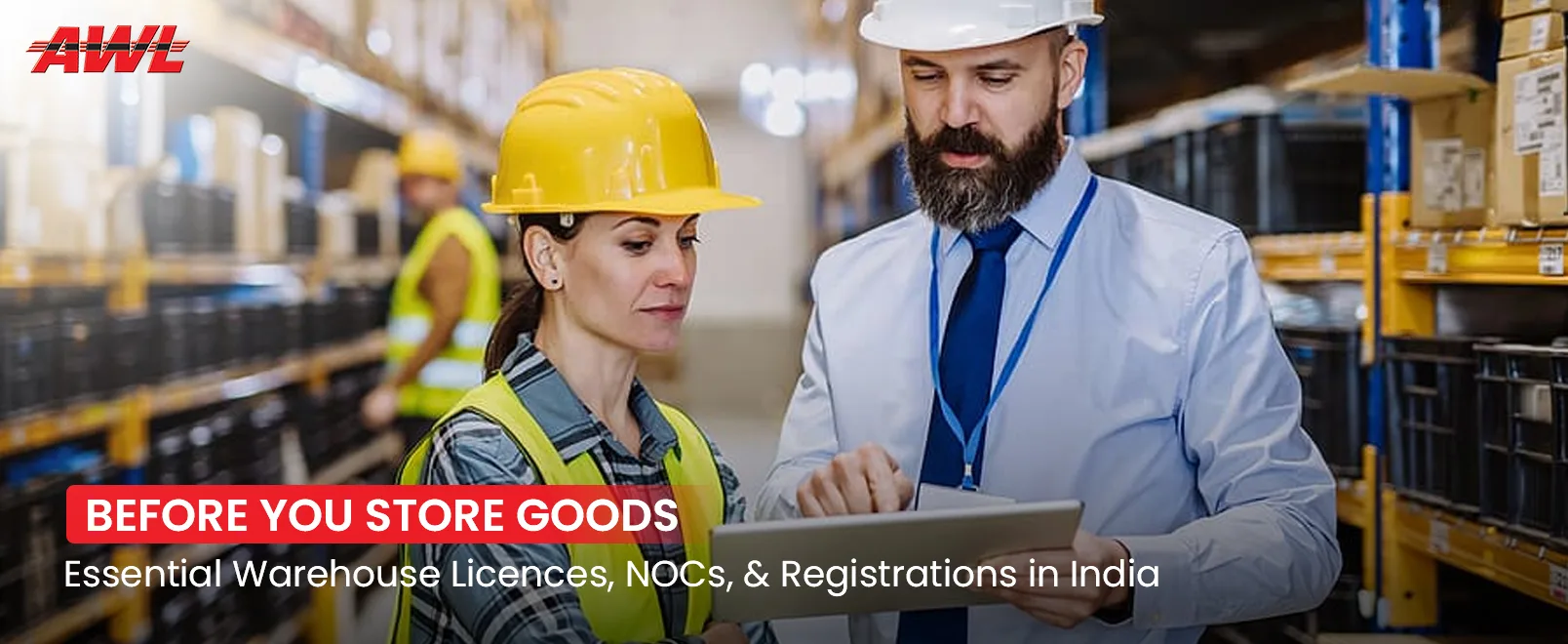
Setting up a warehouse in India involves more than just renting space and filling racks. The storage sector is growing fast, but legal regulations are strict. A single missing document can stall operations, result in fines, or close down a facility. Before moving inventory into any facility, business owners must clear multiple local, state, and central legal approvals.
Wondering why setting up a compliant warehouse feels like navigating a legal maze? Or how top logistics leaders manage these setup steps without facing delays? Let us break down the exact permits, registrations, and clearances needed to build a lawful warehousing network in India.
Essential Registrations and Structural Approvals
Commercial storage centers must operate on legally approved land. Local land use laws require clear land title checks and industrial conversion certificates before any structure is built.
- Land Title and Lease Deed:
A registered lease deed under the Transfer of Property Act ensures clear land use rights. This document prevents future property disputes and legal evictions. - Trade Licence from Municipal Authority:
Local municipal corporations mandate this permit to operate commercial storage within city limits. It verifies that the facility adheres to local commercial zoning rules. - Occupancy Certificate (OC):
Issued by local planning authorities, the OC confirms the facility matches approved building plans. Storing goods without an OC risks immediate closure by municipal authorities. - Factory Licence:
Required under the Factories Act if packing, labeling, or sorting activities happen on-site. It guarantees worker safety standards and regulates maximum working hours. - Goods and Services Tax (GST) Registration:
Mandatory for every commercial storage location to track inventory tax credits. A principal place of business designation is required for cross-border operations.
Experienced logistics managers know that modern infrastructure requires full compliance. Reliable partners like AWL India simplify these site selection procedures to avoid costly regulatory bottlenecks.
Fire, Health, and Safety Clearances
Safety permits protect workers and inventory from unexpected disasters. Modern supply chain operations rely on these mandatory clearances to run smoothly.
- Fire Department No Objection Certificate (NOC):
Issued by state fire and emergency services after strict site inspections. Facilities must install active sprinklers, hydrants, smoke detectors, and clear emergency exits. - State Pollution Control Board Consent:
Requires both Consent to Establish (CTE) and Consent to Operate (CTO). These approvals manage wastewater, industrial waste, and diesel generator emissions on-site. - Labour Law Registrations:
Includes Contract Labour Registration, Provident Fund (EPF), and ESIC compliance. These certificates protect worker welfare and prevent severe labor law violations. - Legal Metrology Registration:
Mandatory if goods are weighed, packaged, or labeled inside the storage facility. It ensures all weighing scales and declared package measures meet national standards.
Professional 4PL Supply Chain Solutions build compliance into every facility. Partnering with a skilled provider helps businesses meet strict regional safety requirements.
Category-Specific Licences and Special Clearances
Specialized inventory demands dedicated regulatory permits before goods hit the shelves. Storing food, electronics, or hazardous goods without proper licences leads to immediate asset seizures.
| Inventory Category | Primary Clearance Required | Issuing Authority | Key Compliance Focus |
| Food & Beverages | FSSAI Storage Licence | Food Safety and Standards Authority of India | Hygiene, temperature logs, pest control |
| Hazardous Chemicals | Petroleum & Explosives Safety NOC | PESO / Petroleum & Explosives Safety Organization | Chemical containment, blast clearance |
| Agri-Commodities | WDRA Registration | Warehousing Development and Regulatory Authority | Electronic Negotiable Warehouse Receipts |
| Imported Customs Goods | Public / Private Bonded Licence | Central Board of Indirect Taxes and Customs | Duty deferment, custom security compliance |
Looking for a simpler way to manage these complex, product-specific approvals? Comprehensive 4PL Services handle these product-specific permits seamlessly across multiple regional hubs.
Regulatory Agencies and Mandatory Approvals
"Compliance in Indian warehousing is no longer just a legal checklist; it is the fundamental foundation of supply chain resilience. Companies that proactively secure their regulatory approvals protect their operations from sudden halts and build long-term trust with global stakeholders."
— Ramesh Agarwal, Prominent Indian Logistics & Freight Expert
According to market research from IMARC Group, the Indian warehousing sector reached a market value of over ₹1.63 trillion in 2025. This rapid growth has led authorities to enforce compliance rules more strictly than ever.
- Warehousing Development and Regulatory Authority (WDRA):
WDRA registration lets facilities issue legally valid Negotiable Warehouse Receipts. It boosts credibility and helps depositors secure easier bank financing. - Food Safety and Standards Authority of India (FSSAI):
FSSAI mandates central or state licenses for all food storage centers. Regular sanitary audits prevent product contamination and protect public health. - Central and State Pollution Control Boards (CPCB/SPCB):
These boards monitor air and water emissions from industrial storage zones. They ensure hazardous waste and diesel power generation meet environmental safety limits. - Central Board of Indirect Taxes and Customs (CBIC):
CBIC governs bonded storage zones housing uncleared import cargo. It enforces strict security standards, customs bonds, and physical inventory audits.
Managing these multi-agency requirements takes significant time and resources. Modern enterprises often rely on specialized 4PL Supply Chain Solutions to maintain continuous compliance across all locations.
The Strategic Advantage of Compliance Outsourcing
Setting up compliant storage facilities in multiple Indian states requires deep legal knowledge. Working with experienced third-party and fourth-party logistics providers simplifies this complex journey.
- End-to-End Regulatory Oversight:
Expert Fourth Party Logistics providers manage all licensing steps from scratch. They handle local zoning, fire approvals, and environmental consents without operational friction. - Risk Mitigation and Asset Protection:
Fully compliant storage prevents sudden site closures, inventory holds, and heavy statutory fines. Secure facilities safeguard capital investments and keep product deliveries on schedule. - Scalable National Expansion:
Outsourcing storage needs allows rapid entry into strategic Tier-1 and Tier-2 delivery hubs. Businesses gain pre-approved storage space without spending months on fresh permit applications. - Integrated Digital Governance:
Advanced Supply Chain Solutions combine warehouse management software with automated compliance tracking. Digital systems maintain real-time logs for safety inspections and permit renewals. - Streamlined Vendor Operations:
Strategic Logistics Outsourcing lets brands focus on core product development and sales growth. Experienced operators handle site audits, worker safety rules, and local council filings.
Leading logistics brands like AWL India deliver end-to-end operational governance across the country. Their comprehensive 4PL Supply Chain Solutions enable seamless, fully compliant storage networks tailored for modern commerce.
By prioritizing regulatory compliance today, enterprises build resilient, efficient, and future-ready supply networks across India.

John Smith
Digital Tech Head