


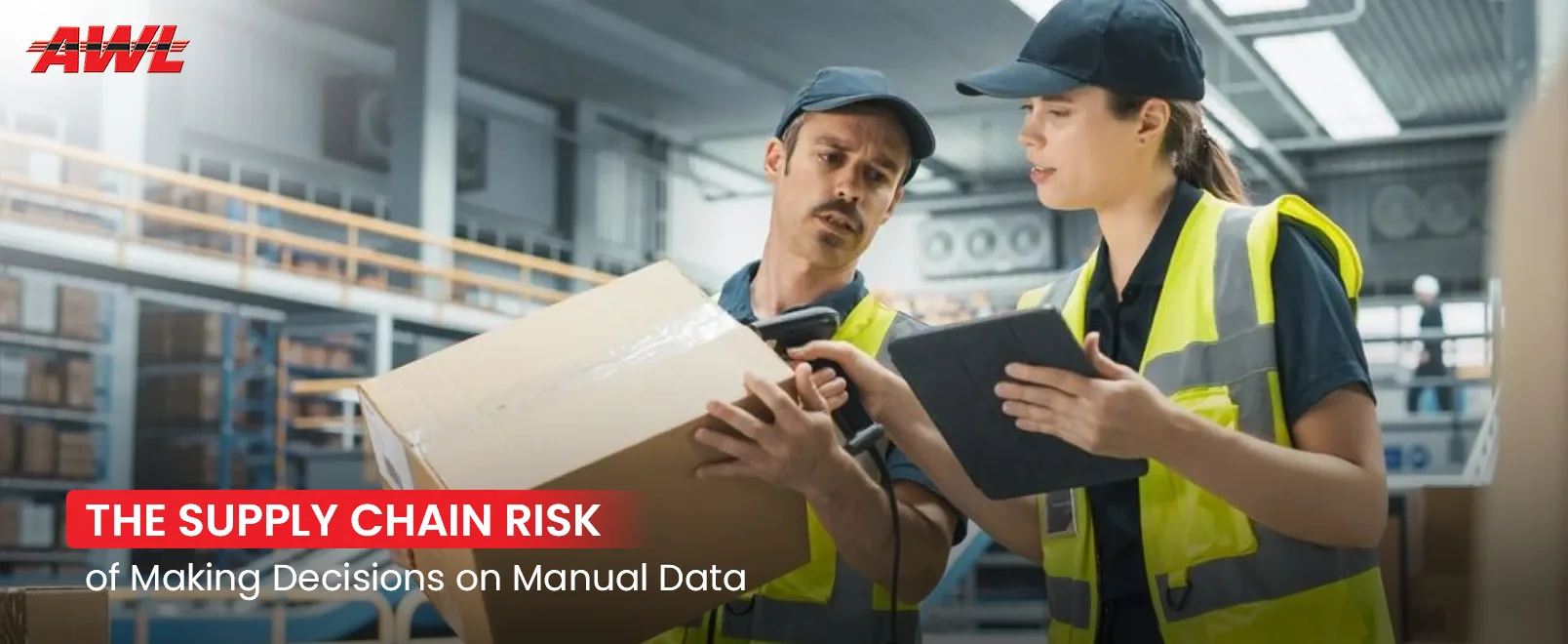
Consider a common warehouse scenario: a manager receives the daily stock sheet at 7 p.m. Someone has entered 500 instead of 50 for a fast-moving SKU. The next morning, no reorder goes out, three marketplaces run out by afternoon, and a truck leaves half empty. Nobody made a bad decision. They made a reasonable decision on a wrong number.
Why Manual Numbers Are a Real Business Risk
Most Indian businesses still run large parts of their operations on spreadsheets, emails, WhatsApp updates, and paper challans. That works when volumes are small. As the business grows, supply chain data collected and passed along by hand becomes the weakest link in every decision that depends on it.
The risk is not just typing mistakes. Manual data is slow, scattered, and hard to verify. By the time it reaches the person making a call on stock, transport, or procurement, it may already be out of date or quietly altered along the way.
Where Manual Data Breaks Down
Manual data errors can enter at any stage of the supply chain, and even small mistakes can lead to bigger operational problems.
Typing and Copy-Paste Errors
Every time a number is retyped from a challan into a sheet, or copied from one file to another, there is a chance of error. A misplaced decimal, a wrong SKU code, or a dragged formula can change stock figures without anyone noticing.
Time Lag Between Event and Record
A carton received at 11 a.m. may only appear in the sheet at the end of the shift. Orders, dispatches, and returns all suffer from this delay. Decisions made in between rely on numbers that no longer match the warehouse floor.
Several Versions of the Truth
Sales has one file, the warehouse has another, and finance has a third. Which one is right? Teams spend meetings arguing about whose figures to trust instead of deciding what to do.
Knowledge Locked in a Few People
In many operations, one experienced supervisor knows which numbers are reliable and which need a manual check. When that person is on leave or moves on, the business loses context that was never written down anywhere.
No Clear Audit Trail
With spreadsheets, it is hard to see who changed a figure, when, and why. That makes errors difficult to trace and creates risk during audits, client disputes, and insurance claims.
What Poor Data Actually Costs
Research shows the problem is widespread. A study by Tadhg Nagle, Thomas Redman and David Sammon, published in Harvard Business Review, found that on average 47% of newly created data records had at least one critical error.
Gartner estimates that poor data quality costs organisations an average of $12.9 million a year, based on its 2020 survey of data quality customers. Melody Chien, Senior Director Analyst at Gartner, has noted that "data quality is directly linked to the quality of decision-making."
The effect on technology projects is also clear. PwC's 2026 Digital Trends in Operations survey found that 87% of operations and supply chain leaders said poor data quality had held back the value of their digital initiatives. In other words, new systems cannot fix decisions if the data feeding them is still unreliable.
For India, the stakes are high at a national level too. A DPIIT and NCAER study estimated the country's logistics cost at 7.97% of GDP in 2023-24. Inefficient planning, often driven by poor data, is one of the factors businesses can control within that cost.
Signs You Rely Too Much on Manual Data
How do you know if this risk applies to your business? Look for these patterns:
- Daily stock or dispatch reports are compiled by hand from several sources, and the final sheet only reaches decision-makers late in the day.
- Teams regularly find gaps between system stock and physical stock, and correct them through recounts rather than by fixing the cause.
- Delivery updates come through calls or messages to drivers, with no live tracking that customers or managers can check themselves.
- Month-end reconciliation between sales, warehouse, and finance takes days, and the numbers still do not fully match.
How to Reduce the Risk Step by Step
You do not need to digitise everything at once. A phased approach is safer and easier to manage:
- List the decisions that matter most, such as reordering, transport booking and order allocation, and trace which data each one depends on.
- Capture data at the source with barcode scanning at receiving, picking and dispatch, so numbers are recorded once and never retyped.
- Connect systems so marketplaces, warehouse software and ERP share the same stock and order data instead of separate files.
- Assign clear owners for key data fields such as SKU master, locations and customer addresses, and review them regularly.
- Keep people focused on exceptions and judgement, not on copying numbers between sheets.
Good supply chain process management starts with deciding where each piece of information is created, who owns it, and where it flows next. Technology then makes that flow faster and more reliable.
A connected supply chain management system gives everyone the same live view of stock, orders, and shipments. It also keeps a record of every change, which helps with audits and dispute resolution.
Where AWL India Fits
AWL India offers warehousing, order fulfilment, and omnichannel logistics services backed by its own technology. Its SWIM platform gives a single view of inventory, orders, and documents across marketplaces, and CHAKSHU provides IoT-based tracking for shipment visibility.
For businesses moving away from spreadsheets, a 3PL partner with these systems already in place can shorten the transition to more reliable supply chain management.
Trust the Numbers Before You Act on Them
Every supply chain decision is only as good as the data behind it. Manual records may feel familiar and cheap, but the hidden cost shows up in stockouts, wasted freight, and time spent fixing errors.
Start by securing the data behind your most important decisions. If you want to understand how dependable your current supply chain data really is, the team at AWL India can review your operations and suggest practical next steps.

AWL India
Owner