


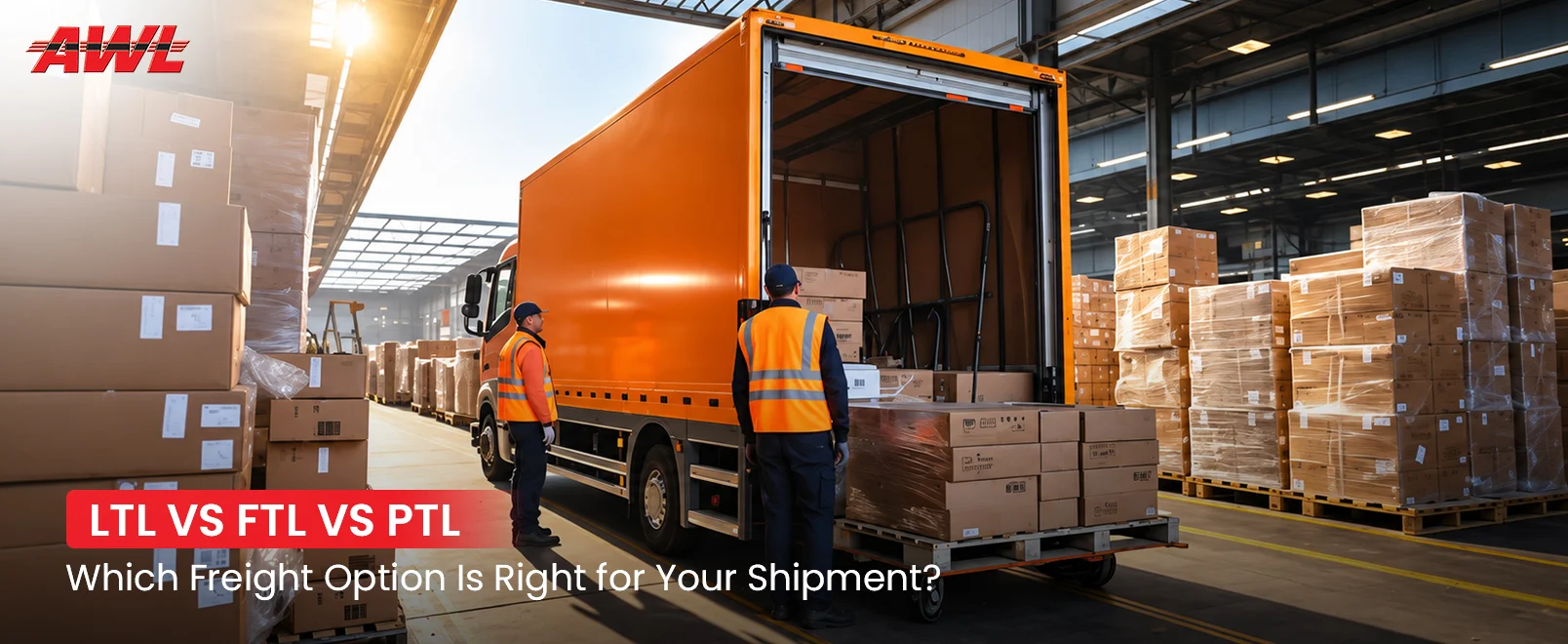
Are you losing money by choosing the wrong freight mode for your cargo? How do you know when to switch from a partial load to a dedicated truckload? When does part-load shipping stop making financial sense for your business? Picking the right freight method protects your supply chain budget. Freight shipping comes down to three main options: Less-Than-Truckload (LTL), Partial Truckload (PTL), and Full Truckload (FTL). Each shipping method serves a specific shipment size and business need. Choosing the wrong mode leads to higher fees, delayed deliveries, and broken items.
Understanding Less-Than-Truckload Shipping
Less-Than-Truckload shipping suits small freight loads. Carriers group shipments from several businesses into one standard trailer. This approach helps companies share transport costs across the same lane.
- LTL shipping combines small cargo shipments from multiple businesses onto a single truck trailer to maximize space and lower overall transit costs.
- Carriers move LTL cargo through several local hubs and regional consolidation warehouses before reaching the final delivery address safely and securely.
- Pricing depends heavily on total shipment weight, physical dimensions, national freight class, and distance traveled across the complete transport route.
LTL works well when shipping one to five pallets. However, frequent handling at terminal hubs increases transit time and damage risks.
Understanding Full Truckload Shipping
Full Truckload shipping reserves a full trailer for one customer. The truck moves straight from the pickup dock to the delivery site.
- FTL shipping reserves an entire truck trailer for one single shipper, ensuring direct point-to-point delivery without intermediate stops or extra handling.
- Truckload freight moves much faster than partial options because driver routes stay direct from origin pickup dock to customer unloading doors.
- Direct transit greatly reduces overall cargo touches, which significantly lowers the risk of freight damage, lost boxes, or product claims during shipping.
FTL offers maximum speed and cargo protection. It is ideal for large bulk orders or fragile goods.
Understanding Partial Truckload Shipping
Partial Truckload shipping bridges the gap between LTL and FTL. Cargo shares truck space with other shipments, but the trailer goes directly to its destination.
- PTL shipping allows medium shipments to share a truck trailer while keeping cargo on the same vehicle throughout the entire journey.
- Shippers do not need freight classification codes for PTL, which simplifies pricing based on linear footage and required weight space.
- Partial shipments avoid terminal transfers, making transit faster than standard LTL while costing less than booking a dedicated full truck.
PTL gives shippers predictable transit times without paying for a full trailer.
Comparing Key Features Across Freight Modes
Selecting the right shipping mode requires comparing volume, cost, and handling requirements.
- LTL works best for smaller shipments under six pallets, whereas PTL suits medium loads between six and twelve pallets effectively.
- FTL guarantees dedicated trailer space for large cargo shipments exceeding twelve pallets or weighing more than twenty thousand total pounds.
- LTL pricing uses freight class and dimensional weight, while PTL and FTL pricing rely primarily on mileage and occupied trailer length.
- Risk levels remain highest with LTL due to multiple hub touches, whereas FTL and PTL offer safer point-to-point transit paths.
The Financial Tipping Point for Part-Load Shipments
Part-load shipping saves money only up to a specific limit. When cargo volume grows, part-load shipping stops making financial sense.
According to data from the Council of Supply Chain Management Professionals (CSCMP), transportation accounts for roughly 64.4% of total business logistics spend. Additionally, industry standards published by the National Institute of Governmental Purchasing (NIGP) note that LTL pricing models apply mainly to loads under six pallets or 10,000 pounds. Once a load reaches 10 to 12 pallets, occupies over 20 linear feet, or exceeds 15,000 pounds, part-load rates jump dramatically.
Dr. Edward Frazelle, founder of Logistics Resources International, notes: "Optimizing freight modes is not just about moving goods; it is about eliminating paid air inside your transport network."
- When cargo occupies more than ten pallets or twenty linear feet, LTL accessorial fees often equal full truckload spot market rates.
- Volumetric weight penalties on partial cargo loads frequently make hiring a full truck cheaper than paying LTL dimensional freight surcharges.
- Transitioning to full truckload eliminates intermediate handling fees, fuel surcharges, and costly delivery window penalties charged by partial shipping networks.
At 50% to 60% trailer capacity, paying for a full truckload becomes cheaper and safer.
Strategic Advantage of Professional Freight Handling
Managing shipping modes requires strong supply chain infrastructure. A reliable provider of third party logistics helps businesses choose the best mode for every shipment.
Many growing brands turn to AWL India to streamline their freight operations. Partnering with 3PL logistics companies in India allows businesses to access volume shipping discounts.
Modern 3PL logistics platforms use smart tracking software to analyze load density. Choosing third party logistics companies in India ensures your goods move quickly without costly transit delays.
An effective 3PL logistics strategy reduces unnecessary cargo handling and prevents inventory damage. Working with AWL India helps shippers combine small shipments into dedicated full truckloads.
Enterprise scaling requires flexible freight management systems. Choosing AWL India gives companies full control over transport schedules and operational costs through custom 3PL logistics solutions.
- Consolidating multiple smaller customer shipments into scheduled full truckloads reduces individual unit delivery costs across long-distance national distribution routes.
- Advanced shipment routing platforms help businesses select the most efficient transport mode based on real-time market rates and vehicle availability.
- Outsourcing complex freight operations to experienced partners eliminates internal management overhead while providing complete tracking visibility over all active shipments.
Final Verdict on Mode Selection
Choosing between LTL, PTL, and FTL depends on cargo volume, budget, and speed requirements. LTL works well for small shipments under six pallets. PTL serves medium loads that need faster delivery without hub reloads. When shipment size reaches 10 to 12 pallets or 15,000 pounds, part-load shipping loses its cost advantage. Transitioning to FTL at this tipping point lowers cost per unit, cuts transit delays, and protects cargo from damage.

John Smith
Digital Tech Head