


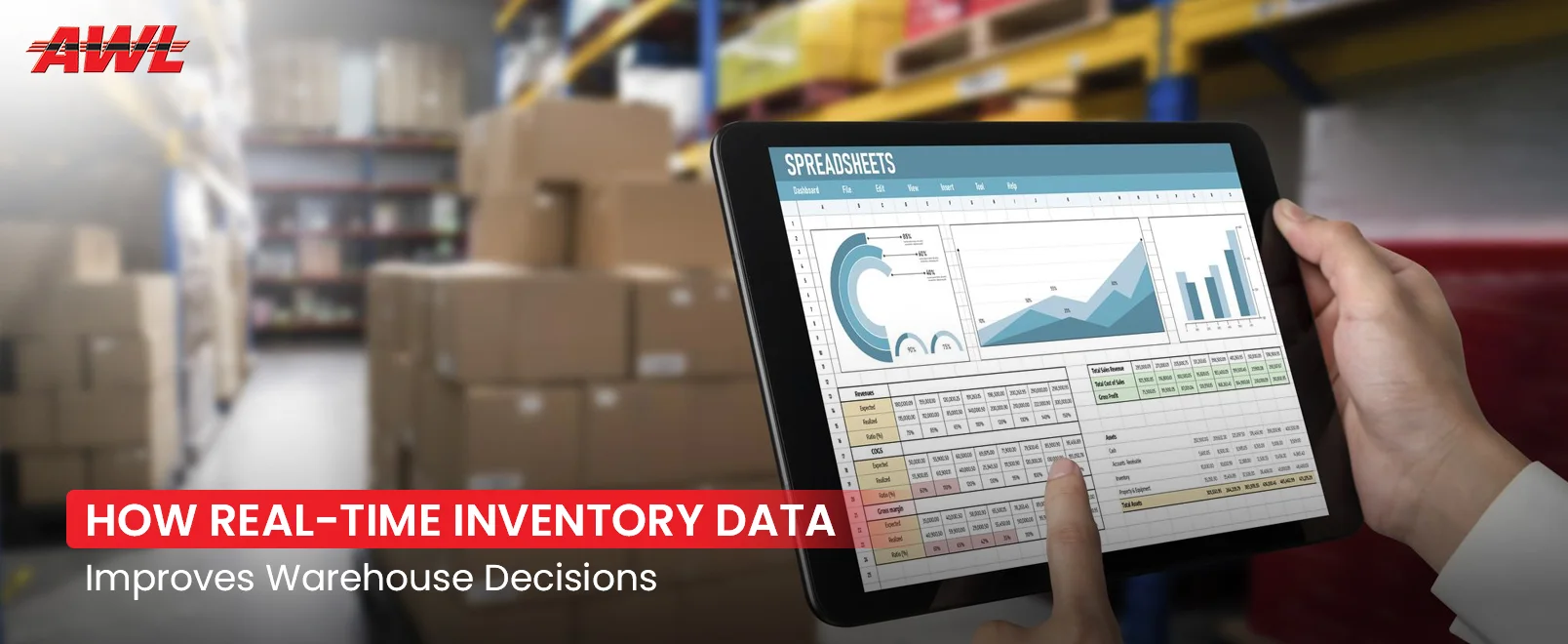
At 10 a.m., a warehouse manager in Bhiwandi approves a reorder based on last night's stock report. By noon, two marketplaces have sold out a product the report still shows in stock, and a third has an item sitting unsold that nobody knew was running long. Every decision in that morning was made on numbers that were already wrong.
The Problem With Yesterday's Numbers
Real-time inventory management means stock records update the moment goods move: when they are received, put away, picked, packed, dispatched, or returned. The system reflects what is on the shelf now, not what was there at the last count or the last batch upload.
That gap matters more than it seems. Most warehouse decisions are about timing. When to reorder, which location ships an order, where to send staff, which returns to restock first. If the data behind those calls is hours old, every decision carries a built-in error.
Six Warehouse Decisions That Improve With Live Data
1. Replenishment and Reordering
Reorder points only work when stock counts are current. With live numbers, buyers see exactly when a fast mover crosses its threshold. They can reorder earlier for items selling faster than expected and hold back on slow movers before excess stock builds up.
2. Order Allocation Across Channels
Do you sell on your own website, two marketplaces, and a quick commerce app from one stock pool? Then every unit is visible in several places at once. Accurate real-time inventory data stops the same unit from being promised to two customers, which protects seller ratings and reduces cancellations.
3. Choosing Which Location Ships
For businesses with stock in more than one city, live data shows which warehouse can fulfil an order fastest and at the lowest cost. A Delhi NCR brand with a second hub in Bengaluru, for example, can route southern orders to the nearer stock instead of shipping everything from the north.
4. Slotting and Space Planning
Pick frequency changes with seasons, promotions, and trends. Live movement data shows which SKUs are speeding up, so supervisors can move them closer to packing stations before congestion starts. It also flags dead stock that is taking up prime space.
5. Labour Planning for the Day
Seeing open orders, pending putaways, and returns in one live view helps supervisors move people where the work actually is. If inbound trucks arrive early, staff can shift from picking to receiving without waiting for an end-of-shift report.
6. Returns and Restocking
Returned items often sit in a corner, unrecorded, while the system shows them as missing. Logging returns at the moment they arrive lets teams decide quickly whether to restock, refurbish, or write off each item, and makes good stock sellable again sooner.
Why This Matters More Than Ever
The cost of poor stock data is high. IHL Group's 2025 research estimated that global retail loses about $1.73 trillion a year to inventory distortion, meaning the combined cost of out-of-stocks and overstocks. That equals roughly 6.5% of global retail sales. Asia-Pacific accounted for the largest regional share, at $642 billion or 37% of the global total.
The same research found that 70% of retailers struggle with inventory accuracy because of their own return processes. Greg Buzek, president of IHL Group, noted that "the regional variations tell a compelling story about different approaches to modernization."
In India, the pressure is rising with order volumes. Unicommerce data showed e-commerce order volumes grew 24% year on year during the 2025 Diwali season, while quick commerce order volumes jumped 120%. Faster channels leave far less room for stock records that lag behind reality.
What You Need for Live Inventory to Work
Real-time data does not appear just because you buy software. A few foundations need to be in place:
- A proper inventory management system that records every movement as it happens and connects with your marketplaces, website, and ERP through reliable integrations.
- Barcode or RFID scanning at every handoff, from receiving to dispatch, so no movement depends on someone remembering to update a sheet later.
- Clean master data, including correct SKU codes, units of measure, and storage locations, because a live system with wrong data only spreads errors faster.
- Floor discipline, with clear rules that no item moves without a scan, backed by training and regular cycle counts to catch drift early.
Poor data quality is a common barrier. PwC's 2026 Digital Trends in Operations survey found that 87% of operations and supply chain leaders said poor data quality had held back the value of their digital initiatives.
How to Measure the Difference
Results vary from one warehouse to another. Your starting accuracy, product mix, and floor discipline all shape how much you gain. The only reliable way to see the inventory visibility benefits in your own operation is to record a baseline first, then compare it month by month after the change.
These four numbers tell you the most:
- Inventory record accuracy: Compare system counts with physical cycle counts every week. A narrowing gap shows that scans are being followed and records are holding up.
- Stock-related cancellations: Track how many orders are cancelled because an item could not be found, and split this by sales channel to spot where overselling still happens.
- Days of inventory on hand: Check this separately for fast and slow movers. If slow stock falls while fast movers stay available, working capital is being freed up.
- Returns restocking time: Measure the hours or days between a return arriving and the item becoming sellable again. Shorter times mean less stock stuck in limbo.
Review these numbers with your floor supervisors, not just management. They usually know why a figure moved before the report does.
How AWL India Supports Stock Visibility
AWL India offers warehousing, order fulfilment, and omnichannel logistics services. Its SWIM platform gives a single view of inventory, orders, and documents across marketplaces, and the company reports a 25% improvement in inventory accuracy through real-time tracking. AWL India also runs CHAKSHU, an IoT-based tracking solution for shipment visibility.
For growing brands, working with a 3PL partner that already runs live stock tracking can be faster than building the system, integrations, and processes in-house.
Making Better Calls With Better Data
Start by checking how often your stock records disagree with physical counts, how many orders are cancelled because of unavailable stock, and how quickly returns become sellable again. These baseline figures will help you identify where better inventory visibility could make the biggest difference.
If you need support improving stock visibility across warehouses and sales channels, AWL India can help you assess your current setup and identify practical next steps.

AWL India
Owner