


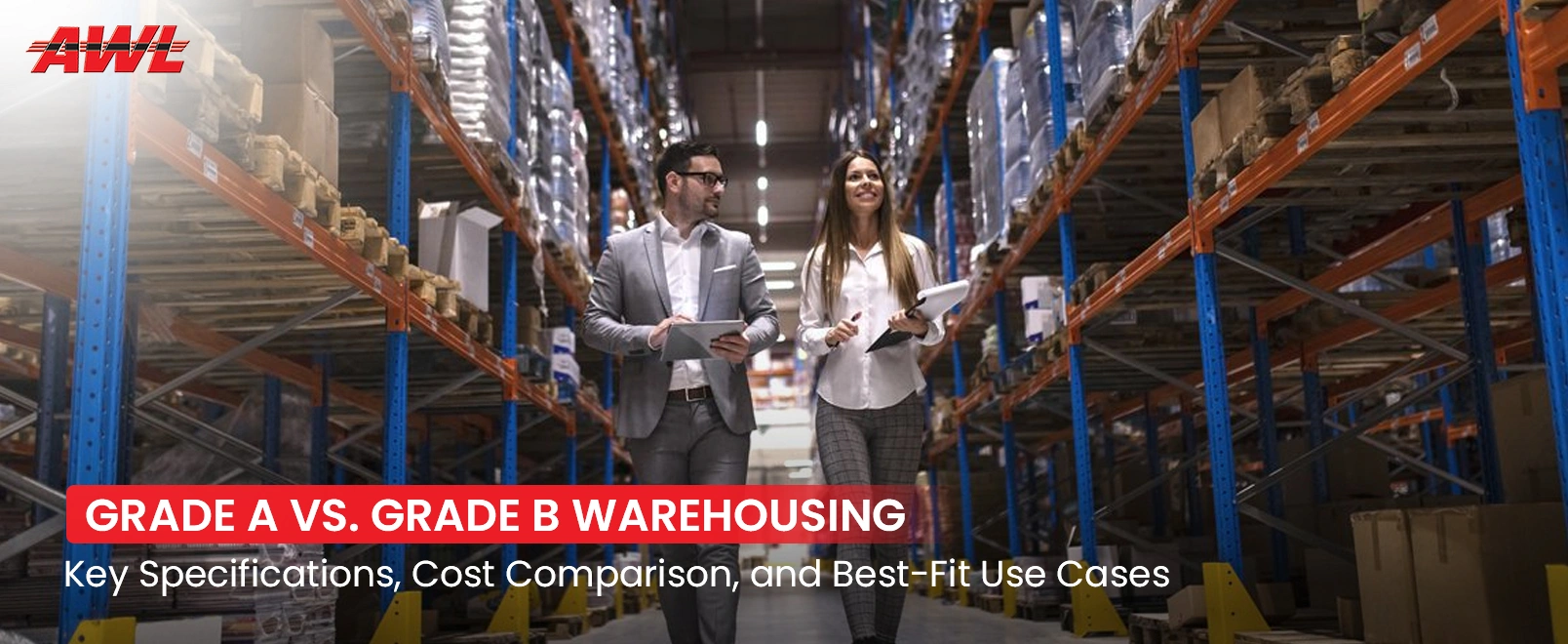
The logistics sector in India is growing fast. Companies need good space to store their goods safely. Choosing the right storage space can be tricky for many business owners. How do you choose between Grade A and Grade B warehouses? Every business has different goals and budgets. Understanding the physical setup and features of each option helps you make a smart choice. This guide explains the key differences to help you decide easily.
Understanding Warehouse Grades in India
Warehouses in India fall into two main categories based on quality and construction. Grade A spaces are modern facilities built with international quality standards. Grade B spaces are traditional units with basic features and lower rental rates.
- Grade A structures feature clear ceiling heights above nine meters, FM2 super-flat floors, and heavy load capacities designed specifically to support tall racking systems and fast forklift movement.
- Grade B structures offer lower clear heights around five to six meters, standard concrete flooring, and basic loading platforms that work well for simple stack storage needs.
According to research published by the Warehousing Association of India (wai.org.in), Grade A facilities now account for over sixty percent of new industrial storage demand across major Indian cities.
Key Specifications and Structural Differences
The physical setup of a storage facility affects your daily operational speed. What drives the price gap between these two warehouse types? Construction quality and safety features create the biggest differences in daily performance.
- Grade A sites offer automated fire sprinklers, insulation, wide internal roads, and multiple hydraulic dock levellers that speed up truck loading processes significantly for high-volume businesses.
- Grade B sites rely on manual fire extinguishers, basic metal roofing, narrow driveways, and manual ramps that require extra labor and time during peak truck unloading operations.
- Grade A buildings follow strict environmental guidelines, feature rainwater harvesting systems, and use energy-efficient LED lights to keep long-term operational costs low and predictable.
- Grade B buildings usually lack green certifications and rely on older electrical setups, which can lead to higher power bills and frequent maintenance issues during peak seasons.
Established supply chain managers like AWL India build modern networks using top-tier specifications to keep stored goods safe from weather damage and heat.
Cost Differences in the Indian Market
Rental rates vary based on location, building age, and structural quality. Grade A properties command higher rent due to premium features. Grade B spaces offer lower upfront costs for price-sensitive companies.
- Grade A spaces cost between twenty-five and forty-five rupees per square foot monthly in major hubs due to advanced safety features and high ceiling space.
- Grade B spaces cost between fifteen and twenty-five rupees per square foot monthly, making them an affordable option for small firms with basic storage needs.
- Grade A operations reduce long-term product damage costs through temperature control and smooth floors, offsetting the initial higher monthly rental fees for growing regional brands.
- Grade B operations save short-term lease money but can cause higher product handling losses due to rough floors and limited climate protection in hot weather.
"Modern logistics relies on structural height, compliance, and smart automation to cut handling errors," notes logistics specialist Dr. Rakesh Sharma in an official report for NITI Aayog (niti.gov.in).
Technology Integration and Operational Efficiency
Modern logistics relies heavily on software to track goods accurately. Grade A buildings support advanced tech setups easily. Using an automated Inventory Management System works best in high-ceiling spaces with reliable power backup infrastructure.
- Grade A hubs support seamless software integration, allowing real-time tracking through advanced Inventory Management tools that connect directly with automated conveyor systems and smart scanners.
- Grade B hubs use simple manual tracking methods due to weaker internet access and limited power backup, which can slow down real-time stock updating during busy sales periods.
- Grade A partners use Vendor Managed Inventory (VMI) to help suppliers track stock levels directly, reducing excess storage costs and preventing stockouts for major retail chains.
- Grade A facilities optimize Vendor Managed Inventory programs by providing real-time data access, allowing fast restocks and accurate order fulfillment for high-demand consumer goods.
Smooth Stock Inventory Management depends on physical space and digital tools working together seamlessly without network interruptions.
When Each Warehouse Grade Makes Sense
Which warehouse type best fits your daily business needs? Your choice depends on your product type, order volume, and long-term budget goals.
- Grade A makes sense for e-commerce, pharmaceutical, and electronics brands that need strict temperature control, quick dock turnaround times, and maximum safety for high-value items.
- Grade A enables efficient Vendor Managed Inventory operations where suppliers need quick access to clean, secure, and automated storage spaces to serve large retail networks daily.
- Grade B makes sense for local distributors, raw material suppliers, and small businesses that store heavy, non-perishable items that do not require specialized climate control systems.
- Grade B offers a budget-friendly option for firms storing bulk goods on low-cost pallets without needing automated sorting systems or multi-level racking setups.
Working with AWL India helps growing companies evaluate their space needs to make practical logistics choices.
Choosing the Right Facility for Business Growth
Choosing between Grade A and Grade B comes down to operational goals. Grade A offers speed, safety, and tech readiness. Grade B offers lower upfront rent and simple storage.
- Selecting Grade A facilities gives high-growth companies superior compliance, modern infrastructure, and seamless digital tracking needed to expand market presence across major Indian commercial hubs.
- Leading logistics partners like AWL India help modern enterprises set up strategic storage solutions while selecting optimal warehouse grades to maximize supply chain efficiency long-term.

John Smith
Digital Tech Head