


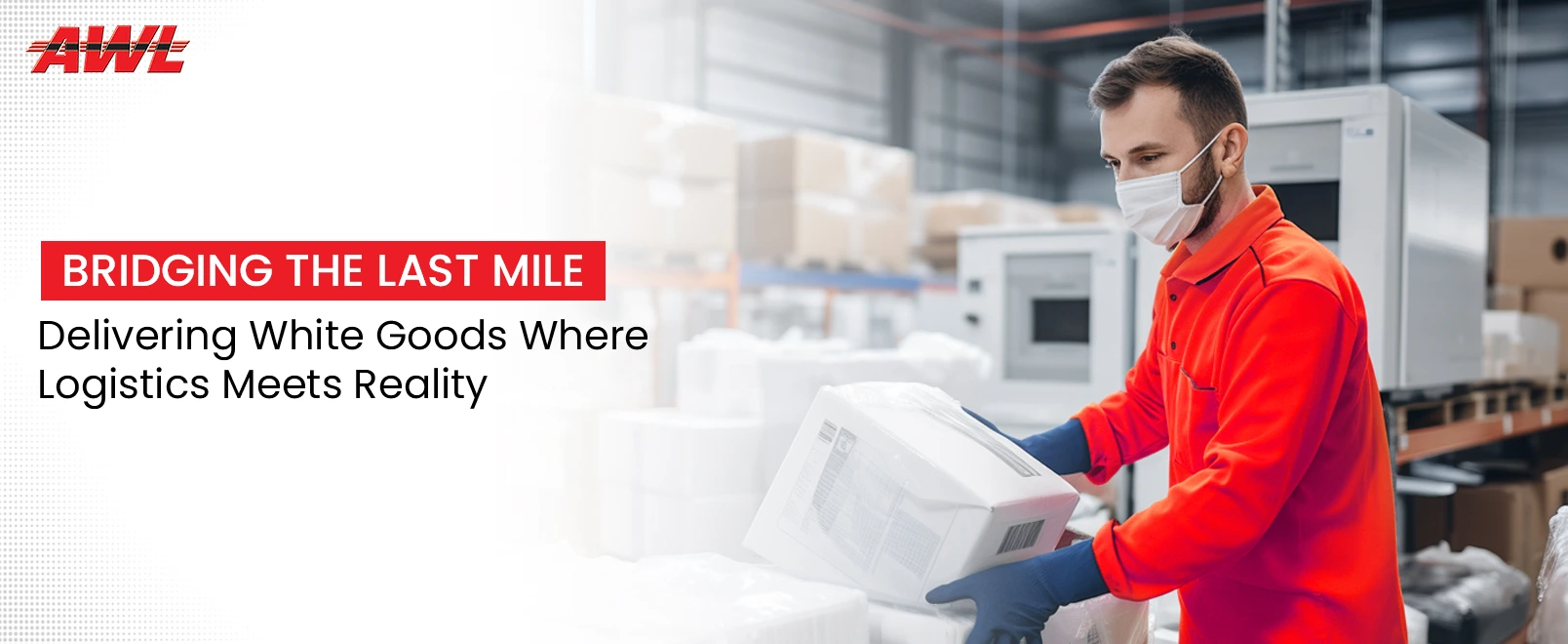
India is buying more appliances than ever before. Refrigerators, washing machines, and air conditioners are no longer just big-city buys. Families in small towns and villages are upgrading their homes too. But here is the real question nobody talks about enough: how do these heavy, fragile products actually reach them? Getting a washing machine from a warehouse in Delhi to a home in rural Chhattisgarh is not simple. It takes careful planning, the right vehicles, trained staff, and a very dependable logistics partner.
The Growing Demand Beyond Metro Cities
India's tier-2, tier-3, and rural markets are booming. And the numbers back this up.
- The Indian white goods market is growing fast, driven by rising middle-class incomes and expanding electrification in semi-urban areas.
- The government's focus on smart cities and rural electrification is directly pushing appliance penetration into non-metro regions. More homes are getting power. More families are buying fridges and ACs.
- The offline retail segment still dominates in rural and semi-urban zones, where buyers want to see and touch products before purchasing.
So the demand is real. The challenge is fulfilment. Can the supply chain keep up?
Why White Goods Are Different from Other Products
Not all goods are created equal. White goods come with unique handling demands.
- These products are large and bulky. A single refrigerator can weigh anywhere from 40 to 120 kilograms. Standard delivery vehicles are often not suitable.
- They are fragile. A small dent or scratch during transit can make a product unsellable or lead to costly returns.
- They require trained staff who know how to load, unload, and move appliances without damage.
- Installation is often expected at the point of delivery, adding another layer of complexity in remote areas.
This is why white goods logistics cannot be handled the same way as FMCG or fashion logistics.
The Real Challenges of Reaching Remote and Semi-Urban India
Poor Road Infrastructure
Here is a lesser-known fact: India's logistics costs sit at nearly 14-16% of GDP, compared to just 8-10% in developed nations. A big reason for this is poor road quality outside major highways.
- Rural and semi-urban regions lack proper road infrastructure capable of handling large delivery bottlenecks.
- Poor roads slow down trucks. They increase the risk of damage to fragile appliances during transit. They also raise fuel and maintenance costs significantly.
- Narrow lanes in smaller towns make it impossible for large cargo trucks to reach the final delivery point. Local carriers or smaller vehicles must take over, creating a two-step delivery process.
Last Mile Delivery: The Hardest Part
So what exactly makes the last leg of delivery so difficult? The answer lies in a combination of geography, access, and coordination.
The last mile delivery challenges India faces are severe in semi-urban areas. These include:
- No clear address systems: Many rural and semi-urban locations do not have standardized pin codes or house numbers. Delivery agents struggle to locate customers.
- Limited delivery windows: Customers in remote areas are often farmers or daily-wage workers with unpredictable schedules.
- High return rates: Failed first-attempt deliveries spike return logistics costs. For bulky appliances, a failed delivery is far more expensive than in e-commerce.
- Lack of local delivery partners: Established courier networks rarely extend beyond district headquarters, making last mile delivery for appliances a very real operational gap.
Warehousing Gaps in Non-Metro Regions
Here is a question worth asking: if there is no proper storage facility close to the customer, how do you deliver on time?
White goods warehouse management in India is largely concentrated in metro cities. Tier-2 and tier-3 cities often lack modern warehouses with the right infrastructure to store bulky items safely.
- Poor warehousing in rural areas means goods must travel longer distances from centralized hubs, increasing transit time and damage risk.
- Temperature and humidity issues in non-climate-controlled storage can degrade product packaging and appearance before delivery.
- GST reforms have encouraged centralized warehousing, improving cost efficiency by about 20% on average, but this still leaves remote areas underserved.
Vehicle and Fleet Limitations
- Standard freight vehicles are not designed for white goods transport. Specialized padding, strapping, and load-securing equipment are needed.
- In hilly or flood-prone regions like the Northeast and parts of Central India, conventional vehicles cannot operate during monsoon months.
- Over 58% of white goods manufacturers already face supply chain delays and logistics disruptions globally. In India's remote corridors, this number is likely higher.
Skilled Manpower Shortage
- Trained workers who can handle, load, and install white goods are concentrated in urban centers.
- Semi-urban areas face a severe shortage of logistics staff who can manage large appliances carefully.
- High attrition rates among delivery staff in smaller towns further disrupt consistent service quality.
White Goods Distribution Logistics: The Hub-and-Spoke Solution
The most effective model for reaching remote India is the hub-and-spoke system.
- Large regional warehouses (hubs) are placed strategically in tier-1 or key tier-2 cities with good road access.
- Smaller distribution points (spokes) serve surrounding tier-3 towns and rural areas.
- This model reduces the distance a product travels from storage to the customer's door.
- It also allows for local delivery partners to handle the final leg, using smaller vehicles suited to narrow or damaged roads.
"Efficient logistics is not just about moving goods. It is about creating the right infrastructure, the right processes, and the right partnerships to ensure that every customer, regardless of where they live, receives the same quality of service." — Ritika Kalra, Senior Research Analyst, 6Wresearch
Technology as a Game-Changer
White goods logistics in India are slowly but surely getting smarter.
- Route optimization tools help drivers find the best path even in areas without proper maps.
- Real-time tracking gives customers and logistics managers live updates, reducing uncertainty in remote deliveries.
- Digital proof of delivery through photos and OTPs reduces disputes and fraud in areas where paper-based systems still exist.
- A report by Arthur D. Little suggests that digitalization of logistics, paired with infrastructure upgrades, will allow India to enter the top 10 global logistics markets by 2030.
India jumped from 44th to 38th rank in the World Bank Logistics Performance Index in 2023, reflecting improving systems. But getting appliances to rural India still demands much more focused effort.
Reverse Logistics: The Often-Ignored Problem
Delivering an appliance is one challenge. Handling returns or exchanges is another.
- In remote areas, return pickups are rare and costly. Logistics partners often lack the infrastructure to collect a 70-kg refrigerator from a village.
- Poor reverse logistics leads to customer dissatisfaction and lost brand value.
- Around 39% of consumers express dissatisfaction with post-sale service quality and spare part availability globally. In India's semi-urban markets, this pain is even sharper.
A complete white goods logistics strategy must include a reliable, planned reverse logistics process.
How AWL India Bridges the Gap
This is where the right logistics partner makes all the difference. AWL India offers end-to-end white goods logistics solutions that address each of these challenges head-on.
- AWL India operates at over 1,700 locations across the country, with a network of 700+ associates. This reach is what makes remote deliveries possible.
- AWL India provides 3PL and 4PL solutions specifically designed for consumer durables, including specialized vehicles, trained staff, and secure warehousing for fragile white goods.
- Their tech-driven Control Tower offers real-time visibility across shipments, making it possible to track a washing machine from a Gurgaon warehouse all the way to a home in a small Rajasthan town.
- AWL India also handles reverse logistics, ensuring that returns and exchanges do not become a nightmare for brands or customers.
For brands expanding beyond metros, AWL India is a partner that understands the terrain, the complexity, and the customer expectations involved.
Key Takeaways
Reaching India's remote and semi-urban markets with white goods is hard. But it is not impossible. Here is a quick summary of what makes it work:
- Invest in a hub-and-spoke distribution model suited to the terrain.
- Partner with logistics providers who have deep last-mile networks in non-metro regions.
- Use technology for route planning, tracking, and proof of delivery.
- Plan reverse logistics from day one, not as an afterthought.
- Choose a partner with experience in white goods distribution logistics, not just generic freight.
The next wave of appliance buyers in India does not live in Mumbai or Bangalore. They live in Khandwa, Sitapur, and Tinsukia. And they deserve the same quality of delivery experience. That is a logistics challenge worth solving.

John Smith
Digital Tech Head